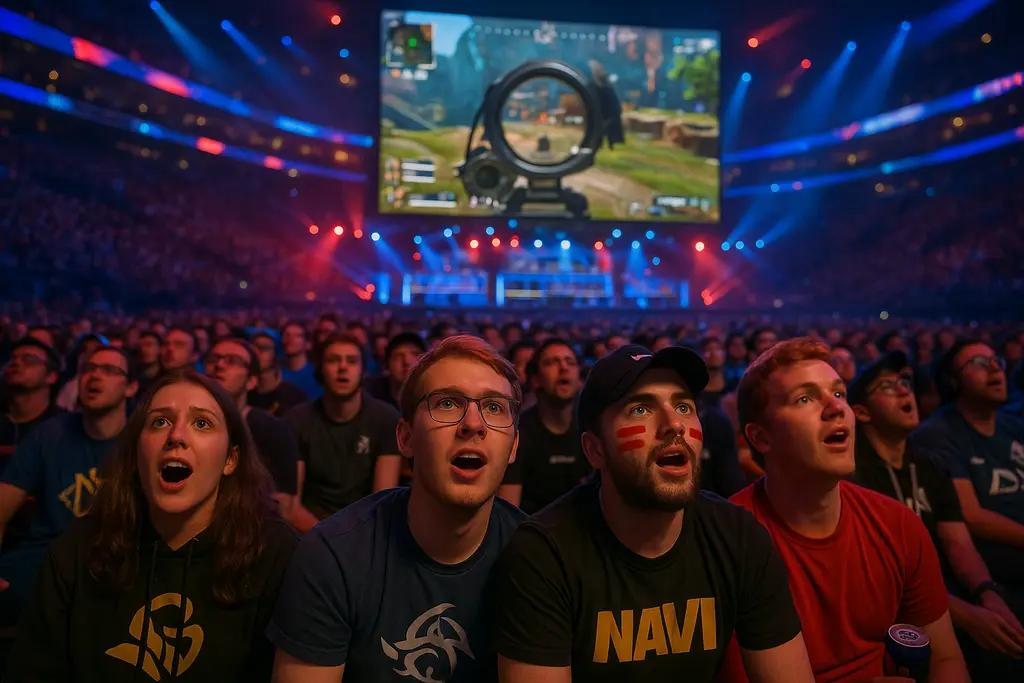
Apex Legends Viewership became one of the sharper week-one stories at the Esports World Cup 2026, not because the number appeared out of nowhere, but because it arrived through a match format and regional audience pattern that competitive Apex has been building toward for years. The ALGS 2026 Split 1 Playoffs, held during EWC 2026, reached 440,360 peak concurrent viewers during Round 10 of the Finals, a 74% increase compared with the previous year’s event, according to Esports Charts. For a battle royale esport that often has to fight for attention between FPS giants and mobile esports, that figure says more than one tournament had a strong Sunday.
The bigger read is about timing, regional momentum, and how Apex’s endgame drama translates to live viewing. Battle royale esports can be difficult to sell in clean scoreboard terms. A round can swing through placement points, zone pulls, third-party fights, and late rotations that casual viewers may not instantly read. Yet that same structure can create rare closing tension. At EWC 2026, the peak landing in Round 10 of the Finals suggests audiences were not just sampling the broadcast. They were staying for the late-set pressure.
Why Apex Legends Viewership Spiked At EWC 2026
The Apex Legends Viewership Number In Context
The 440,360 peak is the headline, but the 74% year-over-year rise is the more useful measure for tournament coverage. A raw peak can be shaped by time zone, co-stream availability, language coverage, and the presence of regionally popular teams. A percentage jump against the prior EWC Apex event points to a stronger viewing base around the title inside the multi-game event structure.
That makes Apex Legends Viewership at EWC 2026 a case study in how a game can benefit from being part of a larger festival without losing its own identity. The Esports World Cup format puts titles next to each other, which can help discovery, but it can also bury mid-sized scenes if broadcast scheduling or competitive stakes feel unclear. Apex avoided that trap by producing a final stretch that gave viewers a clear reason to remain locked in round after round.
Why The Finals Format Matters
Apex does not always hand viewers a simple series score. That can be a weakness for people arriving from tactical shooters or MOBAs, where a map win has a cleaner meaning. In exchange, Apex creates a late-match rhythm that rewards persistence. By Round 10, viewers have watched teams adapt to zones, lobby pressure, and each other’s tendencies. The longer a finals lobby runs, the more the audience understands which teams are forcing the pace and which teams are surviving through discipline.
This is where EWC’s production context matters. Multi-title events need games that can generate their own stakes quickly, especially in an opening week. Apex did that through competitive tension rather than simple brand scale. For readers tracking how tournament broadcasts are being built around retention, our earlier look at community co-streams is useful background, because modern viewership is rarely only about the official feed.
UNLIMIT And The Regional Pull
Japan’s Audience Had A Clear Rally Point
Regional identity gave the finals another layer. Blockport reported that Japanese team UNLIMIT won three of the final four rounds and that the team’s performance contributed to the Japanese viewership surge; the same report also placed EWC 2026 opening week at 20.1 million hours watched across all games, up 10% from the same stage in 2025, via Blockport. That matters because Apex has long had meaningful Japanese interest, but major international peaks still depend on whether local audiences have a storyline worth gathering around.
UNLIMIT’s late-round run gave Japanese viewers something direct to follow: not a passive national presence, but a team visibly shaping the end of the tournament. That distinction is important. Regional viewership does not scale only because a flag is on screen. It grows when a team from that region is involved in the highest-leverage moments and those moments are easy for local communities to explain, clip, and share.
Community Distribution Is Part Of The Story
The community layer is especially relevant for Apex because viewers often rely on trusted voices to interpret chaotic fights. A strong official broadcast can show the action, but creators and regional commentators help translate why a rotation mattered or why a squad’s timing changed the lobby. That makes regional fandom less dependent on a single centralized show. It also gives tournaments more ways to hold viewers who may prefer a local-language or personality-led stream.
For publishers, organizers, and teams, the lesson is not simply “get more co-streamers.” The sharper takeaway is that community distribution works best when there is a competitive reason for people to talk. UNLIMIT supplied that reason at EWC 2026. The audience behavior around that run lines up with the broader pattern we covered in viewer behavior trends: fans increasingly follow events through a mix of main broadcasts, creator channels, short clips, and regional communities.
What The Numbers Say About EWC Programming

Apex Stood Out Against A Mixed Opening Week
The opening week context is useful because not every title moved in the same direction. Esports Charts reported that the Valorant tournament saw a 45.6% drop in peak viewership compared with 2025. That contrast does not mean one title has permanently passed another in competitive relevance. It does suggest that event timing, audience overlap, stakes, and regional hooks can change week-one performance more than brand strength alone.
For EWC, that is the real programming question. A multi-game event wants every title to feel meaningful, but audiences do not divide attention evenly. They follow heat. They follow storylines that make sense quickly. They follow regional hope. In that environment, Apex’s Round 10 peak was not just an Apex result; it was a reminder that the best slot on a calendar still needs the right match tension to convert casual viewers into a larger live audience.
- The peak arrived deep in the Finals, which points to retention rather than only opening curiosity.
- UNLIMIT’s late-round wins gave Japanese audiences a clear competitive anchor.
- The year-over-year jump shows Apex gained inside EWC’s multi-title structure.
- Valorant’s reported decline shows that event-wide growth does not lift every game equally.
Viewer Habits Are Splitting Across Screens
One under-discussed part of this shift is how people watch long tournament days. Some viewers sit through the full broadcast. Others keep a stream on a second monitor, follow clips on mobile, or check community reactions between rounds. That makes retention harder to measure through a single peak, but it also gives games like Apex more entry points. A huge wipe, a final-zone reset, or a regional team’s late surge can travel quickly outside the main broadcast window.
That is also why tournament coverage has to treat technology and fan routine as part of the product, not as background noise. Viewers are comparing broadcast accessibility, platform reliability, and social sharing habits across games. For a wider consumer-tech angle on how play and viewing habits keep overlapping, readers can learn more at Rave Tech, which explores shifts across entertainment technology.
Apex Legends Viewership After The Surge
What Organizers Should Take From EWC 2026
Apex Legends Viewership at EWC 2026 should not be read as a guarantee that every future Apex event will repeat this peak. The supported facts point to a specific mix: a high-stakes Finals, a Round 10 audience crest, strong Japanese interest, and UNLIMIT’s late performance. Remove one of those pieces and the number may look different. That is not a weakness in the result. It is how esports viewership works in practice.
The more useful takeaway is that Apex can still scale when the tournament gives viewers a reason to stay through the hard-to-read parts of battle royale. Organizers should protect that tension instead of flattening it. Broadcasts need clear points context, strong regional coverage, and enough room for creator-led interpretation without making the main show feel secondary. Teams should also recognize that regional identity can become a real audience multiplier when performance backs it up.
EWC 2026 gave Apex a week-one spotlight, but the number that matters most is not just 440,360. It is the path to that number: late finals pressure, a visible regional protagonist, and a community ready to carry the moment beyond the official feed. If competitive Apex wants to turn this spike into repeatable growth, the scene needs more events where those pieces can meet again under clear stakes.