
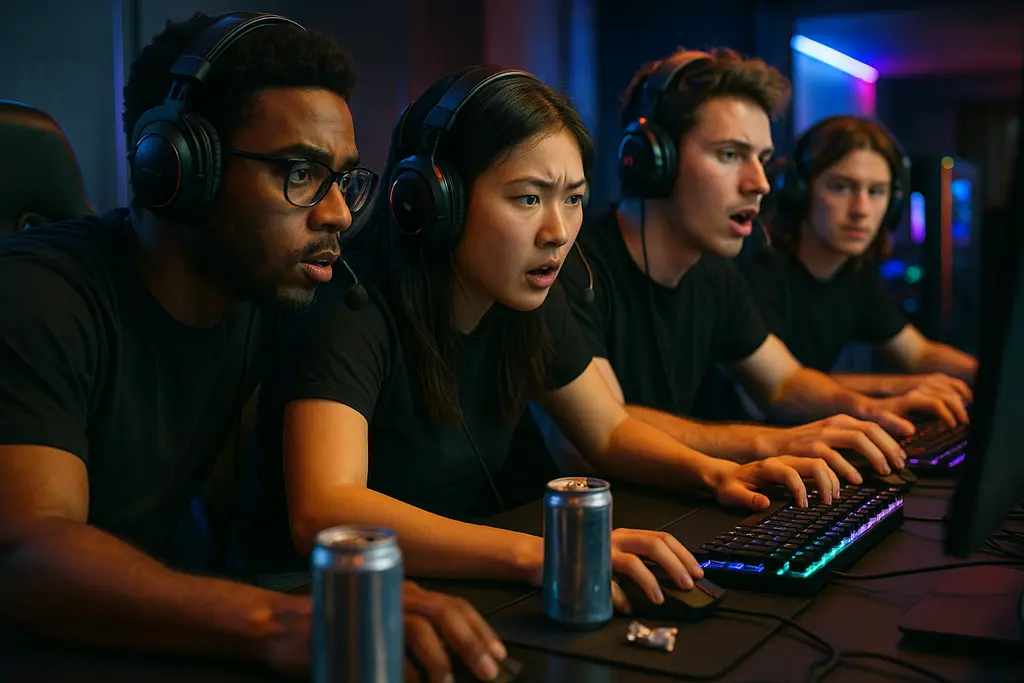
The USA Esports Role at the 2026 Esports Nations Cup starts with a basic but serious shift: the United States is being framed through national representation rather than club brands, publisher leagues, or creator-led showmatches. The inaugural Esports Nations Cup is scheduled for Riyadh, Saudi Arabia, from November 2 through November 29, 2026, with national teams competing across 16 game titles and more than 100,000 qualifier participants expected across 100 nations and territories, according to the event announcement carried by PR Newswire.
For American fans, that matters because the United States is not short on elite players, major organizations, collegiate pipelines, or creator infrastructure. The harder question is coordination. A national-team event asks whether a country with talent spread across several games, regions, leagues, and commercial systems can create a credible shared identity without pretending every title works the same way.
What The USA Esports Role Changes
USA Esports Role In Team Identity
USA Esports has announced multi-game participation in the 2026 Esports Nations Cup and describes itself as a nonprofit representing the United States while aiming to unify the American esports ecosystem and field top U.S. talent in international competition, per the organization’s official announcement. That language is worth reading carefully. It does not promise instant dominance. It points to a practical job: giving American competition a formal national-team structure in an event built around flags, not franchises.
That makes the USA Esports Role different from what fans usually track week to week. In most major games, American players compete under club identities, region labels, or mixed-nationality rosters. A national cup creates a different pressure point. Selection, practice time, eligibility communication, coaching structure, and player availability all sit under heavier public scrutiny because supporters see the team as representing the country, not only an org or sponsor.
A Nonprofit Front For A Fragmented Scene
The nonprofit angle also matters. U.S. esports has long been split across publisher-run circuits, collegiate programs, amateur ladders, endemic organizations, and content-driven communities. A national body cannot erase those divisions. What it can do is become a point of contact for a tournament that needs a recognizable American counterpart across multiple titles. That is a coordination task before it is a trophy task.
The public research available here does not confirm final U.S. rosters, selection dates, or title-by-title staff. That absence should shape expectations. Any preview naming players or declaring starting lineups would be guessing. The more grounded read is that USA Esports now has to turn broad participation into title-specific plans that can stand up to community questions.
Qualification Pressure Across Sixteen Titles
Scale Before Selection
The qualifier scale changes the tone of this event. More than 100,000 participants across 100 nations and territories suggests the Esports Nations Cup is not being built as a small invitational with national branding attached. It is being positioned as a large international qualification project. For the United States, that means the pathway into Riyadh has to be credible enough for fans from several game communities to accept the outcome.
That is easier said than done. A Counter-Strike 2 fan, a Rocket League fan, a VALORANT fan, and a chess fan may all have very different ideas of what a fair national selection process should look like. Some scenes rely heavily on established professional circuits. Some have stronger collegiate or semi-pro layers. Some titles have regional ranking systems that do not map neatly onto a national-team format. The American challenge is not just finding talent. It is explaining why the talent selected fits the format.
Why The Open Path Matters
Open or broad qualification can help with legitimacy, but it also creates friction. A country with a deep player base may have more arguments over who was left out than over who made it. That is especially true in games where U.S. players compete alongside Canadian, Latin American, European, or international teammates during the standard season. A Nations Cup cuts through those club habits and asks fans to think in national terms for a defined window.
That is where tournament operations become part of the story. Multi-title events depend on scheduling, broadcast clarity, competitive rulings, travel windows, and practice access. Readers tracking how large events are built can compare the demands here with our related breakdown of esports event production, especially because national formats add another layer of public accountability.
Title Spread And Community Expectations

PC, Mobile, Console, And Chess In One Event
The listed game pool includes major competitive titles such as Counter-Strike 2, League of Legends, VALORANT, Dota 2, Apex Legends, Rocket League, EA Sports FC, PUBG, PUBG Mobile, Mobile Legends: Bang Bang, Honor of Kings, Rainbow Six Siege, Trackmania, and Chess. Even without naming final rosters, that spread says a lot about the event’s ambition. It is not built around one audience. It is built to force national programs to deal with several esports cultures at once.
For the United States, the strongest community reaction may come from uneven expectations by title. American fans are used to judging some games through North American league results, some through global tournament peaks, and some through individual stars. A single national badge does not make those standards equal. If the U.S. performs well in one title and struggles in another, the conversation will likely split by community rather than settle into one clean national narrative.
What Fans Should Not Assume Yet
There are several things fans should not assume before official selection details are public. A strong domestic scene does not automatically mean a smooth national-team build. A player’s club success does not always translate into availability for a late-year international event. A title with clear American stars may still require role balance, coaching fit, and practice windows. Those are not minor concerns; they often decide whether a national team looks prepared or thrown together.
Community trust will be the real pressure point. American esports fans are used to debating selection in traditional sports, collegiate playoffs, and regional league systems. Esports adds publisher rules, mixed rosters, and different competitive calendars. If USA Esports communicates clearly, the national-team project gets room to breathe. If communication is thin, every roster choice risks becoming a title-by-title argument before matches begin.
USA Esports Role In Riyadh
Riyadh Window Sets The Test
The clearest expectation for the USA Esports Role is not a guaranteed medal count. It is a professional showing across a difficult multi-game schedule. Riyadh will test whether the U.S. can present organized teams, clear competitive priorities, and a national identity that makes sense to fans who usually follow club brands first. That standard is fairer than pretending all 16 titles carry the same American outlook.
The 2026 Esports Nations Cup also arrives during a period when global events are asking organizations, publishers, and national groups to cooperate more often. We have seen similar questions around partnerships after major international events, including how stakeholders plan around host cities and competitive calendars in our coverage of global esports partnerships. The Nations Cup applies that same pressure to national representation.
The Real Measure For The U.S.
The most useful fan lens is process. Did the United States create a believable route from qualification to selection? Did it respect the differences between titles? Did it give players a structure that fits serious international play? Results will still matter, but they will not be the only measure. For a first edition, credibility may be built as much through transparency and preparation as through podium finishes.
If USA Esports can give American players that structure, the 2026 event becomes more than a one-month trip to Riyadh. It becomes an early test of whether the United States can treat national esports as its own competitive category, with standards that match the scale of the event and the expectations of the communities watching from home.


