Global Esports Partnerships rarely get tested in public as sharply as they are around the Esports World Cup 2026 relocation. On May 20, 2026, the Esports Foundation confirmed that the event would move from Riyadh, Saudi Arabia, to Paris, France, due to escalating military conflict in the Middle East, as reported by HLTV on the official move. That single decision changes more than a venue address. It forces publishers, clubs, sponsors, broadcasters, agencies, and host governments to show how much stress their agreements can take before a major international event begins.
The tournament is scheduled to run from July 6 to August 23, 2026, and the Paris edition marks the first time the competition is being held outside Saudi Arabia, according to European Gaming’s report. That matters because the event was not simply postponed or reduced in public reporting available here. It was moved across regions. For esports, where partner confidence often depends on fixed travel plans, streaming windows, player visas, and publisher approvals, that is the harder version of continuity.
Why The Paris Move Matters
A Safety Decision With Commercial Consequences
The core reason for the move is security. That should not be treated as a branding footnote. Any live international tournament depends on the ability to move teams, production crews, broadcast staff, talent, and fans without putting them in an unstable situation. Once organizers judged Riyadh to be unworkable for 2026, the commercial question became whether the event could keep its place on the calendar without weakening trust among partners.
This is where Global Esports Partnerships become less abstract. A sponsor may buy visibility around a location, a broadcast partner may plan studio resources around time zones, and a publisher may coordinate competitive windows months in advance. A relocation can strain every one of those commitments. The Paris switch gives the event a path to proceed, but it also gives every partner a live case study in contingency planning.
The Calendar Stayed The Anchor
Keeping the July-to-August window is significant because esports calendars are already tight. Publishers avoid overlapping their biggest events where possible. Teams commit to bootcamps, roster travel, and content shoots. Casters and observers may be booked across several games. Even if a city changes, a stable date range helps protect the competitive structure around the event.
Still, a stable window does not erase the cost of a relocation. Paris changes travel patterns, local operations, venue planning, accommodation blocks, and likely the rhythm of on-site fan activity. The supported public facts do not name every affected contractor or partner, so the clean read is this: the move preserves the event’s public schedule, but it almost certainly forces behind-the-scenes renegotiation across many connected groups.
What Paris Means For Global Esports Partnerships
Why Global Esports Partnerships Need Firmer Risk Clauses
For Global Esports Partnerships, the main lesson is contractual rather than cosmetic. Large esports properties can no longer treat geopolitical risk as a rare edge case. A multi-title event with international clubs and publisher participation needs clear rules for relocation, cancellation, insurance, travel replacement, media inventory, and partner deliverables if a host city changes.
That may sound dry compared with bracket talk, but it affects the product fans see. If a sponsor loses agreed on-site assets, what replaces them in broadcast? If a publisher needs a different compliance process in a new country, who owns that timeline? If a club must reroute players and staff, how much support is built into the event model? Paris may run cleanly on stage, but the partnership test is whether the business layer can absorb the disruption without pushing the burden onto players and team staff.
Government And Host City Value
Paris also changes the public partnership story. Moving the event to France brings a European capital into the center of the Esports World Cup discussion. That can help the event speak to different commercial markets, especially brands that prefer European venue access or want hospitality opportunities closer to their regional offices.
There is a political layer too. The research provided for this assignment notes French government involvement, but the approved source set here only supports the move, the reason for relocation, and the scheduled Paris dates. That limit matters. Esports coverage should separate confirmed facts from broader claims about national strategy or financial returns unless those claims are tied to reliable sourcing. What can be said safely is that Paris gives the event a new host-market profile and puts government-level event hosting back into the esports conversation.
Operational Pressure On Publishers And Clubs
Publishers Need Certainty More Than Symbolism
Publishers sit in a difficult position during any relocation. They care about competitive integrity, player welfare, brand safety, broadcast quality, and calendar control. A moved event may still offer reach, but reach is not enough if tournament operations feel unstable. Publishers need to know that rulebooks, build access, media rights, and competition standards survive the move intact.
That is why the Paris shift has implications beyond 2026. If the Esports World Cup can keep publisher confidence after a forced relocation, future host-city models may become easier to sell. If partners feel rushed or under-informed, the opposite lesson takes hold. Our related Paris tournament preview follows the event from the wider schedule angle, but the partnership question is more specific: did the move protect the competitive product without turning partners into damage control teams?
Clubs Carry The Human Cost
Clubs are often discussed as brands, but a relocation lands on people first. Players may need new travel plans. Coaches and analysts may lose prep time. Media staff may need to rebuild content schedules around a different city. Family travel, bootcamp location, practice rooms, and rest days can all shift when an event changes regions.
For Global Esports Partnerships, this is a reminder that club agreements should account for human workload. A sponsor activation can be moved. A stream graphic can be rebuilt. Player burnout is harder to repair. The better partnership model is one where clubs are not just expected to adapt, but are given enough notice, logistical support, and communication to keep competition quality from dropping.
The Community Read On The Relocation
Trust Is Built Through Plain Communication
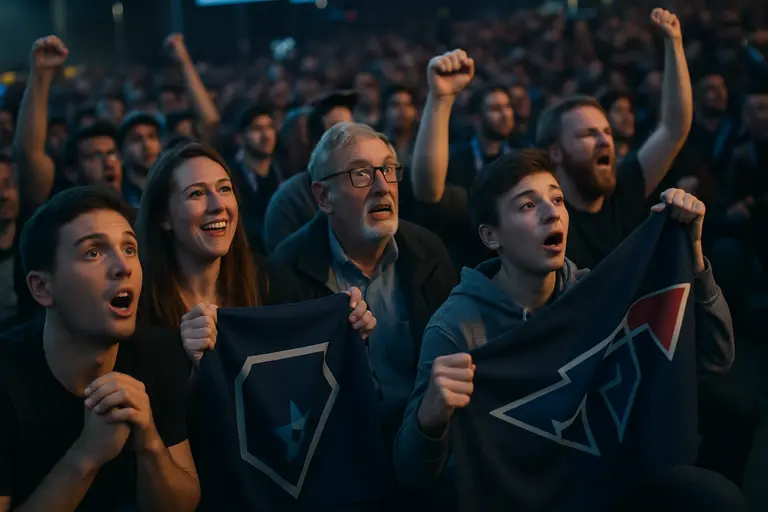
Esports fans tend to spot vague messaging quickly. If organizers frame every disruption as a win, communities push back. The stronger approach is direct: the event moved because the original host environment became unsafe, and Paris is the replacement host for the 2026 edition. That kind of clarity does not solve every concern, but it respects the audience.
Community trust also depends on how partners behave after the announcement. Brands should avoid treating the move as a simple content opportunity while teams and staff are solving real travel problems. Hardware, peripherals, and gaming lifestyle companies around esports can still take part in the conversation, and readers who follow adjacent consumer gaming coverage in the same network can find that lens at Prosettings. The better brand posture is support-first, not victory-lap messaging.
Creator Coverage Changes With The Host City
The creator layer also changes in Paris. Streamers, co-streamers, short-form editors, and on-site reporters build content around the city as much as the bracket. A European host may shift which creators can attend, which languages get stronger on-site coverage, and which fan communities feel close to the event.
That does not automatically make Paris better or worse than Riyadh for every audience. It changes who can participate easily. For some creators, Paris may lower travel friction. For others, the late adjustment may still be expensive or impractical. Partnerships built around creator reach need to account for that uneven impact rather than assuming the same activation plan will work in a new country.
Paris Relocation Sets A Partnership Test
What The Relocation Proves
The Paris move proves that large esports events need fallback plans that are real, funded, and communicated before crisis pressure peaks. Global Esports Partnerships now have a visible benchmark: if a major event can move across regions and keep its public schedule, partners will ask why future agreements do not include clearer relocation pathways from the start.
The supported facts do not confirm every commercial detail, so claims about exact partner gains or national economic returns should be treated carefully unless stronger sourcing is available. What is clear is that EWC 2026 in Paris changes the partnership conversation. The event is no longer just a test of who wins across games. It is a test of whether global esports can protect players, preserve publisher confidence, and keep commercial partners aligned when the original plan breaks.