By Taryn Caldwell | June 17, 2026
Fans tune in to watch their favorite teams lift the trophy, but they rarely see the massive operation hiding behind the main stage. Transforming a standard video game match into a stadium-filling esports spectacle requires an army of broadcast directors, network engineers, and event coordinators. A tier-one competitive gaming tournament functions exactly like a massive traditional sports broadcast, just with far more moving digital parts.
Organizers spend millions of dollars building these temporary arenas. They fly in specialized hardware, rent out massive stadiums like the Paris Expo Porte de Versailles, and set up miles of networking cables just to guarantee a zero-latency environment. To produce a professional esports broadcast guide, directors must sync live crowd reactions with digital gameplay happening at superhuman speeds. Let us look at exactly what goes into producing these massive weekend events.
The Technical Backbone of Live Arenas
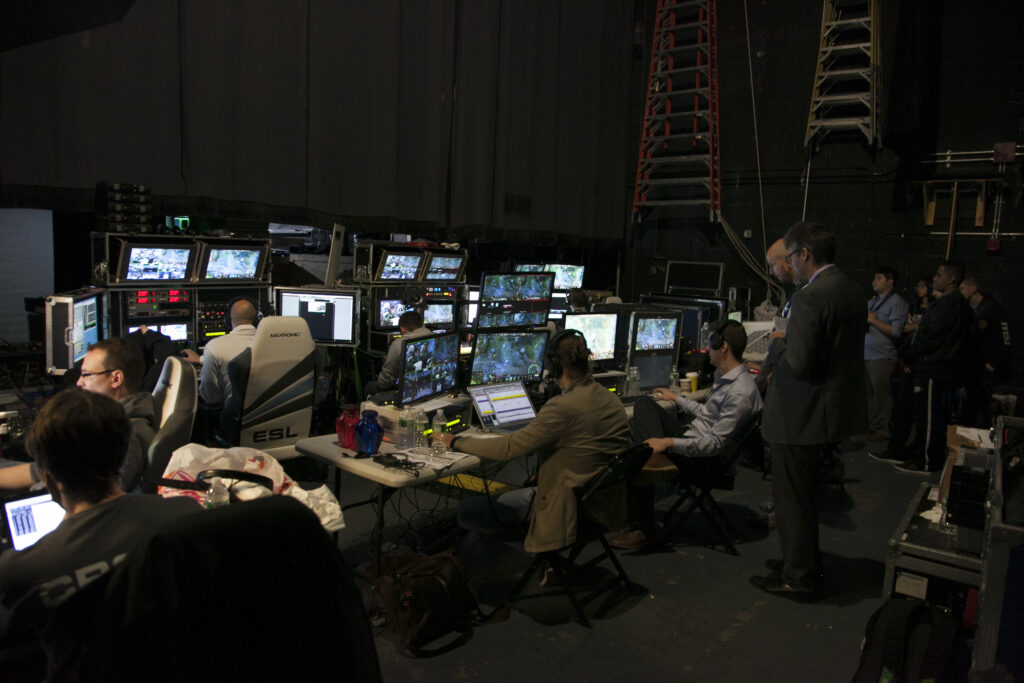
In traditional sports, a camera operator simply points a lens at a physical ball. In competitive gaming, the “ball” exists entirely inside a digital server. Event organizers hire dedicated in-game observers. These specialized professionals act as virtual camera operators. They fly through the game map using custom spectator tools, predicting exactly where the next major firefight will break out.
The production truck then takes these virtual camera feeds and mixes them with physical stage cameras. The director layers real-time statistics, player health bars, and digital replays over the live feed. All of this data must process instantly. A single second of audio delay ruins a massive play. Keeping the tournament coverage perfectly synchronized requires industrial-grade encoding hardware and a massive local area network (LAN) built entirely from scratch inside the stadium.
Scheduling the Broadcast and Managing Delay
Running a smooth schedule stands as the hardest job in tournament production. A basketball game features a strict time limit. A Best-of-3 series in Counter-Strike 2 or VALORANT can end in 45 minutes, or it can drag out into a three-hour marathon full of overtime rounds. Organizers build massive buffer windows into their daily schedules to account for these unpredictable match lengths.
When a computer crashes or a mouse breaks on stage, the entire broadcast grinds to a halt. The production crew must stall the audience during the technical pause. Desk analysts fill the dead air with statistics and storyline breakdowns. Finding reliable financial data on how the esports business operates shows that broadcasters lose thousands of dollars in ad revenue for every minute a stream stays paused. The best tournament organizers keep backup computers running constantly backstage, allowing a player to swap out a defective machine in under sixty seconds.
Prize Pools and Production Costs
The scale of the events completely dictates the financial risk. Organizers regularly spend over $2 million just to rent the venue, build the stage, and pay the production crew. This cost completely ignores the actual tournament winnings.
When you look at massive summer events, the financial stakes reach absurd levels. Dota 2 tournaments regularly feature prize pools exceeding $3 million, and mega-events distribute over $50 million across multiple different titles over a seven-week schedule. To attract the top talent, organizers must offer these massive payouts. Players fight for a share of this money, making titles like Dota 2 and Counter-Strike 2 the best esports games to start practicing right now if you want a lucrative career.
| Production Expense | Core Purpose | Typical Cost Range |
| Venue Rental | Securing a massive arena for a full week | High |
| Broadcast Hardware | Encoding PCs, video switchers, and audio mixers | High |
| Prize Pool | Payouts for the winning teams | Extreme |
| Network Infrastructure | Redundant internet lines and local servers | Medium |
| Talent Fees | Paying casters, hosts, and analysts | Medium |
Selling tickets and merchandise barely covers the core setup costs. Organizers rely heavily on massive corporate sponsorships and exclusive streaming rights deals to turn a profit. They pitch their events to major brands, promising millions of concurrent viewers online. You can track exactly which organizations sponsor these massive events by checking out the Liquipedia tournament database. The next time you watch a grand final, take a second to appreciate the sheer volume of engineering required to bring that match to your screen.