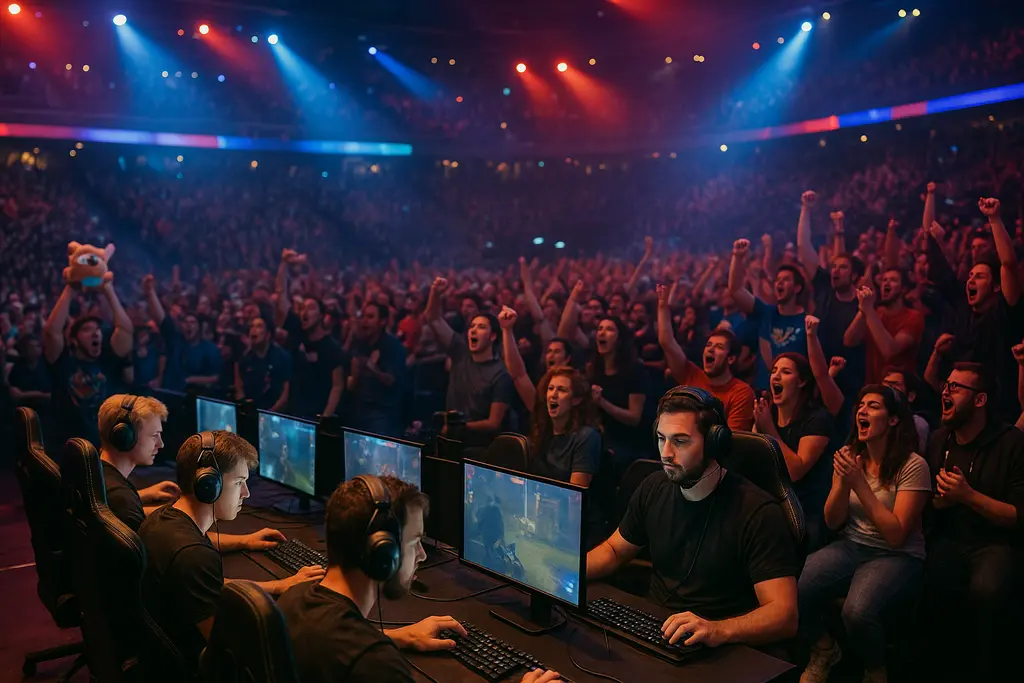
The EWC Paris Relocation is not just a venue swap. It changes how publishers, clubs, sponsors, broadcasters, and host governments judge risk around a mega-event that was originally tied to Riyadh. European Gaming reported that the 2026 event moved from Riyadh to Paris after escalating conflict in the Middle East, including drone and missile strikes near Riyadh and disrupted international air travel, according to a European Gaming report. That planning shock puts every long-term esports partnership under a sharper test: can the deal survive security pressure, calendar disruption, and community scrutiny without losing trust?
The scale makes the move harder to treat as a routine logistics issue. Le Monde reported that EWC 2026 in Paris is scheduled from July 6 to August 23, 2026, with more than 2,000 players from 84 countries competing across 24 games for a prize pool exceeding $75 million; the same report also described expected indirect economic benefits for France of about €600 million and Saudi Arabia covering organizational expenses, per Le Monde’s Paris coverage. For a tournament built around cross-title club value, national branding, and publisher cooperation, that scale turns relocation into a partnership audit.
Why EWC Paris Relocation Changes Partner Risk
Safety Replaces Certainty As The First Partner Question
For sponsors and publishers, the first concern is no longer only whether a tournament can deliver a polished show. The first concern is whether the event operator has a credible backup plan when geopolitics interferes with travel, staffing, visas, and broadcast buildout. Esports has spent years presenting itself as more flexible than traditional sports because competitions can move between venues, studios, and online environments. A summer event of this size pushes that claim into harder territory. Players still need safe travel. Teams still need scrim space. Production crews still need equipment and venue access. Fans still need clear ticketing and travel information.
That matters for commercial partners because uncertainty has a cost. If a brand commits to an international activation, the value is tied to location, audience profile, hospitality, social content, and local media attention. A move from Riyadh to Paris changes all of those pieces. It may reduce travel strain for many European fans and partners, but it also changes the promise originally sold to stakeholders. The strongest partnerships will be the ones with flexible contract terms, transparent public messaging, and enough local support to rebuild the fan experience without pretending nothing changed.
EWC Paris Relocation And The Sponsor Calendar
The EWC Paris Relocation puts sponsor timing under pressure. Campaigns around esports majors are usually planned months in advance, especially when a brand wants creator content, on-site booths, player appearances, hospitality areas, and broadcast integrations. A venue shift can force agencies to rebuild staffing, shipping, permits, media buys, and creator travel in a narrow window. That is not glamorous work, but it decides whether a partnership feels present or patched together.
For clubs, the calendar impact is just as real. Multi-title organizations rely on travel coordination across players, coaches, analysts, managers, and content staff. A location change may help some European-based teams, but it can still disrupt budgets and preparation habits. The partner lesson is clear: mega-events need contingency planning that covers more than stage design. They need scenario planning for staff, competitive practice, media days, creator obligations, and player welfare.
Paris Gives Publishers A Different Audience Test
Venue Access Changes Fan Behavior
Paris changes the event’s audience profile. The research points to Paris being chosen in part because of infrastructure, international access, and an established esports base. Even without overstating the benefit, the city gives the event a different relationship with European fans. A spectator who can reach the venue by rail or short-haul flight interacts with the tournament differently than a fan watching only through broadcast. That can help publishers test live demand across several game communities in one concentrated period.
For publishers, the question is not just crowd size. It is whether the live audience reflects the player communities they want to keep engaged between official seasons. A fighting game audience, a tactical shooter audience, and a mobile esports audience do not behave the same way. Their tolerance for sponsorship, stage pacing, side content, and ticket pricing can vary widely. Paris gives partners a chance to learn from that mix, but it also makes weak community handling more visible.
The Broadcast Pitch Still Has To Prove Itself
A large live event can still miss the mark if the broadcast treats every title the same. Competitive gaming audiences are fluent in their own games and unforgiving when coverage feels generic. Publishers will be watching whether the event gives each scene enough context, talent, and schedule space. Partners will be watching whether viewers stay engaged across games they may not normally follow.
This is where esports partnerships differ from conventional sports sponsorship. A brand cannot simply buy presence beside a trophy and assume the audience cares. It has to fit the community, the broadcast rhythm, and the creator conversations around the match. For readers tracking how venue moves affect sponsor planning, our related analysis on global esports partnerships follows the same pressure point from the commercial side.
The France Saudi Partnership Sits Under Scrutiny
Economic Upside Is Not The Whole Story
The France-Saudi esports connection gives the event political weight beyond the match schedule. Le Monde’s reporting frames the Paris event as part of a controversial partnership, and that matters because esports communities do not view funding sources as background noise anymore. The size of the prize pool, the expected economic benefit for France, and Saudi Arabia’s continued organizational role all shape how fans, teams, and publishers talk about the event.
There is a practical side to that scrutiny. If public funding, national strategy, and international soft power sit close to the event, partners need a communications plan that does not rely on vague celebration. Fans may still watch the matches. Players may still compete because the career stakes are real. Sponsors may still see value. But trust depends on clarity: who is paying, who is hosting, what changed, and how player and fan safety were prioritized during the relocation.
Community Trust Becomes A Deliverable
The EWC Paris Relocation also tests how much community trust event owners have built. Esports audiences are not a single block, and reactions to the move will differ by region, game, and personal politics. Some fans will focus on access to a European venue. Others will focus on Saudi involvement. Some will simply want stable schedules and strong competition. None of those reactions cancel out the others.
That split creates a harder job for teams and publishers. If they treat the relocation as only a business win, they risk sounding disconnected from community concerns. If they treat it only as a crisis, they ignore the players and staff who still have to perform. The best public posture is direct and specific: explain what changed, acknowledge why it changed, and avoid pretending that a mega-event can be separated from the politics and money behind it.
EWC Paris Relocation Sets A New Partnership Standard
The EWC Paris Relocation may become a reference point for how global esports events are structured. Not because every future event will move cities, but because every future partner will ask sharper questions after seeing a major tournament shift from Riyadh to Paris. Venue clauses, safety plans, local operating partners, broadcast redundancy, and community messaging will all receive more attention in negotiations.
The event also gives publishers a live case study in multi-title cooperation. Twenty-four games under one tournament banner means very different competitive cultures sharing the same commercial frame. That can create reach, but it can also flatten identity if handled poorly. The partners that gain the most will be those that respect each game’s audience rather than treating the World Cup format as a single interchangeable product.
If the EWC Paris Relocation proves workable on the ground, it strengthens the argument that the biggest esports properties can rotate across major host cities. If operational strain or community backlash dominates the conversation, partners will be more cautious about tying their brands to events shaped by geopolitical risk. Either way, Paris is now more than a replacement host. It is the stress test for the next phase of international esports dealmaking.