Twitch Viewer Habits in the 2026 State of Gaming report gave creators and esports teams a sharper read on where attention actually went between January 1 and September 1, 2026. Twitch said viewers watched 8.6 billion hours of gaming content on the platform during that period, with the data compared year-on-year against the same window in 2025, according to the official Twitch State of Gaming 2026 report. That is not a small sampling problem. It is a large enough signal to pressure how creators schedule, how publishers promote, and how esports-adjacent brands decide which communities deserve time and budget.
The report did not present a single clean story where one genre took over and everyone else chased it. The stronger read is more practical: gaming viewership remained concentrated around huge competitive and social titles, but growth pockets came from formats that reward community rhythm rather than only leaderboard prestige. For a streamer trying to build a career, that distinction matters. A game can be massive and still be difficult to enter. A genre can be smaller and still offer clearer room for identity, recurring formats, and loyal chat behavior.
What Twitch Viewer Habits Changed In 2026
Top Games Still Anchored The Platform
The five most-watched games in Twitch’s report were League of Legends, Counter-Strike, GTA V, VALORANT, and World of Warcraft. Together, those top five generated nearly 1.7 billion hours watched from January 1 through September 1, 2026. That list says a lot about the split personality of Twitch gaming: esports staples remained huge, but open-ended roleplay and long-running MMO culture still held serious gravity.
For esports organizations, that mix should stop any lazy assumption that competitive titles are the only streaming pipeline worth studying. League of Legends, Counter-Strike, and VALORANT still carry event calendars, watch parties, co-streaming habits, and pro-player visibility. GTA V and World of Warcraft operate differently. They are driven more by personality loops, social worlds, challenge runs, guild culture, and creator-led storylines. The practical lesson is that Twitch gaming is not just match coverage. It is match coverage sitting beside persistent communities that behave like serialized entertainment.
Twitch Viewer Habits By Genre
Genre movement was one of the more useful parts of the report. Sandbox led with 831 million hours watched, while indie-tagged content was reported as the fastest-growing area, up 51% year over year and reaching more than 348 million hours watched, according to Streamer Guide’s breakdown. Horror also had real weight, with 287 million hours across the genre and 93 million hours for the broader Horror tag, up 6% year-on-year.
For career planning, Twitch Viewer Habits here point toward repeatable community formats. Sandbox streams tend to support long sessions, viewer participation, collaborative servers, and creator-made goals. Indie growth suggests that discovery still has value on Twitch, especially when a streamer can turn a smaller title into a recurring social space rather than a one-off variety slot. Horror’s continued pull makes sense for live platforms because chat reaction is part of the product. A scare, a failed puzzle, or a streamer losing composure lands differently when thousands of viewers can react at once.
Drops, Genres, And The New Retention Math
Drops Were More Than A Giveaway Tool
Twitch’s report said streams tagged with DropsEnabled reached 1.6 billion hours watched, up 46% year over year. Twitch also reported more than 7,500 Drops campaigns, up 20%, and 40 million users claiming Drops, up 15%. That is the kind of platform mechanic publishers and esports teams cannot treat as decoration. Drops do not make weak programming strong on their own, but they can change the first hour of viewer behavior. They give casual viewers a reason to sample a stream and give regular viewers a reason to stay through slower sections.
The risk is that Drops can distort what success looks like. A channel can post stronger hours without building the kind of viewer relationship that survives after the reward window closes. For creators, the better question is not simply whether Drops lift viewership. It is whether those viewers follow, return, join Discord, watch non-Drops segments, or show up for tournament coverage without an item attached. Twitch Viewer Habits around Drops should push teams to track retention after the campaign, not just the spike during it.
Indie And Horror Growth Reward Clear Identity
The indie and horror numbers matter because both categories favor creator framing. In a major esport, the game supplies much of the structure: ranked grind, scrims, patch reaction, co-streams, and official matches. In indie or horror, the creator often supplies the reason to care. That might mean a weekly discovery slot, a speedrun challenge, a chat-voted horror night, or a long-form playthrough where the audience knows the creator’s taste well enough to trust the pick.
This is where smaller and mid-sized streamers can read the report without getting trapped by top-five game gravity. Competing directly inside the biggest categories can still work, but it demands a reason for viewers to choose one channel over hundreds of similar ones. Genre growth outside the biggest titles shows that identity, pacing, and audience ritual can still carve space. That connects with broader MostPlays coverage of streaming metrics and esports audiences, where platform numbers have increasingly rewarded creators who understand viewing context, not just raw hours.
Regional Viewing Is Not A Side Note
Local Favorites Changed The Map
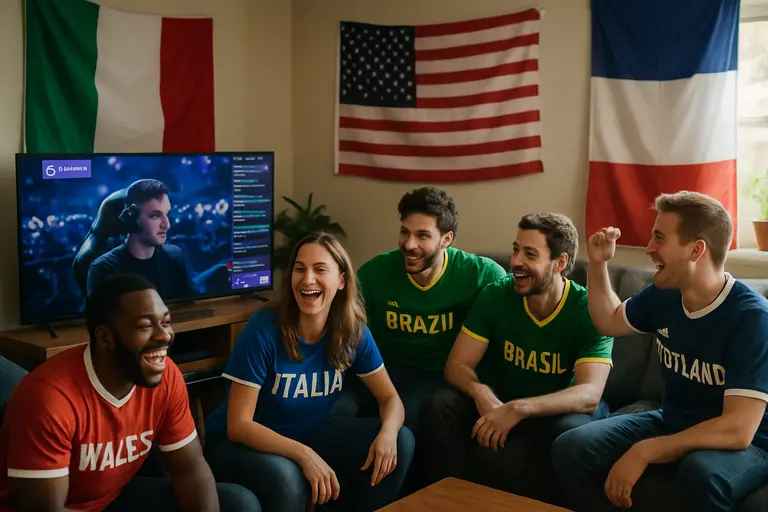
The report’s regional details were a useful check against treating Twitch as one global audience with one taste profile. League of Legends ranked as the most-watched game in the US, UK, Spain, France, Mexico, Brazil, Taiwan and Hong Kong, and Australia and New Zealand. DACH differed, with World of Warcraft leading across Germany, Austria, and Switzerland. Japan differed too, with GTA V at number one.
For esports teams, this means a creator plan copied from one market can miss the point in another. A League of Legends co-streaming push might make sense across several regions, but a World of Warcraft creator in DACH or a GTA V personality in Japan may sit closer to local viewing habits than a team account trying to force the same global format everywhere. Language, schedule, game culture, and creator trust all shape whether a stream feels native to a market or imported into it.
Creator Events Became Regional Markers
The report also broke out creator-led formats by region. In Brazil, cellbit staged an escape-room livestream inside an old VHS store. In Mexico, aldo_geo ran a Minecraft event called Geoware World in August 2026. In Taiwan and APAC, Tsukilin broke the Twitch Subathon record during a subathon, ranking number five globally and number one in APAC in the report’s framing. Those examples are not interchangeable content types. They show how regional creators can build moments that travel through clips, community posts, and word of mouth without needing to mimic a standard tournament broadcast.
That should interest esports organizations because the same audience that watches elite competition may also spend hours inside creator-led events with lower competitive stakes. The production lesson is not to abandon competition. It is to respect the community behaviors around competition: pre-show hangouts, creator lobbies, local-language analysis, aftershows, and side events that let fans feel present even when they are not watching an official match. For readers who also track the broader tech and platform side of gaming media, checking out Rave Tech offers insights from a related site in the same network.
What The 2026 State Of Gaming Report Means For Creators
The clearest career signal from the 2026 report is that scale and fit are different things. The biggest categories still matter because they provide massive search demand, shared culture, and frequent competitive moments. Yet the growth signals around indie, horror, creatures-and-companions games, and Drops-enabled campaigns show that creators need more than category selection. They need a reason for viewers to build a habit around them.
Twitch Viewer Habits also suggest that publishers will keep pairing live service beats with creator incentives. Drops campaigns grew in both campaign count and claimed users, which gives publishers a measurable reason to keep using Twitch as a promotion channel. Creators should be careful, though. A channel built only around reward windows can become dependent on external campaigns. A healthier plan uses those campaigns to introduce viewers to a schedule that already has structure: ranked nights, community lobbies, review sessions, watch parties, or genre-specific programming.
For esports-adjacent careers, the report’s value is less about declaring winners and more about narrowing the brief. Pro players need to understand that off-match content can live beside competitive practice if the format is clear. Casters and analysts can use regional game preferences to shape shows for specific audiences instead of speaking to a vague global crowd. Organizations can study creator-led regional events and ask whether their own broadcasts give fans enough reasons to stay between matches.
The 2026 State of Gaming report made one thing hard to ignore: Twitch is still shaped by giant games, but viewer loyalty is built in smaller behavioral loops. The creators who read those loops well are not just chasing the largest category. They are building repeatable reasons for people to return.