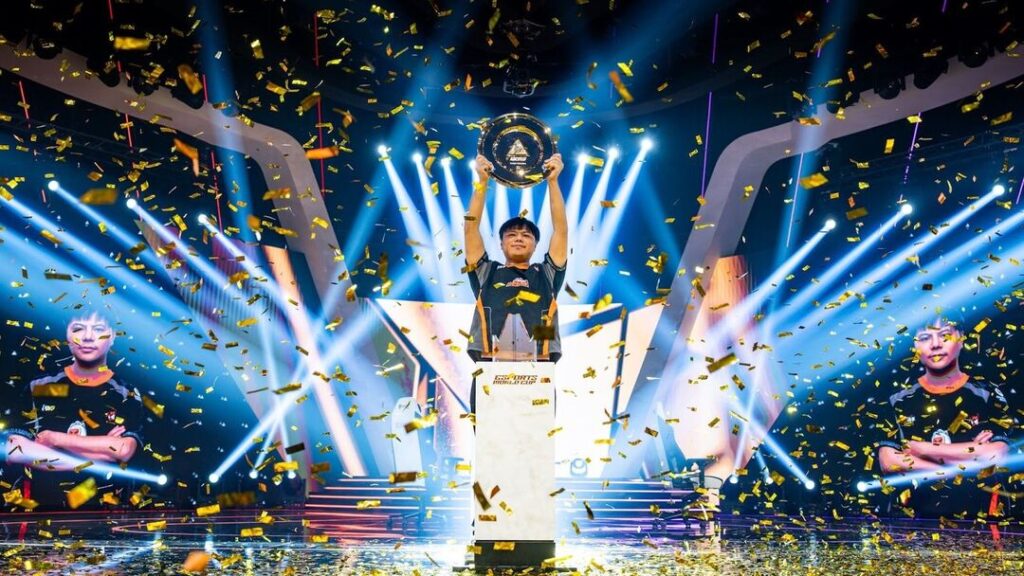
The esports industry has evolved from a niche subculture of competitive gaming into a global entertainment powerhouse. Valued at over $1.8 billion in 2026 and commanding an audience of more than 500 million viewers worldwide, esports now rivals traditional sports leagues in cultural influence, brand partnerships, and media coverage. What was once a handful of players competing in cramped LAN cafés has become a sprawling ecosystem of professional organizations, broadcast networks, hardware manufacturers, and fan communities that span every continent.
This pillar page serves as your comprehensive hub for understanding the esports industry — from the organizations that dominate competition to the business models that fuel growth, the technology trends reshaping the landscape, and the regional markets driving expansion. Whether you are an investor evaluating opportunities, a professional exploring a career in esports, or a fan seeking deeper understanding, this guide covers every major dimension of the industry as it stands today.
Table of Contents
Major Esports Organizations
The backbone of competitive esports is its professional organizations. These entities recruit top-tier talent, secure sponsorship deals worth tens of millions of dollars, and build global fanbases that rival those of traditional sports franchises. Understanding who they are — and how they operate — is essential to understanding the esports industry itself.
The Global Powerhouses
T1, backed by South Korean telecom giant SK Telecom and Comcast Spectacor, remains one of the most decorated organizations in esports history. With its roots in League of Legends — where legendary mid-laner Faker has won four World Championship titles — T1 has expanded into Valorant, Dota 2, and other titles while maintaining a fanbase of over 30 million across social platforms.
Team Liquid operates as one of the most diversified organizations in competitive gaming. With rosters spanning League of Legends, Counter-Strike 2, Dota 2, Valorant, and numerous fighting game titles, Liquid has built a reputation for consistent performance across multiple disciplines. Their partnership with Alienware and other blue-chip sponsors demonstrates the mainstream appeal of top esports brands.
FaZe Clan represents a unique hybrid model — part esports organization, part lifestyle and entertainment brand. FaZe has leveraged its massive social media presence (over 90 million followers across platforms) to attract partnerships with brands like Nike, Beats by Dre, and G Fuel. Their approach has blurred the line between competitive gaming and pop culture influence.
Sentinels rose to prominence through early dominance in Valorant, particularly behind the explosive popularity of players like TenZ. The organization has demonstrated how a focused investment in a single emerging title can accelerate brand growth and audience acquisition, later expanding into other competitive games.
Other major organizations shaping the landscape include Cloud9, Gen.G, Fnatic, NAVI (Natus Vincere), 100 Thieves, and DRX. Each brings a distinct regional identity, competitive philosophy, and business model to the table.
Key stat: The top 20 esports organizations collectively generated more than $1.2 billion in revenue in 2025, with the most valuable franchises appraised at over $400 million each.
For an in-depth analysis of these organizations — their histories, championship records, player development pipelines, and business strategies — read our detailed breakdown: Powerhouses of Esports: Major Organizations & Championship Teams.
The Viewership Explosion
If revenue is the engine of the esports industry, viewership is its fuel. The audience for competitive gaming has grown at a pace that has stunned even the most optimistic projections, fundamentally reshaping how brands, broadcasters, and investors view the space.
The Numbers Behind the Boom
Global esports viewership crossed the 500 million mark in 2025, with projections for 2026 pushing toward 580 million unique viewers. This audience is split between two key segments:
- Esports enthusiasts (regular viewers who watch at least once per month): approximately 285 million globally
- Occasional viewers (who tune in for major events like Worlds or The International): approximately 295 million
To put this in perspective, the 2025 League of Legends World Championship drew a peak concurrent viewership of over 6.4 million on English-language streams alone, with Chinese platforms contributing an estimated 50 million additional concurrent viewers. The Valorant Champions Tour Grand Finals attracted 3.8 million peak concurrent viewers in 2025 — a 40% increase from the previous year.
Platform Dynamics
The streaming landscape continues to evolve. Twitch remains the dominant platform in Western markets with over 31 million daily active users, but YouTube Gaming has closed the gap significantly, particularly for long-form tournament broadcasts and VOD content. In Asia, platforms like Bilibili, AfreecaTV, and Huya command massive audiences that often surpass Western platforms in raw numbers.
A growing trend is the shift toward co-streaming — where popular content creators rebroadcast official tournament feeds with their own commentary. This model has proven effective at reaching younger demographics who prefer the personality-driven style of individual streamers over traditional broadcast commentary.
Demographics: Young, Global, Engaged
The esports audience skews younger than virtually any other major entertainment category. Approximately 73% of esports viewers fall between the ages of 16 and 34, making this one of the most coveted demographics for advertisers. Gender diversity has improved steadily, with female viewership growing from 22% in 2020 to an estimated 35% in 2026, driven by inclusive community initiatives and the growth of mobile esports.
Explore the full story behind these numbers — the platforms, the demographics, and the cultural shifts driving this audience growth — in our dedicated analysis: The Rise and Expansion of Esports Viewership.
Emerging Trends Shaping Esports
The esports industry in 2026 is not standing still. Several technological and cultural shifts are actively reshaping how games are played, watched, and monetized. Staying ahead of these trends is essential for anyone invested in the space — financially or otherwise.
AI-Powered Coaching and Analytics
Artificial intelligence has moved from a novelty to a core component of professional esports training. Organizations like T1 and Gen.G employ dedicated AI teams that analyze thousands of hours of match footage, identify opponent tendencies, and generate strategic recommendations. AI coaching tools are now available to amateur players as well, with platforms offering real-time feedback on decision-making, positioning, and resource management during ranked play.
The Mobile Esports Surge
Mobile gaming accounts for over 50% of global gaming revenue, and competitive mobile titles are finally receiving the infrastructure and investment they deserve. Games like Honor of Kings (Arena of Valor), PUBG Mobile, and Mobile Legends: Bang Bang command massive competitive scenes, particularly in Southeast Asia, India, and Latin America. Prize pools for top mobile tournaments now rival those of PC-based competitions, and dedicated mobile esports leagues are proliferating across emerging markets.
VR and Immersive Competition
Virtual reality esports remains in its early stages, but the trajectory is clear. Titles designed specifically for competitive VR play are attracting dedicated communities, and hardware improvements — lighter headsets, better motion tracking, reduced latency — are removing barriers to adoption. Several major tournament organizers have begun incorporating VR exhibition matches into their event programming, testing audience appetite for immersive competitive formats.
Blockchain and Digital Ownership
While the initial hype around blockchain gaming has moderated, practical applications are emerging. Tournament platforms are exploring blockchain-based verification for match results and player credentials, while some organizations are experimenting with tokenized fan engagement models that offer governance rights and exclusive access.
For the complete picture of the ten most impactful trends reshaping competitive gaming — including data on adoption rates, investment flows, and expert predictions — see our full report: The Future of Esports: 10 Emerging Trends Shaping Competitive Gaming.
The Business of Tournaments
Major esports tournaments are among the most complex live entertainment productions in the world. Behind every broadcast — every instant replay, every crowd reaction shot, every player cam — is a massive logistical operation that rivals the staging of professional sports championships.
How Tournaments Generate Revenue
The economics of esports tournaments rest on several interconnected revenue streams:
- Sponsorship and naming rights: Title sponsors for tier-one events typically pay between $2 million and $15 million per tournament cycle, depending on viewership projections and geographic reach.
- Media rights: Broadcast deals with platforms like YouTube, Twitch, and regional television networks contribute significantly. Riot Games reportedly generates over $100 million annually from media rights for League of Legends esports alone.
- Ticket sales: Major finals events regularly sell out arenas with capacities between 15,000 and 70,000. The 2025 League of Legends Worlds finals in London sold out its 20,000-seat venue in under 15 minutes.
- In-game item sales: Crowdfunding prize pools through cosmetic item sales (pioneered by Dota 2 and its Compendium system) remains highly effective. Valorant Champions bundles and League of Legends Worlds skins contribute millions directly to prize pools and event budgets.
- Merchandise: On-site and online merchandise sales for major events generate between $1 million and $5 million per tournament.
The Logistics Behind the Spectacle
Producing a major esports tournament requires coordination across dozens of specialized teams: stage designers, network engineers (who must guarantee sub-millisecond latency for competitive integrity), broadcast crews (often numbering over 200 people), security teams, catering, travel logistics for international player pools, and compliance officers managing visa requirements across multiple jurisdictions.
The average production budget for a tier-one esports championship in 2026 ranges from $5 million to $20 million, depending on the game, the venue, and the scale of the broadcast operation. For those interested in the operational realities of competitive gaming events, the career landscape offers diverse opportunities — from event management to broadcast production. Learn more about pathways into the industry in our guide to esports careers.
Discover what goes into these massive productions — from the months of planning to the split-second decisions made during live broadcasts — in our behind-the-scenes exploration: Behind the Scenes of Major Esports Tournaments.
Esports and the Olympics
The relationship between esports and the Olympic movement has been one of the most debated topics in competitive gaming for over a decade. In 2026, that relationship is finally taking concrete shape — and the implications for the esports industry are profound.
The Push for Olympic Recognition
The International Olympic Committee (IOC) has moved from cautious skepticism to active engagement with esports. The formation of the Olympic Esports Committee and the staging of dedicated Olympic Esports Week events have signaled a genuine institutional interest in integrating competitive gaming into the Olympic framework.
Key milestones include:
- The 2023 Olympic Esports Series in Singapore, which featured competitions in virtual cycling, sailing, baseball, archery, and motorsport
- The IOC announcing plans for a dedicated Olympic Esports Games, with Saudi Arabia hosting the inaugural edition
- Multiple National Olympic Committees formally recognizing esports federations within their jurisdictions
The Milano Cortina 2026 Connection
The 2026 Winter Olympics in Milano Cortina represent another significant moment for the intersection of traditional sports and competitive gaming culture. While esports will not feature as an official medal sport, the cultural programming surrounding the Games includes significant gaming and technology showcases. The growing overlap between sports fans and esports viewers — particularly among younger demographics — is creating cross-promotional opportunities that both the IOC and game publishers are eager to explore.
The drama, storylines, and cultural impact of the 2026 Winter Games are already shaping conversations about how competitive events — whether on ice or on screen — capture global attention. For more on the Olympic drama unfolding in Italy, read: The Golden Roar: Olympic Drama and the 2026 Winter Games.
Gaming Hardware as an Industry Driver
The esports industry does not exist in a vacuum. It is deeply intertwined with the broader gaming hardware ecosystem — the consoles, PCs, peripherals, and networking infrastructure that make competitive play possible. The relationship is symbiotic: esports drives demand for high-performance hardware, and hardware innovation enables new competitive possibilities.
The Console and PC Ecosystem
The gaming hardware market is projected to exceed $200 billion in 2026, encompassing consoles, gaming PCs, peripherals (monitors, mice, keyboards, headsets), and streaming equipment. Esports serves as a powerful marketing engine for hardware manufacturers — when a professional player uses a specific monitor or mouse on stage in front of millions of viewers, the sales impact is measurable and immediate.
Major hardware partnerships in esports include:
- Logitech G sponsoring dozens of professional teams and events worldwide
- ASUS ROG providing tournament-grade monitors and PCs for tier-one competitions
- HyperX (Kingston Technology) maintaining one of the largest peripheral sponsorship portfolios in esports
- Secretlab becoming the official chair partner for multiple leagues and organizations
Console Gaming and Esports Crossover
While PC gaming dominates the competitive landscape for titles like Counter-Strike 2, League of Legends, and Dota 2, console gaming plays a significant role in the broader esports ecosystem. Fighting game communities (Street Fighter 6, Tekken 8) remain predominantly console-based, and console-first titles like Call of Duty and Halo maintain dedicated competitive circuits. The success of platforms like the Nintendo Switch — which became a cultural phenomenon — illustrates how console innovation drives gaming culture at every level. Learn how that particular platform reshaped the industry: How the Nintendo Switch Became the Most Successful Console in Nintendo History.
Revenue Streams in the Esports Economy
Understanding how money flows through the esports ecosystem is critical for anyone analyzing the industry. The revenue model has matured significantly over the past five years, diversifying beyond its early dependence on sponsorships into a multi-channel economy.
Sponsorships and Brand Partnerships
Sponsorship remains the single largest revenue category, accounting for approximately 58% of total esports revenue in 2025. However, the nature of these partnerships has evolved. Early esports sponsorships were dominated by endemic brands — gaming hardware companies, energy drinks, and snack brands. Today, the sponsor mix includes:
- Automotive: BMW, Mercedes-Benz, Honda, and Kia all maintain significant esports sponsorship portfolios
- Luxury fashion: Louis Vuitton (League of Legends Worlds trophy case), Gucci (partnerships with 100 Thieves), and Puma (Cloud9 apparel)
- Financial services: Mastercard (League of Legends global partner), State Farm (LCS), and various cryptocurrency exchanges
- Telecommunications: T-Mobile, SK Telecom, and Airtel have invested heavily in esports activations
Media Rights and Broadcast Deals
Media rights represent the fastest-growing revenue segment. As traditional broadcasters recognize the value of the esports audience — particularly its younger demographic profile — competition for exclusive broadcast rights has intensified. In 2025, several major broadcast deals were signed:
- YouTube secured exclusive English-language rights for select Activision Blizzard titles
- Twitch renewed multi-year partnerships with Riot Games and ESL
- Regional television networks in South Korea, Brazil, and parts of Europe integrated esports programming into prime-time schedules
Merchandise and Consumer Products
Team merchandise — jerseys, hoodies, accessories, and collectibles — generates meaningful revenue, particularly for organizations with strong brand identities. The merchandise model has shifted toward limited-edition drops (borrowing from streetwear culture) rather than traditional always-available retail. Organizations like 100 Thieves and FaZe Clan have built merchandise operations that function as standalone fashion businesses.
In-Game Item Revenue Sharing
Publisher revenue-sharing models have become an important income stream for organizations and leagues. When fans purchase team-branded in-game items (skins, banners, sprays), a percentage of the sale goes directly to the relevant organization or league. This model, pioneered in Dota 2 and refined across Valorant, League of Legends, and other titles, generates hundreds of millions of dollars annually across the industry.
2026 Revenue Breakdown (estimated): Sponsorships: $1.05B | Media Rights: $320M | Merchandise & Tickets: $190M | Publisher Fees & Revenue Sharing: $150M | In-Game Items: $130M | Other: $55M
Regional Markets: A Global Breakdown
The esports industry is truly global, but regional dynamics vary dramatically in terms of dominant titles, audience size, infrastructure maturity, and revenue generation. Understanding these differences is essential for a complete picture of the industry.
Asia-Pacific: The Epicenter
Asia-Pacific remains the largest esports market by every metric. China alone accounts for approximately 33% of global esports revenue, driven by massive audiences for League of Legends, Honor of Kings, and Peacekeeper Elite (PUBG Mobile China). The country boasts over 170 million esports enthusiasts and a deeply integrated ecosystem that includes government-supported esports parks, university degree programs, and dedicated television channels.
South Korea remains the gold standard for esports infrastructure. The country pioneered professional gaming leagues in the early 2000s and continues to produce disproportionate numbers of world-class players across multiple titles. Japan has emerged as a rapidly growing market, particularly for Valorant and fighting games, while Southeast Asia — led by the Philippines, Indonesia, and Thailand — is the fastest-growing region for mobile esports.
North America: Commercial Powerhouse
North America generates the second-highest esports revenue globally, driven by mature sponsorship markets, high-value media rights deals, and strong consumer spending. The United States hosts many of the industry's largest organizations (Cloud9, Sentinels, 100 Thieves, FaZe Clan) and serves as the primary market for English-language esports content. Canada has produced numerous world-class players and hosts a growing number of events.
Europe: Diverse and Fragmented
Europe presents a complex landscape of nationally distinct esports cultures. Northern Europe (particularly Sweden, Denmark, and Finland) has a long history of producing top Counter-Strike and League of Legends talent. Eastern Europe (Ukraine, Russia, Poland) contributes significantly to Dota 2 and Counter-Strike competitive scenes. France, Germany, and Spain have the largest esports audiences in Western Europe, supported by growing broadcast partnerships and government recognition programs.
Latin America: The Growth Frontier
Brazil stands as the dominant esports market in the region, with one of the most passionate competitive gaming fanbases in the world. LOUD, the Brazilian esports organization, became a global sensation after winning Valorant Champions 2022, galvanizing a fanbase that rivals traditional football clubs in intensity. Mexico, Argentina, and Colombia round out the region with growing competitive scenes focused on Free Fire, League of Legends, and Valorant.
Middle East and Africa: Emerging Opportunities
The Middle East, led by Saudi Arabia and the UAE, has become one of the most aggressive investors in esports infrastructure globally. Saudi Arabia's Savvy Games Group, backed by the Public Investment Fund, has committed over $38 billion to gaming investments. The region is positioning itself as a future hub for international esports events. Africa remains the least developed major market, but mobile gaming penetration is creating new pathways for competitive gaming growth, particularly in South Africa, Egypt, and Nigeria.
Frequently Asked Questions About the Esports Industry
How big is the esports industry in 2026?
The global esports industry is valued at approximately $1.8 billion to $1.9 billion in 2026, with projections to surpass $2.5 billion by 2028. This valuation includes sponsorship revenue, media rights, merchandise, ticket sales, publisher fees, and in-game item revenue sharing. The broader gaming industry (of which esports is a subset) exceeds $200 billion.
What are the most popular esports games in 2026?
The most popular competitive titles by viewership and prize pool in 2026 include League of Legends, Valorant, Counter-Strike 2, Dota 2, Honor of Kings, PUBG Mobile, Fortnite, Street Fighter 6, and Tekken 8. Newer titles like Marvel Rivals and Deadlock are building competitive scenes rapidly.
How do esports players make money?
Professional esports players earn income through several channels: base salary (ranging from $50,000 to over $1 million annually for top players), tournament prize winnings, streaming revenue (subscriptions, donations, ads on platforms like Twitch and YouTube), sponsorship and endorsement deals, and revenue sharing from in-game item sales. Top-tier players in popular titles can earn $2 million or more annually from combined sources. For more on career paths in the industry, explore opportunities in esports careers.
Is esports in the Olympics?
Esports is not yet an official Olympic medal sport, but the International Olympic Committee has taken significant steps toward integration. The IOC has organized Olympic Esports Series events and announced plans for a dedicated Olympic Esports Games. The conversation around esports at the 2026 Winter Olympics in Milano Cortina continues to highlight the growing intersection of traditional and digital competition.
What is the difference between esports and regular gaming?
Esports refers specifically to organized, competitive gaming at a professional or semi-professional level — with structured leagues, tournaments, teams, and prize pools. Regular gaming encompasses all forms of video game play, including casual, single-player, and recreational multiplayer. The distinction is analogous to the difference between recreational basketball and the NBA: the core activity is the same, but the level of organization, investment, and competition is fundamentally different.
Which region dominates esports?
The Asia-Pacific region, led by China and South Korea, dominates esports by audience size, player count, and competitive results. China alone accounts for roughly one-third of global esports revenue and viewership. However, North America leads in per-viewer revenue generation due to higher sponsorship values and consumer spending, while Europe produces world-class talent across multiple titles.
Conclusion: Where the Esports Industry Goes From Here
The esports industry in 2026 stands at an inflection point. The fundamentals are strong: a massive and growing global audience, diversifying revenue streams, increasing mainstream recognition (including from the Olympic movement), and technological tailwinds from AI, mobile gaming, and immersive platforms. The major organizations that have survived the industry correction of 2023-2024 are leaner, more sustainable, and better positioned for long-term growth.
Yet challenges remain. Player burnout and mental health continue to demand better support systems. The reliance on a handful of game publishers for competitive ecosystems creates structural risks. Regional disparities in infrastructure and investment mean that the industry's global potential remains partially untapped.
What is clear is that competitive gaming is no longer a question of if but how — how large it will grow, how quickly it will mature, and how it will integrate with the broader entertainment and sports landscape. The emerging trends in technology and culture suggest that the most transformative chapters of the esports story are still being written.
For those looking to stay informed, we will continue updating this hub as the industry evolves. Explore our detailed coverage of viewership trends, tournament operations, and the career opportunities that this industry creates. The esports industry is not just growing — it is maturing into one of the defining entertainment categories of the 21st century.