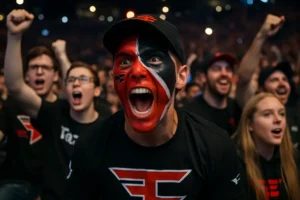
FaZe R6 viewership after the Esports World Cup 2026 final tells a cleaner story when the win and the audience data are read together. On August 15, 2026, FaZe Clan defeated FURIA Esports 3-1 in the Rainbow Six Siege Grand Final in Paris, becoming the first team to complete the Triple Crown by winning the Six Invitational, a Major, and the Esports World Cup, according to the official EWC report. That achievement was historic in competitive terms, but the viewership pattern around it was not a simple victory lap.
The audience picture was split. The Rainbow Six Siege event at EWC 2026 produced more than 3.7 million hours watched, a series record for the event, while the Grand Final between FaZe and FURIA peaked at 99,200 concurrent viewers, down 60.1 percent from the 2025 edition. FaZe also earned $750,000 from the $2,000,000 prize pool and collected 1,000 Club Championship points, based on the ESCharts recap. Those figures show why tournament coverage has to separate prestige, peak reach, and sustained attention.
FaZe R6 Viewership Was Split Between Prestige And Pattern
FaZe R6 Viewership Did Not Move As One Number
The easiest mistake after a championship run is treating audience response as a single scoreboard. FaZe won the trophy, completed a rare competitive arc, and still played in a final with a much lower peak than the prior EWC edition. That does not erase the achievement. It changes what the achievement can tell organizers, teams, and sponsors about Siege’s audience.
FaZe R6 viewership had two different signals sitting side by side. The watch-time record showed that the event kept people around across the full competition. The lower peak showed that the single biggest moment did not pull the same top-end crowd as 2025. For a title like Rainbow Six Siege, where tactical pacing and round-to-round tension reward informed viewing, that distinction matters. A casual viewer may sample the final. A committed viewer may follow Play-In matches, group stakes, and bracket movement across several days.
This is why FaZe’s win should be read less as a universal audience surge and more as a fandom stress test. The result confirmed FaZe as a major competitive reference point in Siege, while the metrics suggested that event structure, language coverage, and creator presence can shape audience behavior as much as the teams on stage. To explore more related context across games, Game Cloud Network offers insights into the broader gaming ecosystem within the same network.
Why Regional Broadcasts Carried More Weight
Brazilian Identity Changed The Audience Mix
The Grand Final was a Brazilian brawl between FaZe Clan and FURIA Esports, and that context matters for engagement. The Portuguese-language broadcast peak rose 50.3 percent year over year even as the full event peak dropped sharply. That is not a small side note. It points to a scene where regional identity can cut against global top-line decline.
For community members, this is a familiar Siege dynamic. Brazilian teams have often brought a visible and vocal audience, especially around major international matches. In this case, the language data made that support measurable. The result was not just FaZe winning another title; it was a Brazilian-led final giving Portuguese-language coverage a stronger relative role inside the event’s audience mix.
That shift should matter to organizers. English-language reach still carries weight for global sponsors and broad tournament packaging, but Siege does not grow only through one broadcast lane. Portuguese coverage, local co-streaming culture, and regional storylines can keep a tournament alive for viewers who see the match as more than a neutral esport product. FaZe R6 viewership, in that sense, is also a reminder that community attachment is often strongest when language, team identity, and competitive stakes line up.
Format Length Changed The Meaning Of Engagement
More Matches Created More Entry Points
EWC 2026 used an expanded 22-team Rainbow Six Siege format with Play-In stages, and the research points to that structure as a major reason the event set a watch-time record. More teams and more matches do not automatically create better viewing, but they can create more reasons for different audience segments to check in. A fan of a regional underdog, a neutral analyst, and a FaZe supporter may all enter the event at different points.
That is where peak viewership can become a blunt tool. A lower Grand Final peak might suggest reduced impact if read alone. The record watch time says the tournament still gave viewers enough competitive inventory to stay connected. For a game built on preparation, site execution, and adaptation across maps, extended format value is not only about volume. It gives storylines time to form before the final.
- Record watch time suggested stronger event-long commitment.
- The lower peak showed reduced single-match concentration.
- Portuguese-language growth pointed to regional audience resilience.
- The absence of major creator coverage, including names cited in the research such as Jynxzi, likely affected English-language peaks.
This combination fits wider esports viewing behavior in 2026. Creator-led discovery, regional loyalty, and longer competitive formats are pulling attention in different directions. That does not mean the official broadcast is losing value. It means the official broadcast is now one part of a viewing system that also includes co-streams, language communities, Discord groups, short-form clips, and team-specific fandom. For a related read on the competitive side of the same result, our earlier piece on FaZe Clan’s EWC 2026 Rainbow Six Siege victory covered how the championship fit into global competition.
What FaZe R6 Viewership Signals For Siege Fandom
The Community Lesson Is About Distribution
FaZe R6 viewership at EWC 2026 should push Siege discussion away from one-number arguments. The event did not produce a clean rise across every audience metric. It produced a record for hours watched, a much lower peak than 2025, and a stronger Portuguese-language peak. That is not contradiction. That is distribution.
For teams, the lesson is that winning still matters, but winning does not control every engagement lever. FaZe’s Triple Crown gives the organization a rare competitive claim, yet the audience response depended on broadcast language, event length, opponent identity, and creator coverage. For organizers, the lesson is even clearer: format decisions can raise total commitment, but peak moments need the right amplification network around them.
For the Siege community, the numbers also argue against panic. A lower peak can be a real concern without being proof of collapse. A watch-time record can be a real success without proving that every part of the audience is expanding. The healthiest reading sits between those extremes. FaZe’s win gave Rainbow Six Siege a historic competitive moment, while the audience data showed a fandom becoming more regional, more distributed, and more dependent on the channels that carry each community’s voice.