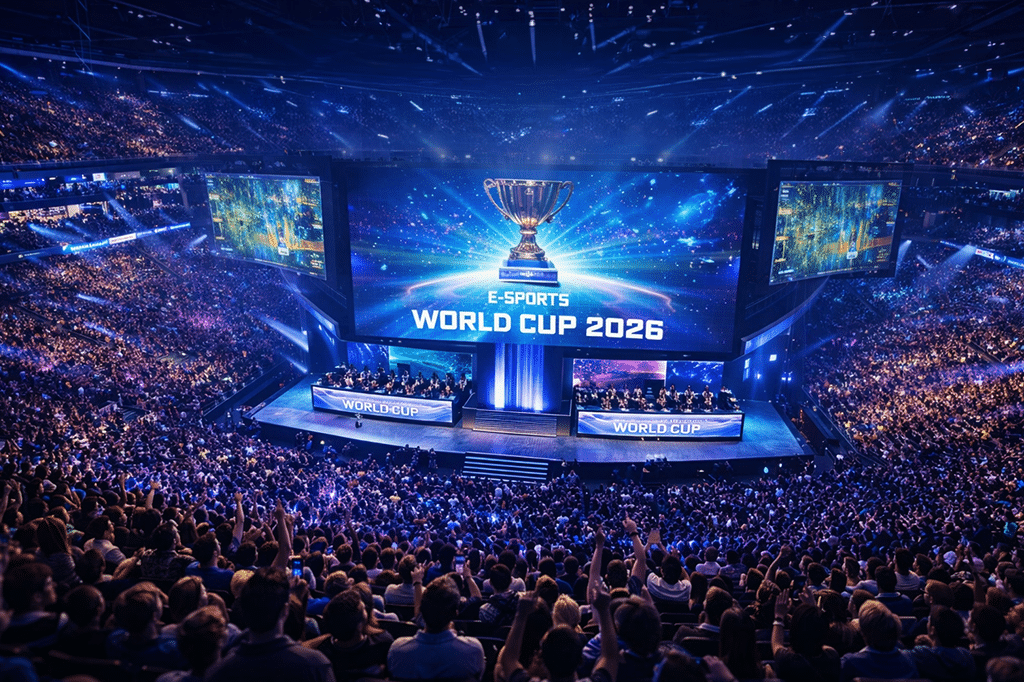
The Esports World Cup 2026 is shaping up to be the most ambitious tournament in competitive gaming history. With a record-breaking prize pool, dozens of elite game titles, and thousands of players competing across multiple weeks, the event represents the modern apex of esports competition.
Taking place in Riyadh, Saudi Arabia from July 6 to August 23, 2026, the tournament will bring together the best professional players and clubs from around the world to compete across multiple games and formats. Organized by the Esports World Cup Foundation and supported by ESL FACEIT Group, the event has become one of the most important fixtures on the global esports calendar.
More than just a tournament, the Esports World Cup is increasingly positioned as the esports equivalent of traditional mega-events like the Olympics or FIFA World Cup—an international stage where the best organizations compete for prestige, prize money, and long-term dominance.
A Record-Breaking Prize Pool and Global Scale
One of the defining features of the 2026 Esports World Cup is its $75 million prize pool, making it the largest prize purse in esports history. The money is distributed across individual game championships and the overall Club Championship, where organizations earn points based on their performance across multiple titles.
The scale of the event reflects the continued growth of competitive gaming worldwide. More than 2,000 players and around 200 esports organizations from over 100 countries are expected to compete in the tournament’s various competitions.
Over the course of seven weeks, the tournament will host 25 competitions across 24 different esports titles, offering fans a near-constant stream of high-level matches and championship finals.
Key Numbers for EWC 2026
| Category | Details |
|---|---|
| Location | Riyadh, Saudi Arabia |
| Dates | July 6 – August 23, 2026 |
| Total Prize Pool | $75 million |
| Games Featured | 24 |
| Tournaments | 25 |
| Players Competing | 2,000+ |
| Participating Clubs | 200+ |
These numbers illustrate just how large the modern esports ecosystem has become. Prize pools once measured in thousands now rival those of major traditional sports competitions.
A Multi-Game Festival of Esports
Unlike single-title tournaments such as The International or the League of Legends World Championship, the Esports World Cup is designed as a multi-game festival of competitive gaming.
The 2026 lineup includes a wide range of genres:
- Tactical shooters
- Battle royale titles
- MOBAs
- Fighting games
- Racing simulations
The roster also continues to evolve each year. For example, Trackmania joins the lineup, while popular titles like Fortnite return with new formats, demonstrating how the event adapts to shifting player communities and industry trends.
This diversity is central to the tournament’s strategy. By bringing together different competitive scenes under one umbrella, the Esports World Cup creates a unified global stage for esports fans across multiple communities.
The Club Championship: Esports’ Ultimate Team Competition
While individual tournaments crown champions in each game, the Club Championship adds another layer of competition.
Instead of focusing on a single title, the Club Championship rewards organizations that perform consistently across multiple games throughout the event. Teams earn points based on placements in each tournament, and the club with the highest overall score is crowned the Esports World Cup Club Champion.
A significant portion of the total prize pool—$30 million—is allocated to this competition alone, highlighting the growing importance of multi-game esports organizations.
This format encourages organizations to build diverse rosters across multiple esports titles, transforming clubs into global entertainment brands rather than single-game specialists.
Why the Esports World Cup Matters for the Industry
The rise of the Esports World Cup reflects a broader transformation in the competitive gaming industry. Esports has evolved from small grassroots tournaments into a global entertainment sector supported by major sponsors, professional leagues, and international audiences.
Major events now attract millions of viewers across streaming platforms and live arenas, creating an ecosystem that includes players, teams, analysts, broadcasters, and fans. Coverage platforms like Esports Charts data platform increasingly track viewership trends, showing how global audiences continue to grow year after year.
Events like the Esports World Cup also play a key role in shaping the future of the industry by:
- Creating global storylines across different games
- Raising the financial ceiling for esports tournaments
- Strengthening professional esports organizations
In many ways, the tournament functions as a central gathering point for the entire competitive gaming ecosystem.
The Future of Global Esports Events
As esports continues to mature, large multi-title events like the Esports World Cup are likely to become even more influential. The combination of massive prize pools, cross-game competitions, and global participation signals a new phase in the industry’s development.
For fans trying to follow the increasingly crowded competitive calendar, guides such as the 2026 esports tournaments calendar can help track the biggest events throughout the year. For those considering a deeper involvement in the industry, this complete guide to esports careers in 2026 also breaks down the growing opportunities across teams, broadcasting, coaching, and event management.
What makes the Esports World Cup unique, however, is its ambition to unite the entire esports landscape under one event. By bringing together dozens of games, hundreds of teams, and thousands of players, it offers a glimpse into the future of competitive gaming—a future where esports stands alongside traditional sports as one of the world’s most powerful entertainment industries.