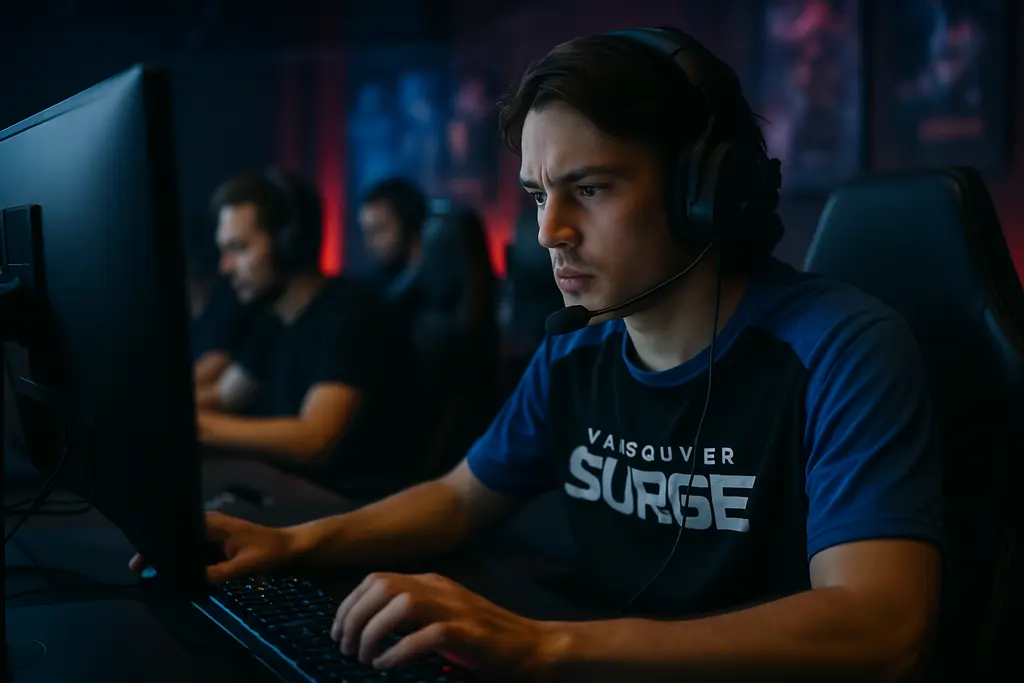
The Vancouver Surge Roster reset became official after a season that gave the organization little reason to preserve the old structure. As of October 17, 2026, this is no longer an offseason rumor cycle or a slow retool. Vancouver released its previous Black Ops 7 lineup on August 13, then announced a new group on October 16 built around Abuzah, Arcitys, Huke, and Illey, with Rambo returning as Head Coach.
That timing matters. Surge finished the 2026 CDL regular season in 11th place on June 28, missed Champs, and closed its Esports World Cup 2026 run on August 9 in 13th-16th place. Those results left the organization in a position where a partial change would have been harder to defend than a clean break. For those interested in the gaming industry’s context, GameCloud Network provides insights into related market dynamics within the same network.
Why The Vancouver Surge Roster Was Reset
Vancouver Surge Roster Moves Followed Missed Champs
Surge’s season turned on one blunt fact: the team did not qualify for Champs. The club’s own history page records that Vancouver ended the CDL 2026 regular season in 11th place on June 28, 2026, then placed 13th-16th at the Esports World Cup on August 9, 2026, before revealing the new roster on October 16 through its official team timeline. For a franchise trying to establish credibility under current management, those dates chart a steady slide rather than one isolated bad weekend.
The August decision to move on from the old Black Ops 7 group was the clearest sign that the front office viewed the problem as structural. Vancouver released Paul “Mamba” Solano, Jay “Craze” Mallhi, Noah “Lunarz” Whillock, and Dylan “Nero” Koch on August 13, according to Esports Brief. A team can replace one player and claim it is fixing a role issue. Releasing the full lineup says something else: the organization did not see enough in the prior mix to carry forward.
The August 13 Release Closed The Black Ops 7 Chapter
The Vancouver Surge Roster release also changed the tone of the offseason. There was no public attempt, based on the provided record, to frame the previous core as one piece away. That is significant in Call of Duty, where chemistry, pacing, and role clarity can collapse quickly if the four-player unit is not aligned. The 2026 results gave Vancouver little cover. Missing Champs is the line that divides an average campaign from one that forces staff, players, and fans to ask whether the project was viable.
Roster churn is common across competitive games, but full resets carry different risk. A rebuild can clear out bad habits, yet it also removes any built-in continuity. That same tradeoff has shown up outside CDL as well; roster-market pressure was a major theme in North American Rainbow Six roster movement. For Surge, the difference is that the change came after a year with poor finishes and no Champs appearance, so patience was already thin before the new four had played a map together.
What The New Lineup Says About The Rebuild
Experience Was Prioritized Without Carry-Overs
Vancouver’s October 16 roster announcement pointed toward a direct attempt to balance experience with growth potential. Arcitys and Huke bring established CDL pedigrees, while Abuzah and Illey fit the research record’s description of a younger-talent side of the mix. The key detail is not only who came in, but who did not remain. There were zero player carry-overs from the Black Ops 7 roster released in August.
That makes the Vancouver Surge Roster one of the cleaner case studies in how an organization responds when the prior season fails at multiple checkpoints. Vancouver did not preserve a duo. It did not keep one player as a cultural anchor. It chose a new competitive identity, then brought Rambo back as Head Coach in the same October 16 reveal. The move puts responsibility on everyone: the veterans cannot lean on reputation alone, the younger pieces need to adjust quickly, and the coaching staff has to turn a paper reset into a playable system.
Coaching Context Is Part Of The Story
The coaching piece deserves attention because Vancouver’s management context had already shifted before the 2026 season. On November 6, 2025, operations moved under XDOTG with backing from Canucks Sports & Entertainment, and Ricky “Atura” Lugo was appointed Head Coach and General Manager at that time, per the research record. The notes also describe an August coaching shake-up around the roster release, before Rambo returned as Head Coach in the October 16 announcement.
That sequence suggests Vancouver was not only replacing slayers and objective players. It was searching for a chain of command that could survive pressure. A full roster reset without a clear staff voice often becomes four players trying to solve matches through individual comfort. Bringing back Rambo gives the new group a named leader, but it does not erase the time cost. Systems have to be taught, disagreements have to be managed, and practice has to identify which roles are stable before official matches expose the weak points.
Pressure Points After The October 16 Reveal
Early Majors Will Carry Extra Weight
The next competitive cycle will put pressure on Vancouver faster than a normal rebuild would prefer. Missing Champs in 2026 means the organization cannot sell slow development without results for long. The regular season finish, the Esports World Cup placement, and the August full release all created a clear public record: the previous plan failed, and the current plan was chosen to stop a repeat.
The early Majors and qualifiers will be the first real measure of whether the new lineup has solved anything. That does not mean Vancouver must win immediately for the project to make sense. It does mean the team needs to show better floor results than the group it replaced. If the new four start with the same early exits and poor stage-level form described in the research, community discussion will shift from optimism about change to questions about whether the front office identified the right problem.
Fan Patience Has Limits After 11th Place
Surge fans have seen enough resets across CDL history to know that new names do not automatically fix timing, communication, or map control. The Vancouver Surge Roster announcement on October 16 gave supporters a clear break from the Black Ops 7 season, but it also raised the standard. A full rebuild invites a full evaluation. If no one from the old lineup was retained, then the new group has to justify why the clean slate was better than targeted repair.
There is also a branding issue tied to results. Vancouver operates in a league where fan attention often follows teams that either win or build a clear identity. An 11th-place finish makes identity harder to sell. The new lineup does not need manufactured hype; it needs evidence. Better qualifier performances, cleaner series losses when they happen, and visible role clarity would matter more than bold statements. In Call of Duty, supporters usually forgive a rebuild when they can see why the team is losing and where the improvement path sits.
Vancouver Surge Roster Reset Stakes
A Clean Slate Raises The Standard
The Vancouver Surge Roster reset should be read as an admission that small fixes were not enough after the 2026 results. Releasing Mamba, Craze, Lunarz, and Nero on August 13 closed one version of the project. Announcing Abuzah, Arcitys, Huke, Illey, and Rambo on October 16 opened another. Those moves do not guarantee a Champs return, and they do not answer whether the team can build chemistry in time for the next competitive stretch.
What they do provide is clarity. Vancouver chose no carry-overs, a new four-player core, and a returning head coach after missing the biggest domestic checkpoint of the season. That is a real reset, not an offseason trim. The competitive question now is whether the organization can convert that clarity into steadier results before the same problems that defined 2026 start to define the new era as well.