Fortnite viewership became one of the clearest tournament stories of late 2026, but the clean read is not simply that the esport is “back.” By October 5, 2026, the major dates in question have already passed: the Reload Elite Series Championship at the Esports World Cup ran from August 19-22, 2026, and the FNCS 2026 Global Championship followed on September 26-27, 2026. Together, those events gave competitive Fortnite its strongest recent argument for relevance while also exposing the gap between a giant peak and a full broadcast that holds attention from start to finish.
The community read should stay grounded. Fortnite did not need a vague comeback narrative as much as it needed proof that its tournament formats could still create appointment viewing. The available 2026 data delivered that proof in bursts. The Esports World Cup event surged through a revised Reload format, while FNCS produced the biggest Fortnite Battle Royale tournament peak of the season. The question for organizers, creators, and teams is what can be repeated, not what can be celebrated once.
Fortnite Viewership Hit Two Different Peaks
Fortnite Viewership At The Esports World Cup
The Reload Elite Series Championship at the Esports World Cup 2026 gave Fortnite a very different type of success story from the classic Battle Royale circuit. Held from August 19-22, 2026, the event marked Fortnite’s return to the Esports World Cup through Reload, not the standard FNCS format. Esports Charts reported roughly 422,600 peak concurrent viewers during Round 13 of the Finals, with peak viewership up 481.6% compared to the 2024 edition and watch time up nearly 506% year over year, according to its Fortnite Esports World Cup recap.
That jump matters because it was tied to structural changes rather than a single celebrity-driven spike. The 2026 EWC event expanded from 16 duos in 2024 to 40 duos, added a Survival Stage, and shifted to Reload mode. Those changes gave viewers more teams to track, more elimination pressure, and a mode that reads faster for casual spectators. For a game that has often fought the viewing challenge of chaotic late-game fights, Reload offered a cleaner broadcast hook: survival, resets, and quick consequences.
The FNCS Global Championship Spike
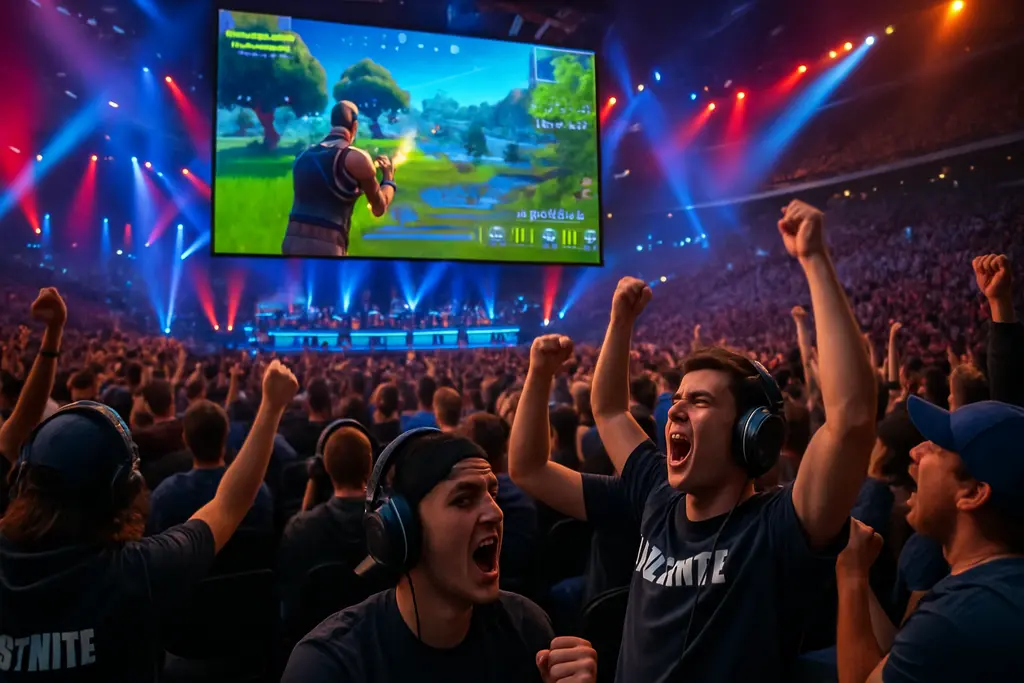
The FNCS 2026 Global Championship then pushed the conversation higher. The event concluded across September 26-27, 2026, and peaked above 1,011,169 concurrent viewers during Round 12 on Day 2. The research data places it as the most-watched FNCS event ever and the most popular Fortnite tournament in the past seven years. It also generated 5.67 million hours watched with about 602,204 average viewers.
Those figures put competitive Fortnite in rare company for 2026 esports broadcasts. Still, they also need context. A million-plus peak shows that the FNCS brand can still pull a large global crowd when the stakes are clear and the calendar gives the event room. It does not automatically prove that every qualifier, major, or regional broadcast has the same staying power. The championship peak was a high point, not a guarantee that weekly attention has been solved.
What The Numbers Say About Broadcast Health
Peak Audience Versus Full-Show Retention
The most useful lesson from the FNCS 2026 Global Championship is the split between peak growth and retention. The event’s peak rose by about 6.3% from the previous year, but average viewers fell by 11.5% year over year, and total hours watched declined by 23.6%. That is not a failure, but it is a warning sign for anyone treating a peak number as the whole story.
In esports, peak concurrent viewers often measure the best moment of a broadcast: the final rounds, the decisive map, the last lobby, or a creator-led surge. Average viewers and hours watched tell a different story. They show how well the event held people across dead time, analysis blocks, reset periods, and early rounds. For Fortnite, the 2026 data suggests the biggest moments can still pull huge crowds, while the full broadcast package has more work to do.
Language And Platform Split Changed The Read
The FNCS 2026 Global Championship also showed that the audience is not locked to one language or platform. English accounted for 53.3% of total hours watched, while French and Spanish each contributed around 9%. Twitch generated about 66.2% of hours watched, while YouTube accounted for about 27.6%.
That split has practical meaning for competitive gaming. Fortnite’s global community does not consume esports through one central broadcast habit. Regional language coverage matters. YouTube still matters. Creator-led and community-led discovery also matter, especially for a title whose player base includes viewers who may not identify as traditional esports fans. That lines up with a wider 2026 pattern covered in our analysis of how community co-streams reshape esports viewing, where local voices can carry audience trust that official desks do not always reach.
Why Fortnite’s 2019 Benchmark Still Shapes 2026
The World Cup Shadow Remains
Any serious read on Fortnite viewership still has to deal with the 2019 World Cup. Epic Games said the Fortnite World Cup Finals, held July 26-28, 2019, drew more than 2.3 million concurrent viewers across Twitch and YouTube during the Solo Finals in its record-setting tournament report. That number remains the all-time peak reference point for competitive Fortnite.
The 2026 FNCS Global Championship did not pass that 2019 mark, and framing it as if it did would misread the history. What changed is the standard for the post-World Cup era. The 2025 FNCS Global Championship had already pushed above 950,000 peak viewers, making it the most-watched Fortnite tournament since 2019 at the time. The 2026 event then cleared one million. That progression matters because it shows a sustained return to major-event scale, not a one-off anomaly.
Format Experimentation Beat Nostalgia
The smarter takeaway is not that Fortnite must recreate the World Cup. The stronger read is that format experimentation worked in 2026. EWC benefited from Reload, a larger field, and added stage structure. FNCS benefited from the weight of a global championship and a broadcast that could concentrate attention around final-day rounds.
For players, that can be a mixed signal. Bigger fields and altered formats may create more visibility, but they can also change preparation demands. For teams and managers, the lesson is sharper: Fortnite remains valuable when event structure gives viewers a reason to follow the entire competitive arc. A big prize moment is not enough by itself. Broadcast rhythm, regional access, and readable match stakes all affect whether viewers stay.
Fortnite Viewership And Competitive Gaming
What Organizers Should Take From 2026
Fortnite viewership in 2026 gave tournament organizers a useful case study. First, established games can generate renewed audience interest without pretending their older peak never happened. Second, mode choice and format clarity can change the size of the audience. Third, a peak record can sit beside weaker retention metrics, and both can be true at the same time.
The drop in unique broadcast channels from 770 in 2025 to 253 in 2026 also deserves attention. Fewer channels can concentrate viewership and make the official number cleaner, but it may reduce the spread of community coverage. For a game with Fortnite’s creator culture, that trade-off matters. A centralized broadcast can look stronger on paper while losing some local texture across languages, regions, and creator communities.
For readers tracking the wider competitive scene across this network, related gaming conversations are covered on Hexiled Gaming, offering insights from a broader player perspective. In Fortnite’s case, that player angle is essential because the esport is tied closely to how people already play, watch, and share the game outside formal competition.
The Practical Read After Worlds
After the FNCS 2026 Global Championship, the honest read is that competitive Fortnite has strong top-end demand again. The million-viewer peak was real. The EWC growth was real. The 2019 World Cup benchmark still stands. The retention concerns are also real.
That combination should shape how teams, sponsors, and tournament operators talk about Fortnite viewership from here. The game can still create major global moments, especially when the format feels fresh and the broadcast gives viewers clear stakes. Sustaining that attention across full events is the harder task. If 2026 proved anything, it is that Fortnite does not lack audience potential; it needs event design that turns peak curiosity into longer viewing habits.