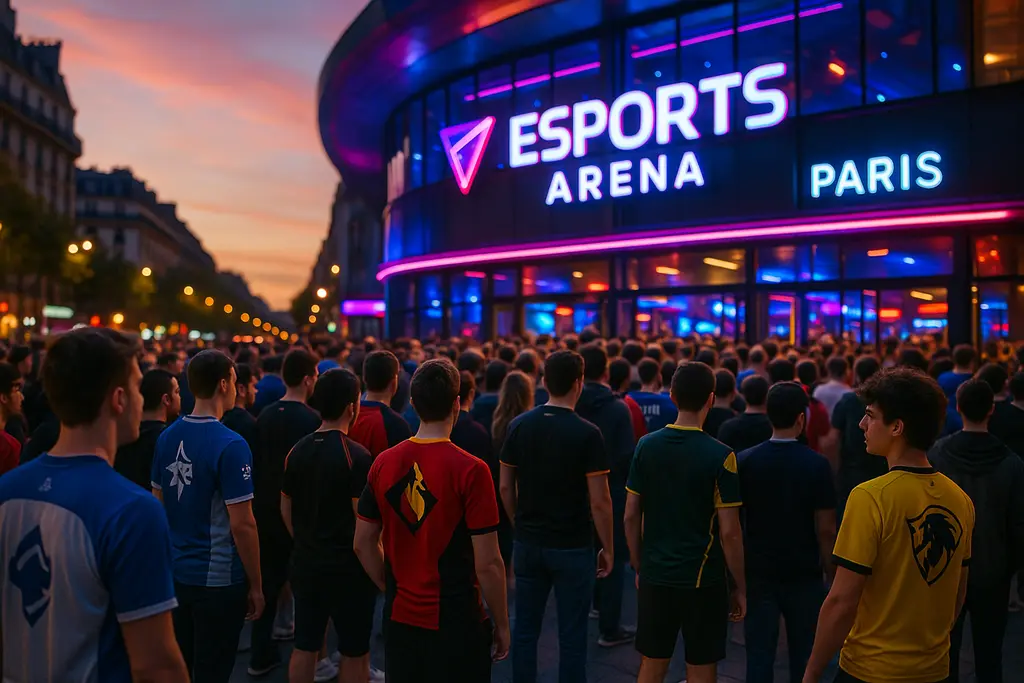
The EWC Paris Relocation changes the 2026 Esports World Cup from a destination event into a stress test for access, trust, and operational clarity. The confirmed move from Riyadh to Paris gives European competitors and fans a more familiar travel map, but it also places the organizer under sharper scrutiny. A relocation can solve one set of problems while creating another: revised travel plans, venue learning curves, broadcast expectations, and community questions about why the change happened.
What we know is narrower than the reaction cycle around the event. HLTV reported that the Esports World Cup Foundation confirmed the move on May 20, 2026, citing security concerns linked to ongoing conflict in the Middle East HLTV report. Esportsheaven reported the event window as July 6 to August 23, 2026, with a $75 million prize pool, Paris Expo Porte de Versailles as the main venue, and the opening ceremony set for July 8 at La Seine Musicale Esportsheaven venue report. Those are the hard points. The participation and engagement effects remain projections until official team lists, attendance data, and broadcast figures are published.
Why The EWC Paris Relocation Changes The Event Brief
EWC Paris Relocation As A Safety Decision
The most immediate impact is not competitive format; it is confidence. A security-driven move tells players, clubs, publishers, staff, and fans that event location is no longer just a branding choice. It is a risk variable. That matters in esports because top-tier events depend on many groups saying yes at the same time: teams must commit rosters, publishers must approve competitive usage, broadcast crews must travel, sponsors must activate, and fans must decide whether the trip is worth the cost.
Paris does not erase all of that risk. It simply changes the risk profile. Instead of asking participants to assess travel into a region affected by wider conflict concerns, the event now asks them to trust a compressed relocation plan in one of Europe’s busiest event markets. For competitors, the question shifts from whether the original host city feels viable to whether the new plan gives them enough notice, practice stability, accommodation certainty, and media obligations that do not drain preparation.
The Verified Event Frame
The confirmed event frame is unusually large by esports standards: a summer-long competition window, a major Paris exhibition venue, and an opening ceremony away from the main site. That combination creates both opportunity and strain. Paris Expo Porte de Versailles is familiar to international event traffic, but esports crowds behave differently from conventional trade audiences. They linger around stage schedules, creator meetups, merchandise queues, demo areas, and watch-party zones. The fan experience has to work across long days rather than one match block.
For readers tracking how venue decisions affect sponsors, publisher planning, and public reception, our earlier analysis of global partner pressure fits the same issue: a move can protect the event from one concern while exposing every weak point in communication. The first credible test is not whether the announcement sounded decisive. It is whether competitors and fans receive clear, consistent information before bookings become expensive.
Competitor Participation Moves From Distance To Scheduling
European Access Becomes The Obvious Advantage
For European teams and players, the EWC Paris Relocation is likely to reduce travel friction. That does not guarantee broader participation on its own, because each title’s invitation structure, qualification path, publisher rules, and team budgets still matter. But the practical difference is real enough to discuss: shorter flights for many European rosters, fewer time-zone disruptions for regional staff, and easier access for support personnel who may not always travel to long-haul events.
That matters most for organizations operating across several games. Multi-title clubs often move analysts, content teams, social staff, and management between matches and media windows. A central European host can make that movement less punishing for some orgs, especially when rosters are spread across multiple countries. It may also help smaller European teams whose travel budgets are thinner than those of major international organizations. Still, the event has not published final participation effects in the research provided, so any claim of increased entries would be premature.
The Competitive Cost Of A Late Venue Shift
The counterpoint is timing. A relocation announced after teams have already planned around Riyadh can create sunk costs and logistical drag. Some competitors may need revised visas, changed flights, new bootcamp locations, or different media schedules. Even when a move improves access for one region, it can complicate travel for others. Players from outside Europe still face long trips, and staff who had already built plans around the original location may now need to reset them.
This is where event organizers have to be judged by execution rather than intent. The fairest participation outcome would be one where teams are not punished for the disruption. That means timely operational updates, clear venue guidance, stable practice conditions, and travel support where needed. The event’s scale makes those basics harder, not easier. A prize pool can attract elite teams, but it cannot replace trust in the schedule.
Fan Engagement Becomes A European Access Test
Attendance Could Improve, But Proof Comes Later
The fan-side case for the EWC Paris Relocation is straightforward: Paris is easier to reach for many European spectators than Riyadh. Rail links, short-haul flights, existing hotel capacity, and a dense local gaming audience give the event a stronger base for in-person attendance. For French and nearby European fans, the event becomes less of a major international commitment and more of a planned summer trip. That can change who shows up, not just how many people show up.
But access is not the same as engagement. Fans need schedules that make sense, ticketing that does not punish late planners, venue zones that handle crowds, and programming that respects both hardcore competitive viewers and casual attendees. A long event window can create fatigue if the calendar is confusing. It can also reward repeat attendance if match days, creator appearances, and community activities are communicated cleanly.
Community Trust Is The Real Attendance Metric
Esports crowds are not passive buyers. They compare ticket prices, broadcast quality, venue rules, sponsor presence, and competitive integrity in real time. If the Paris event feels organized, fans will credit that. If access feels unclear or overly commercial, they will say so just as loudly. The event’s move gives local communities a better chance to attend, but it also invites closer criticism from a European fan base used to major LAN events.
The peripherals and equipment fans might need as they prepare for long days at the venue. The core question for the esports event remains this: does the experience justify the time and expense for attending fans? Ultimately, aspects like crowd flow management, seating arrangements, clear schedules, and a focus on integrating remote viewers into the experience will determine the success of fan engagement.
Organizer Communication Becomes The Main Product

What Competitors Need Before Match Day
The EWC Paris Relocation gives the organizer a chance to show that safety decisions can be made without leaving teams guessing. Competitors will need exact information about practice rooms, media days, equipment rules, transport, accommodation, arrival windows, and title-specific schedules. None of those details are glamorous, but all of them affect performance. A player losing preparation time to unclear logistics is not a small issue at an event with major competitive stakes.
For tournament operators, the cleanest communication model is boring by design: publish updates, avoid vague promises, separate confirmed facts from plans still being finalized, and keep title communities informed through their own channels. Esports audiences can accept difficult decisions when the reasoning is clear. They are less forgiving when major changes arrive without practical detail.
What Fans Need Before Buying In
Fans face a different version of the same problem. They need reliable daily schedules, venue maps, ticket categories, opening ceremony access rules, and clear guidance on whether specific games or stages require separate entry. If the event wants stronger attendance, it cannot rely on Paris alone as the selling point. The host city opens the door; execution keeps people inside.
That is why partner planning remains central to this story. Our related piece on esports partner risk argued that the move shifts pressure toward trust, safety, and publisher coordination. The same applies to fans. A well-run Paris event could make the relocation feel justified. A confused one would turn the move into a recurring criticism across every match day.
EWC Paris Relocation And The Trust Question
The confirmed facts support a cautious read. The event has moved from Riyadh to Paris because of security concerns, it has a scheduled summer window, it has named major venues, and it carries a reported $75 million prize pool. The likely effects are also clear enough to analyze: European competitors may face easier travel, European fans may have better access, and the event may benefit from Paris as a major international host city.
What remains unproven is the scale of that benefit. No official attendance totals, viewership gains, or final participation changes are available in the supplied research. The fair assessment is that the relocation improves the event’s access case while raising the standard for operational delivery. Paris gives the Esports World Cup a stronger route to European fans and teams. It does not automatically earn their trust. That has to be won through clear communication, stable scheduling, and a venue experience that respects the communities the event is asking to show up.