The Worlds 2026 format has already changed how the opening week feels. As of October 17, 2026, League of Legends Worlds is ongoing in the United States, with the full event running from October 15 to November 14. The Play-In Stage runs October 15-18 in Los Angeles, and its new structure is not a soft entry point: four teams enter, one reaches Swiss, and three leave before the Main Event fully opens. That is a sharper filter than many fans are used to seeing at the start of Worlds.
The core shift is simple on paper and harsh in practice. The four lowest-seeded teams begin in a Best-of-Five double-elimination bracket: the second seed from CBLOL and the third seeds from LCP, LCS, and LEC. Only one advances to the Main Swiss Stage, where 16 teams play five rounds and teams move on at three wins or exit at three losses, according to the 2026 World Championship listing. That makes Play-Ins a survival bracket, not a warm-up lane.
How The Worlds 2026 Format Rebuilt Play-Ins
Why Worlds 2026 Format Pressure Starts Early
The immediate impact of the Worlds 2026 format is psychological as much as structural. Double elimination gives a team room to recover from one lost series, which can reduce the damage of one poor draft read, one bad level-one setup, or one off day from a key carry. That is the part supporters of the system point to: Best-of-Five League is better at identifying repeatable strengths than a short set of Best-of-Ones.
But the bracket also compresses stakes. Three of the four teams assigned to Play-Ins are eliminated before the Swiss Stage begins. That is a brutal exchange. The teams get more games per matchup, but fewer total survivors. For regions watching their representatives start in Los Angeles, the format turns seeding into a public audit of year-long performance. MSI allocation and regional strength now matter before the first Worlds draft appears on stage.
There is a fan-side effect, too. A Best-of-Five opening stage asks more from viewers than a quick play-in group. It gives analysts more draft data, more lane-swap evidence if teams use it, and more chances to test whether a region’s style holds up across adaptations. It also makes losses feel heavier. A team cannot shrug off an early defeat as bracket noise when every series sits so close to elimination.
The Value Of A Second Life
Double elimination usually gets praised because it reduces variance. In a game where draft priority, side selection, early jungle pathing, and one Baron setup can swing a map, a second life can protect a better team from one narrow collapse. For Worlds, that matters because Riot’s international events are judged not only by fairness, but by whether the strongest teams reach the stages where the widest audience expects to see them.
Still, a lower-bracket run carries costs. A team that drops early may have to show more drafts, reveal more answers, and spend more stage energy before Swiss. The bracket does not only ask whether a team can win. It asks whether it can keep winning without giving future opponents a clean scouting file. That is especially relevant when the prize for survival is not a trophy, but entry into a Swiss field full of direct qualifiers.
Competitive Tradeoffs In Worlds 2026 Format
Selection Advantages Are Small But Real
The bracket includes a specific reward for the team coming through the winners’ side in the final qualifying match. The “Right of Dual Selection” gives that team both map-side and pick/ban order choice for Game 1, as described in the Worlds 2026 Play-In bracket breakdown. That is not a massive series-long cushion, but it is not empty either. In a Best-of-Five, Game 1 often sets the first read on meta priorities, comfort picks, and side-based draft assumptions.
The question is whether that edge is enough. Upper-bracket teams avoid one elimination series, which is meaningful, but they do not receive the kind of grand-finals buffer some double-elimination systems use. Community debate around these brackets often lands here: if a team wins through the top side, should it receive more than opening-game choice, or is avoiding the lower bracket already enough compensation?
There is no clean answer. A larger upper-bracket advantage can make the final feel less even. A smaller one can make the winners’ path feel underpaid. The current design appears to favor competitive readability: both teams still need to win the series outright, and viewers are not asked to parse bracket resets or uneven match counts. That makes the broadcast easier to follow, even if it leaves room for argument among format purists.
Best-Of-Five Play-Ins Change Broadcast Rhythm
The Worlds 2026 format also changes how the opening days are packaged. Best-of-Five series create longer broadcast windows, more desk segments, and more time for storylines to breathe. That can be useful for teams outside the direct Swiss field. A smaller region’s representative gets a proper series arc instead of disappearing after a few short games.
There is a cost, though. Longer series mean more production load and more viewer time commitment. For community creators, co-streamers, and analysts, this can be valuable content. For casual viewers, it can make the first stage feel dense. The best version of this setup rewards fans who enjoy draft adaptation and matchup learning. The weaker version risks making early elimination feel stretched rather than dramatic.
That is where presentation matters. The Play-In stage has to sell why each adaptation matters without treating every pause between games like a grand event. Sites in the broader gaming network, including Cooler Master Gaming, often track how player-facing hardware and creator setups shape the viewing experience, but the tournament itself still lives or dies on clarity: who is at risk, what changed between games, and why the next draft matters.
What The Swiss Stage Changes After Play-Ins
One Qualifier Enters A Faster Main Event
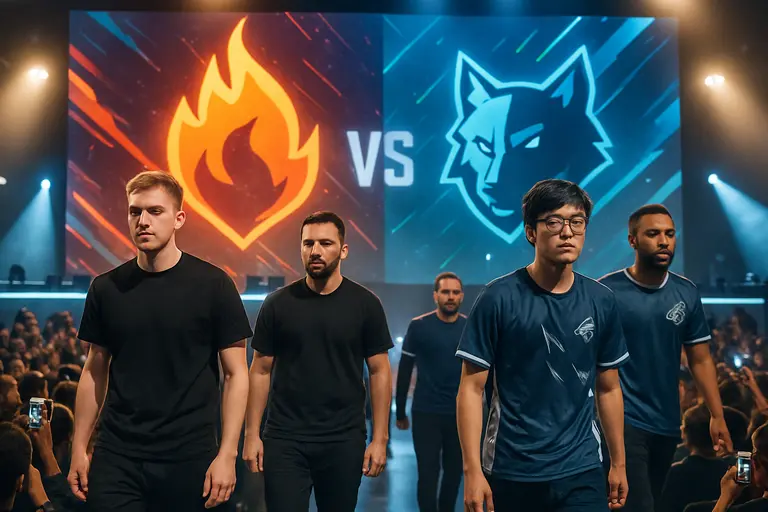
The Play-In winner does not get much time to reset into a forgiving format. The Main Event’s Swiss Stage includes 16 teams: the Play-In winner plus 15 direct qualifiers. Teams with three wins advance to Knockouts, and teams with three losses are eliminated. That means early Swiss results carry weight immediately. A 2-0 opening path creates breathing room; an 0-2 start leaves almost no room for error.
This is where the Play-In design becomes more demanding. A surviving team may enter Swiss with stage momentum, but also with public drafts, possible fatigue, and opponents who have had time to study its habits. Direct qualifiers, by contrast, avoid the elimination pressure in Los Angeles and can prepare for the wider Swiss field. The format rewards the Play-In winner with access, not comfort.
For readers tracking venue flow and the broader event structure, our earlier breakdown of League of Legends Worlds venues and format gives useful context on how Riot arranged the 2026 event across the United States. The Play-In change is one piece of that larger tournament design, but it is the piece most likely to shape regional narratives before Swiss begins.
Regional Seeding Now Carries More Public Weight
The format also sharpens how fans talk about regions. Being placed directly into Swiss signals international performance and allocation strength. Starting in Play-Ins means a team must justify its region’s slot under immediate pressure. That does not mean a Play-In team is weak by default, but it does change the public frame. Every draft becomes evidence in a larger argument about whether that region deserved more security.
This is especially relevant because Worlds 2026 features 19 total teams, with CBLOL receiving an added slot and other allocations tied to international performance. The expanded field gives more access, but the Play-In bracket keeps that access narrow at the point of entry. More teams are present at Worlds, yet only one of the four lowest-seeded teams reaches Swiss. Expansion and exclusion sit side by side.
Worlds 2026 Format Stakes In Los Angeles
The Worlds 2026 format is best understood as a trade: fewer soft landings, more meaningful series. The double-elimination Play-In gives teams a second life, but it does not give them much room. It rewards adaptation, punishes shallow prep, and turns regional seeding into a live pressure test. For analysts, that is useful. For players, it is punishing. For fans, it creates a sharper opening act than a lighter group stage would have offered.
The fairest critique is not that the system lacks stakes. It has plenty. The question is whether the reward structure fits the pressure. If the upper-bracket edge feels too small, debate will continue. If the lower-bracket winner looks battle-tested rather than worn down, the format will look smart in hindsight. As of October 17, 2026, the Play-In Stage is still active in Los Angeles, so any judgment has to stay tied to what the structure is designed to do rather than invented results. What is already clear is that the Worlds 2026 format has made the first stage matter from the first series.