By Crystal Bell | April 15, 2026
Imagine it is the Grand Final of a major Counter-Strike 2 tournament. The score is tied 12-12. An anchor player is left in a seemingly impossible 1v3 clutch situation. They hit a miraculous flick shot, outmaneuver the remaining attackers, and defuse the bomb with mere milliseconds to spare. Now, imagine watching that entire sequence in complete silence.
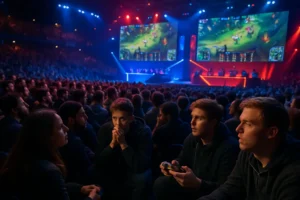
The raw mechanical skill of professional players is the foundation of esports, but it is the broadcast talent—the casters, desk hosts, and analysts—who transform that raw gameplay into a stadium-shaking, global spectacle. In 2026, a Tier 1 esports broadcast is a highly orchestrated television production. While the players are fighting for the trophy, the talent on the microphones are building the narratives, translating complex macro-strategies for the audience, and creating the unforgettable moments that define competitive gaming history.
The Synergy of the Casting Booth: Play-by-Play and Color
If you listen closely during a live match, you will notice that the two voices in the casting booth have very distinct, highly specialized jobs. The casting duo is divided into two roles: the play-by-play commentator and the color analyst. Their synergy is what keeps an audience engaged through a grueling Best-of-5 series.
The play-by-play caster is the engine of the broadcast. They are the rapid-fire voice tracking the immediate action, building the hype, and delivering the explosive vocal peaks when a massive play occurs. Their job is to paint a real-time picture of the chaos.
Conversely, the color analyst (often a former professional player or coach) is the brain of the operation. In a tactical shooter like CS2, the color caster steps in during the freeze time or post-round replay to explain exactly why a team won the round. They break down the microscopic details—like how a perfectly timed pop-flash allowed the entry fragger to take map control, or why a specific economic read dictated the weapon buys. They elevate the broadcast from pure entertainment to high-level education.
| Broadcast Role | Primary Responsibility | Essential Skillset | Output Style |
| Play-by-Play Caster | Narrating real-time action and building hype during engagements. | Breath control, rapid vocal pacing, and emotional resonance. | Energetic, fast, and emotionally driven. |
| Color Analyst | Breaking down tactical setups, economy, and meta shifts. | Deep, encyclopedic game knowledge and analytical breakdown. | Educational, methodical, and observant. |
| Desk Host | Driving the narrative, managing transitions, and leading the analyst desk. | Time management, pacing, and broad industry knowledge. | Charismatic, structured, and conversational. |
The Desk Host: The Maestro of the Broadcast
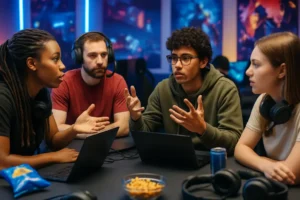
While the casters handle the server action, the desk host is the maestro conducting the entire show. A great desk host makes a notoriously difficult job look effortless. They are the bridge between the hardcore, jargon-heavy analysts and the casual viewer tuning in for the first time.
When the match concludes, the broadcast cuts back to the analyst desk. The host’s job is to immediately reset the narrative, manage the broadcast clock, and tee up their analysts to shine. If an analyst starts getting too bogged down in the minutiae of a single utility throw, a skilled host gracefully redirects the conversation back to the broader storyline of the series. They are constantly receiving countdowns and production cues in their earpiece while maintaining a completely relaxed, engaging conversation on camera. If you are exploring the complete guide to esports careers, you will quickly learn that a world-class desk host is often the most highly sought-after commodity in the industry.

Immortalizing the Legacy of the Players
Perhaps the most important role of broadcast talent is their ability to immortalize the players. A legendary clutch or a devastating tournament exit is only as memorable as the words used to describe it.
The greatest casting calls in esports history are permanently etched into the minds of the fans. When a caster perfectly captures the gravity of a moment, they create a piece of history that will be replayed in highlight reels for decades. Furthermore, desk segments contextualize a player’s journey, explaining the heartbreak of their previous losses to make their eventual championship victory feel infinitely sweeter.
As the industry continues to shatter viewership records across the globe, examining the professional esports broadcast metrics reveals a clear correlation: audiences do not just tune in for the games; they tune in for the personalities calling them. The next time you watch a tournament, take a moment to appreciate the voices echoing through the arena. They are the storytellers of the digital generation.