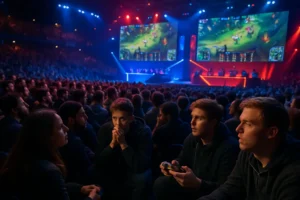
KODEX Roster Acquisition is a useful case study because it is not built around a perfect win streak or a clean entry into Counter-Strike 2. On August 29, 2026, KODEX officially entered CS2 by acquiring the former Foxtrot roster, a move that landed right as the team was already under competitive pressure. That timing matters for players trying to understand how org moves affect careers: the badge can change visibility, but the server still exposes every role issue, every emergency, and every result.
The cleaner story would be that an organization signed a roster, the roster instantly improved, and everyone learned a simple lesson about backing talent. The real read is more useful. Before the signing, the former Foxtrot group had lost its previous three listed matches against EMPIRE, NRG in April 2026, and BOSS in March 2026. After the move, the same squad entered late-August LAN play under a new banner, posted a top-16 finish at FRAG Midwest: St. Louis 2026, and sat at 9-5 in ESEA Advanced Season 58 as of September 4, 2026, according to NoSmokeSport’s report.
Why The KODEX CS2 Move Matters
The Foxtrot Context
Tier-two North American Counter-Strike is rarely a straight line. A roster can look flat in a short match sample, still have workable structure, and still need an organization willing to bet on the group before a larger breakout happens. That is the tension in this signing. The last-three-match record before the pickup looked rough, but it did not end the roster’s market value. KODEX’s decision showed that orgs do not only acquire recent scorelines. They also acquire reps, player relationships, unfinished potential, and the chance to stabilize a team before the next set of officials.
For players, that distinction is not cosmetic. Careers often stall when a team becomes defined by its latest public losses. An acquisition can interrupt that label, giving a lineup a new round of attention from opponents, fans, tournament staff, and potential sponsors. It does not erase demo review or role conflicts. It does reset the way the room reads the team.
Why Timing Was The Whole Story
KODEX entered CS2 at a point where the roster had immediate matches to validate the move. FRAG Midwest: St. Louis 2026 was not a distant target; it was the first LAN event under the KODEX banner in late August 2026. That left little time for a long brand rollout or soft launch. From a career standpoint, that is both risky and valuable. A new org tag can bring pressure, but it can also compress the proof window. Players do not have to wait months for the move to matter.
That is where the case becomes relevant beyond KODEX. For unsigned or lightly supported rosters, the best acquisition window often lines up with scheduled competition. If an org signs a team with no officials nearby, the story fades into announcement graphics. If the signing lands near a LAN or league run, the players get a direct stage to show whether the backing changed anything practical.
What KODEX Roster Acquisition Changed
KODEX Roster Acquisition As A Career Reset
The KODEX Roster Acquisition did not prove that branding causes better Counter-Strike. The available facts do not support that kind of claim. What it did show is how a roster can shift from a poor short-term match sample to a more workable public position. The 9-5 ESEA Advanced Season 58 record placed the team in strong playoff contention as of September 4, 2026, while the FRAG St. Louis top-16 run gave the group a LAN result under the new name.
That matters because tier-two careers are built through accumulation. A single top-16 finish is not a career guarantee. A 9-5 league record is not a promotion by itself. But together, they create a better public file for players than a three-match losing run sitting alone at the top of the résumé. Scouts, org staff, and teammates usually need a reason to keep watching. KODEX gave this roster a new frame, then the roster gave observers enough recent data to keep the conversation alive.
For readers tracking the same move from a competitive angle, our earlier KODEX CS2 entry breakdown focused on what the former Foxtrot roster showed at FRAG St. Louis. The career angle is slightly different: it asks what players can control when results, timing, and org interest collide.
What Players Should Read Into Org Backing
Org support is useful, but players should be careful about treating it as a cure. A new banner can help with exposure, structure, and public legitimacy. It can also raise the cost of underperformance because expectations become easier for the community to track. The lesson from KODEX is not “sign anywhere as fast as possible.” It is that players need to know what a signing is supposed to change.
- Role clarity: Players should understand whether the org expects the existing system to stay intact or change quickly.
- Event planning: A signing near a LAN can be useful only if travel, substitutes, and practice time are handled early.
- Public record: Recent losses do not define a career if the next results create a better sample.
- Support terms: Players should ask how emergencies, schedule conflicts, and roster absences are handled before they happen.
Career Lessons From The St. Louis Test
The Substitute Lesson
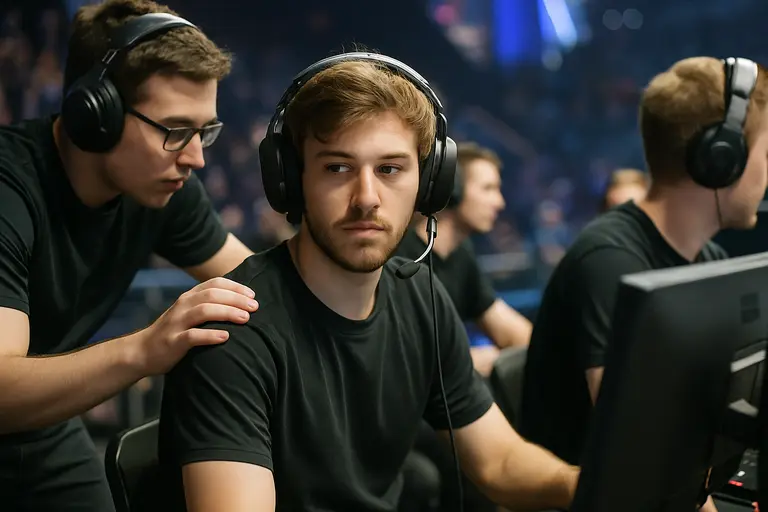
The hardest part of the St. Louis story was not competitive at all. Raymon “duhpe” Carrillo was unable to attend FRAG St. Louis after being struck by a drunk driver, and KODEX brought in Anthony “celery” Pylko as a substitute shortly before the event, as CS2Feed reported. That kind of disruption cuts through the neat way roster moves are usually discussed. Real careers include illness, travel problems, family issues, accidents, and late replacements.
For players, the practical lesson is uncomfortable but necessary: substitute planning is part of career management. Teams that wait until a crisis hits are asking a stand-in to learn too much too late. Players who want long-term stability should care about the sixth-man conversation, even if it feels like a threat to their spot. A prepared substitute plan protects the team and protects the absent player from becoming the reason an event falls apart.
Reading Results Without Overreacting
KODEX went 2-1 in the FRAG St. Louis group stage, including a victory over Sassy Sunshines on August 29, 2026, and finished top 16. That is a positive first LAN marker, not a finished verdict. It suggests the roster could compete through a difficult entry point, especially with a late substitution, but it does not settle where the team belongs in the North American CS2 order.
This is where players and fans often talk past each other. Fans tend to want a quick label: good signing, bad signing, wasted pickup, breakout roster. Careers move with less certainty. A player can gain value from a stable event under pressure even without winning the bracket. A substitute can build credibility by helping a team survive a rough week. An org can learn whether its new lineup handles pressure without needing a trophy to get useful information.
What KODEX Roster Acquisition Means For Players
The Career Takeaway
The lasting value of KODEX Roster Acquisition is that it shows how careers are shaped by timing as much as talent. The former Foxtrot roster entered KODEX with recent losses attached, then produced a more encouraging public stretch through ESEA Advanced and FRAG St. Louis. That does not make the acquisition a guaranteed success. It makes it a clean example of how an org can give players another competitive window when the last one looked limited.
For players outside the top tier, the message is grounded: keep enough structure around your team that an org can understand what it is buying. Results matter, but so do roles, availability, communication, and the ability to survive disruption. KODEX did not sign a flawless public résumé. It signed a roster with a recent downturn, a live league record, and an immediate LAN test. That is much closer to how esports careers usually move.
Community coverage matters here as well because tier-two careers are often documented by smaller reporting networks before wider attention arrives. For broader gaming and esports-adjacent coverage in the same network, readers can explore Hexiled Gaming for a broader view on how competitive culture is discussed outside the biggest headlines.
The KODEX Roster Acquisition should be read less as a victory lap and more as a working model. Players need performance, yes, but they also need timing, contingency planning, and enough recent proof to keep doors open. KODEX’s CS2 entry gave the former Foxtrot roster a new public frame. What the players do with that frame after September 4, 2026, will decide whether the move becomes a short reset or a longer career step.