Baylor Esports Careers are becoming a useful case study because the university is not treating competitive gaming as a side activity. In March 2026, Baylor joined the USA Esports Alliance, a group described by the university as bringing together professional esports organizations and leading collegiate institutions to strengthen competitive pathways and improve the United States’ position in international competition, according to Baylor’s USA Esports Alliance announcement. That framing matters because careers in esports rarely appear from one tournament win alone. They usually come from repeatable systems: coaching, event work, content, team operations, student leadership, broadcast support, community moderation, analytics, and a clear route from school play into higher competition.
The Baylor example is not a promise that every student who joins a club will land paid work in gaming. That would be an unfair reading of the available facts. What it does show is how a university can connect varsity competition, scholastic events, student clubs, and national partnerships into a more visible structure. For an added perspective on how this ties into broader gaming-community discussions, one can explore Cooler Master Gaming, which is part of the same competitive network.
Why Baylor Esports Careers Matter Now
Baylor Esports Careers Start With Structure
Esports career talk often gets flattened into one question: can a player go pro? Baylor’s recent moves point to a better question: what kinds of work can form around competitive play when a campus gives esports an official home? The university formally established its esports program in 2025 with Adam Stanley as its first esports director and coach, according to the research provided. That step matters because a named program leader gives students someone accountable for standards, scheduling, team identity, and the connection between student activity and university goals.
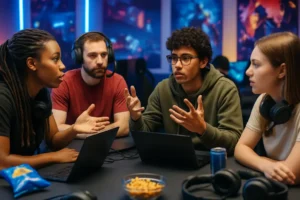
For Baylor Esports Careers, the structure is the main story. A student-athlete may care first about rank, scrim quality, and match days. A student producer may care about run-of-show documents, replay timing, audio checks, and sponsor-safe presentation. A club officer may learn how to manage signups, settle disputes, run practice space, and communicate with parents or administrators. Those are not the same jobs, but they are linked by the same campus system. That is where a university program can be more valuable than an isolated team account or a short-lived tournament run.
Why The Community Layer Counts
Baylor’s work with Oso Esports, its gaming club established in 2017, is especially relevant because college esports programs can easily drift away from the students who built the earliest community. The research says Baylor is collaborating with Oso Esports to form the Baylor Esports Academy, aimed at training and raising student-athletes for future varsity rosters in expanded gaming competitions. The academy idea creates a middle step between casual play and varsity selection. That middle step is where many students find out whether they want to compete, coach, produce, organize, or simply stay involved as community members.
That distinction matters for access. A varsity roster has limited slots by design. A healthy campus esports program should still make room for students who are not starters. If academy work is built carefully, it can give newer players feedback without making the whole scene feel closed. It can also give non-player students a place to learn event support, team communication, and peer leadership before they ever apply for an internship or campus job tied to gaming.
Alliance Building Changes The Career Frame
The USA Esports Alliance Signal
The USA Esports Alliance is significant less because of branding and more because of alignment. Collegiate esports has often been fragmented, with schools, clubs, leagues, publishers, and tournament operators moving on different schedules. Baylor joining a national alliance suggests the university wants its program to sit inside a wider competitive frame rather than operate as a local showcase only. That can help students understand how standards, eligibility, scheduling, and national competition intersect.
There is a caution here. Public alliance announcements do not automatically define paid roles, internship counts, scholarship structures, or post-graduation hiring outcomes. The available research does not provide those numbers, so they should not be assumed. Still, alliances can shape expectations. If students see how professional organizations and colleges communicate, they get a clearer view of how esports work is coordinated beyond Discord servers and match lobbies.
Careers Beyond The Starting Lineup
A related MostPlays piece on Baylor’s alliance move framed the partnership as a national signal for esports career development. That is the right lens, as long as the conversation stays grounded. Most esports students will not become full-time pro players. More may end up around the work that supports competition: coaching assistance, social content, broadcast production, event operations, scholastic program support, player management, or community programming.
That is why college esports should be judged by more than win-loss records. Results matter because competition is the core product. But a program also needs to teach students how matches become events, how events become community habits, and how those habits create experience that can be explained on a resume. For a wider view of non-obvious roles, MostPlays has also covered less visible esports careers, which connects naturally to the Baylor case.
Competitive Results Give The Program Proof
Rocket League Sets A Measurable Standard
Baylor’s Rocket League varsity team gave the program a clear competitive marker in April 2026. The team won its first conference championship, finishing a perfect 20-0 run in the Power Esports Conference Grand Finals at the HyperX Esports Arena in Las Vegas, according to Baylor’s title report. That result should not be stretched into claims about national dominance beyond what the source says. It does, however, show that Baylor’s varsity setup produced an immediate, measurable outcome in a recognized conference setting.
For students, a title run can create practical learning moments far beyond the three-player roster. Match preparation, media requests, travel coordination, practice review, and post-event coverage all create work around competition. Even if the public only sees the final scoreline, the campus community sees the process. That process is where students can begin to understand what esports labor looks like under pressure.
Events Teach Work Away From The Stage
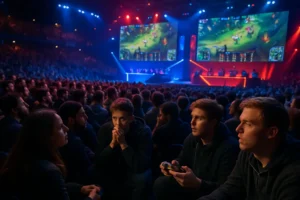
The research also notes that Baylor and Waco hosted major esports events in May 2026, including the Texas Scholastic Esports Federation Undisputed State Championships and the Collegiate Esports Commissioners Cup, drawing nearly 11,000 competitors, coaches, families, and fans. Earlier, Baylor hosted the Texas Esports League Fall Finals in December 2024 for middle and high school teams competing in titles such as Rocket League, Valorant, and Fortnite. Those details matter because hosting is one of the strongest bridges between campus esports and practical career exposure.
Large events ask different questions than team practice. Where do families check in? Who helps coaches find the correct station? How are delays communicated? Who protects a fair competitive environment for younger players? How does a campus welcome scholastic competitors without treating them like a marketing asset? Students who help answer those questions gain experience that can apply to tournament operations, school esports administration, live production, and community management.
What Students And Parents Should Read Carefully
Career Claims Need Specific Skills
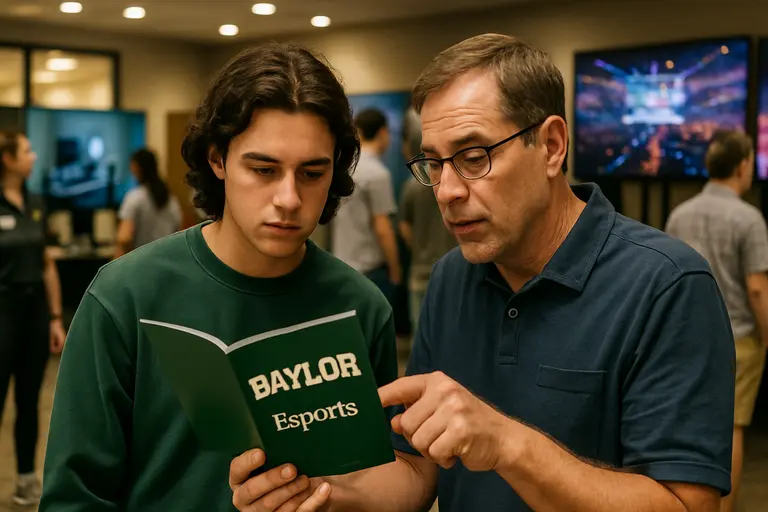
Baylor Esports Careers should be read as a developing model, not a finished job pipeline. The public research supports a strong direction: a varsity program, a director and coach, an alliance membership, a Rocket League conference title, academy development with Oso Esports, and event hosting in Waco. What remains less clear from the available material is how many paid student roles exist, how internships are assigned, how academic departments connect to esports, or how graduates will be tracked after leaving campus.
That uncertainty is not a weakness by itself. It is a reminder that students should ask specific questions. Does the program offer production work? Can club staff help with events? Are there chances to write, cast, edit, coach, or manage brackets? Is there training for safeguarding younger competitors at scholastic events? Are students documenting their work in portfolios? Those questions matter more than a banner graphic or a single championship photo.
Community Scale Must Serve Students
The strongest collegiate esports programs understand that growth can create strain. More events mean more labor. More visibility means more pressure on young players. More outside attention can make casual members feel secondary. Baylor’s challenge is the same one facing many schools that move from club activity to institutional esports: the program has to preserve student belonging while it builds competitive standards.
That is where the academy and club connection could be valuable. If Oso Esports remains a real entry point, students can participate before they are ready for varsity expectations. If event hosting includes student learning instead of only student labor, the community gains skills rather than just responsibilities. If competitive success is celebrated without crowding out non-player roles, the program becomes more durable.
Baylor Esports Careers As A Campus Model
Baylor Esports Careers offer a grounded example of where collegiate esports may be heading: less separation between varsity competition, scholastic outreach, event operations, and student club culture. The strategic partnership angle is meaningful because it places Baylor inside a national conversation while the Rocket League title gives the program a concrete competitive proof point. Neither piece is enough alone. Together, they suggest a campus model where students can see several routes into esports work, not just the pro-player dream.
The best read on Baylor right now is cautious optimism backed by evidence. The university has made visible commitments, won an inaugural conference title in Rocket League, hosted events tied to scholastic and collegiate play, and linked its student club history to a planned academy structure. The next measure will be how clearly those pieces translate into skills, portfolios, mentorship, and access for students across the community.