Remember when a spinning wheel was our biggest fear? Now, we face a battle for attention in milliseconds. The new tech isn’t just about better pictures or cool goggles. It’s about reconstructing reality itself.
Forget the cloud. For true immersion in VR or smooth 4K, data can’t travel far. My friends in data centers say latency is key. It’s what makes VR feel real, not just a laggy video.
AI is the ultimate puppet master. Generative tools create dynamic stories and worlds. But, a Deloitte report shows a catch: over half of companies avoid AI due to data issues. The power is huge, but privacy concerns are growing.
This isn’t just a tech upgrade. It’s a deeper, more demanding deal with our devices. As these tools shape competitive gaming and more, the real future trends are about ethics, not just tech.
Integrating Esports Events
What does a WNBA media rights deal have to do with a teenager clutching a controller? Everything. It’s the most exciting innovation in sports entertainment. The recent deal with Disney, Amazon Prime, and NBC wasn’t just about basketball. It was a sign for the future of all competitive spectacle.
Look at the “Caitlin Clark Effect.” Women’s basketball isn’t just popular; it’s a billion-dollar engine. Deloitte’s research shows this explosive growth. This gives a blueprint for esports to grow.
The real innovation isn’t the 4K stream or the ultra-low latency 5G. Those are just the basics. The real magic is in the business model. Streaming platforms are becoming patrons, buying up entire ecosystems. Esports is the ultimate sticky content, attracting viewers and building communities.

We’ve seen this before, in music apps. Their innovation? Live audio and virtual events. These features create direct revenue streams for artists. Esports and game streaming do the same, selling virtual tickets and loot.
| Model | Traditional Sports Broadcast | Esports Ecosystem | Music App Live Events |
|---|---|---|---|
| Primary Revenue Driver | TV Advertisers, Cable Subscriptions | Sponsorships, Virtual Goods, Direct Fan Payments | Subscriptions, Virtual Tips, Exclusive Access Passes |
| Fan Relationship | Passive Viewer | Invested Community Member | Direct Patron of the Artist |
| Platform Role | Content Pipe | Ecosystem Owner & Curator | Venue & Monetization Enabler |
| Key Innovation | Scale & Reach | Owning the Cultural & Economic Loop | Disintermediating Traditional Gatekeepers |
Platforms like Amazon Prime are leading the charge. They’re not just renting content. They’re buying the stadium, the teams, and the fan experience. This move is reshaping next-gen sports streaming. The audience wants immersion, not just observation.
The real game isn’t on Summoner’s Rift or in *Counter-Strike*’s de_dust2. It’s on the balance sheet. The winning innovation is total vertical integration. It’s about controlling the narrative from start to finish. You build a self-sustaining economy where fandom has value. That’s how you turn a stream into a society.
Trends in Viewer Interaction
The fourth wall didn’t just break; it was shattered by countless data points and live chats. We’re no longer just watching; we’re co-creating, testing, and providing feedback before the show even starts. This shift marks a major change in media: interaction is now the main content.
At the heart of this change is AI-driven personalization. It’s not just suggesting shows; it’s crafting stories that match your deepest desires. An algorithm studies your online habits, music, and even grocery app use. It then offers you a show like Severance that fits your mood perfectly. This isn’t creepy; it’s smart content engineering that keeps you coming back.
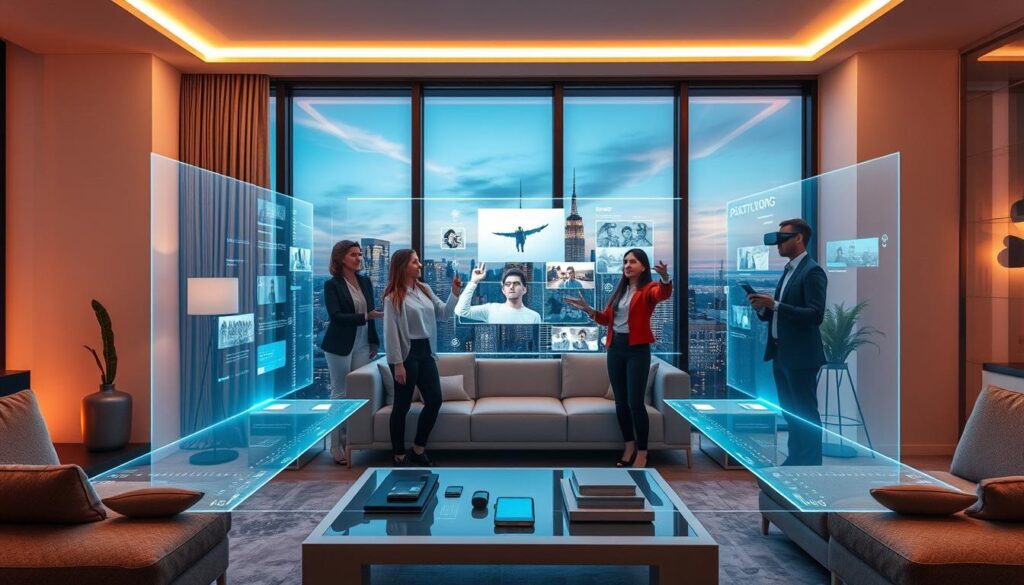
A new generation is leading this demand for interaction. Users aged 13-24 now control over 36% of the music app market. Their growth rate of 10.53% shows they want more social listening, short-form content, and direct creator interaction. This is what every major platform is racing to offer, as seen in digital media trends.
The stage for this interaction has grown beyond screens. The real innovation is in ambient experiences. Imagine your smart speaker narrating the game while you cook. Or Mercedes-Benz’s FYI RAiDiO, which personalizes audio news for your commute. Your car is now a media center that knows your team lost and offers comfort.
This growth is driven by innovation that makes content more accessible. In emerging areas, carrier-billing is making payments easier. Someone in Nairobi can now tip a streamer with mobile airtime. This isn’t just a payment hack; it’s opening up new markets. Also, fixed wireless access is bringing fast internet to places cable forgot. This means you can stream high-quality content from a rooftop antenna, not just a fiber line.
So, what are the key pillars of this interactive future trends landscape?
- Ambient Integration: Content flows seamlessly into smart speakers, cars, and wearables.
- Frictionless Access: Payment and connectivity barriers are dissolving globally.
- The Data Dialogue: Every click, pause, and comment feeds the AI, refining your experience in real-time.
- The Creator-User Loop: The line between broadcaster and audience is permanently blurred.
The question is no longer “what are you watching?” It’s “how, where, and with whom are you interfering with the narrative today?” The platforms that thrive will be those built for this glorious, messy conversation.
What’s Next for Gaming Content?
Looking ahead, we see a big change. We’re moving from seeing games as products to seeing them as ongoing services. This shift is at the heart of the next big leap in gaming.
The real excitement might be in the tech behind it. With open standards like RISC-V, we could see powerful streaming devices become cheap and common. Quantum computing is also on the horizon, promising unbeatable security for our digital lives. This tech is what will make VR streaming smooth and seamless.
It’s not just about the next big game. It’s about owning a creator’s entire world. This includes their game, podcasts, and virtual stores. It’s like a city-state for platforms. The success of podcasts shows the power of side content.
As games become more like real life, they might need new ways to prove their worth. Maybe they’ll be seen like digital health treatments. The biggest innovation might be finding the right balance between interactive streams and shared experiences.