August 2026 made live streaming growth harder to dismiss as a simple platform story. Twitch recorded 1.56 billion Hours Watched in August 2026, its strongest month of the year to that point, with average viewers above 2.14 million and both measures up about 6% from July 2026, according to Streams Charts data. For esports organizers, that combination matters more than a single viral peak. It points toward longer viewing sessions, stronger daily habits, and a viewer base that is not only appearing for one spectacle before disappearing.
The esports side of the month had its own signal. The Esports World Cup 2026, held from July 6 to August 23, 2026, generated 237 million hours watched across 25 tournaments, a 29.5% increase over 2025, while viewership jumped 37% year over year, according to GamesBeat’s report. That does not mean every tournament can copy the same model. It does mean August gave publishers, tournament operators, teams, and creators a clearer read on where competitive gaming attention is concentrating.
Why Live Streaming Growth Mattered In August
Live Streaming Growth Was Not Just A Peak Story
The most useful reading of live streaming growth in August 2026 starts with the gap between total watch time and peak audience. Twitch’s Hours Watched and Average Viewers rose from July, but peak concurrent viewership fell by 10% to about 4,173,855. The research notes tie that fall largely to July’s La Velada del Año VI boxing event losing influence in August. That split should shape how esports teams talk to sponsors. A record or near-record peak can be valuable, but it can also be distorted by one crossover moment that does not repeat on command.
Average viewers and Hours Watched tell a different story. They reward regular programming, match-day pacing, restream value, community discussion, and creator schedules that keep audiences attached after the headline match ends. For competitive gaming, that is closer to the business problem most organizers face: not whether one final can break through for a few hours, but whether the event can hold attention across groups, playoffs, shoulder content, and multiple languages.
Twitch’s Month Was Broad, Not Simple
August was not carried by one esports title alone. The simulator genre rose 45% month over month in both Hours Watched and Average Viewers, helped by an Escape from Tarkov patch update and a Minecraft marathon by major creators. Escape from Tarkov surged by about 525% in Hours Watched on Twitch during August, while Minecraft rose 54%. Dota 2 more than doubled its Hours Watched compared with July, with The International 2026 identified in the research notes as the main driver.
That mix matters because esports often treats genre identity too narrowly. Traditional tournament calendars still lean on established competitive titles, but August showed that audience energy can come from patch cycles, creator-led endurance formats, and event structures that sit near esports without matching a standard bracket. The lesson is not that every organizer should chase every trending game. It is that future esports events may need more flexible programming around the main competition, especially when a patch, creator campaign, or community challenge gives viewers a reason to stay on the platform.
Esports Events Benefited From Distributed Audiences
EWC Showed Event Scale Across Many Titles
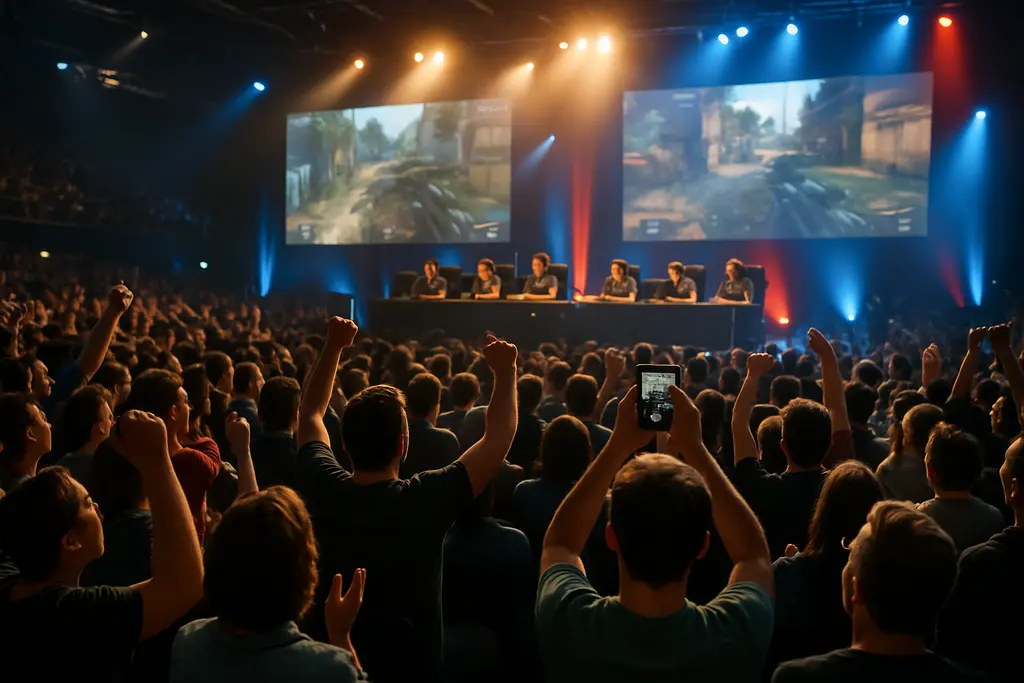
The Esports World Cup 2026 was the strongest example from the research set because it stretched attention across 25 tournaments rather than relying on a single game. Its average live viewership rose to 145,100, while peak viewership reached 2.89 million, nearly matching the prior year’s record. The Mobile Legends: Bang Bang Mid Season Cup playoff match between Onic Esports and Aurora Gaming was singled out in the research notes as a key peak-viewership driver.
For tournament planners, the cross-title model creates both reach and risk. A large event can gather different communities under one commercial package, but those communities do not behave identically. A Mobile Legends audience, a Counter-Strike audience, and a Dota 2 audience have different broadcast habits, creator loyalties, regional language needs, and tolerance for downtime. Live streaming growth rewards events that understand those differences rather than treating all viewers as interchangeable traffic.
Co-Streams Changed The Broadcast Center Of Gravity
The research notes indicate that community casting and co-streaming accounted for 51.4% of total Esports World Cup 2026 watch time, slightly ahead of official broadcasts at 48.6%. That finding lines up with a pattern we have tracked before in community co-streaming: audiences often choose the room, language, jokes, and pacing they trust, even when the official channel has cleaner production and direct access.
This should not be read as a failure of official broadcasts. It is a distribution shift. The official show still defines the competitive product, supplies the feed, sets match context, and protects competitive integrity. Co-streamers convert that product into community-specific viewing rooms. For publishers and organizers, the practical question is no longer whether co-streaming should exist. It is how rights, moderation standards, sponsor placement, language coverage, and creator access should be designed before the event begins.
What Organizers Should Change For 2027 Planning

Average Viewers Deserve More Weight
August’s data argues for a cleaner hierarchy of metrics. Peak viewership still has PR value, but it should not be the only number used to judge event health. Twitch grew Hours Watched and Average Viewers in August while its peak fell. That is exactly the kind of month that can be underrated if decision-makers only chase the tallest spike on a chart.
Future esports events should build reporting around average audience, total watch time, language splits, creator contribution, and retention across match blocks. A sponsor interested in consistent exposure may care more about four stable broadcast days than one explosive semifinal. Teams evaluating content value should also look at how much discussion their matches created outside the official stream. The event is no longer confined to the main channel once co-streams, clips, creator recaps, and watch-party communities carry a large share of the viewing load.
Genre Choice Can Move The Needle
The August figures also challenge the safest version of esports scheduling. Counter-Strike rose 38% during EWC in the research notes, while Dota 2 received a major lift from The International 2026. At the same time, Escape from Tarkov and Minecraft showed that creator culture and patch timing can push viewing behavior at a scale tournament operators should respect.
That does not mean a Minecraft marathon is the same product as a championship bracket. It does mean esports events can borrow smarter timing. If a game has a meaningful update, a major creator campaign, or a community-driven format near a competitive event, organizers should consider how those audiences overlap. For broader game-market context across the same network, GameCloud Network provides insights and tracks related shifts in player attention and platform behavior.
- Use average viewers and Hours Watched as primary health metrics, with peak viewership treated as a separate volatility signal.
- Plan co-stream access, language coverage, and creator guidelines before the tournament starts.
- Test event formats around patch windows, creator schedules, and regional broadcast habits rather than relying only on legacy time slots.
Live Streaming Growth And Future Esports Events
The August 2026 Readout Was A Planning Brief
Live streaming growth in August 2026 gave esports a practical brief for the next wave of events. The month showed that total platform demand can rise even when peak concurrency drops. It showed that large multi-title competitions can still produce major watch time when the calendar is dense and the audience paths are varied. It also showed that creator-led distribution is not a side channel anymore; for some events, it can rival or pass the official broadcast in total viewing contribution.
The community impact is the part organizers should treat with care. Viewers are not rejecting professional production. They are asking for access points that fit how they already watch: local language casts, trusted creators, flexible schedules, and social spaces where a long match day feels shared rather than passive. If tournament operators read August only as a bigger-number month, they will miss the more useful signal. Live streaming growth is now tied to event design, creator policy, platform mix, and community trust as much as it is tied to the quality of the matches themselves.