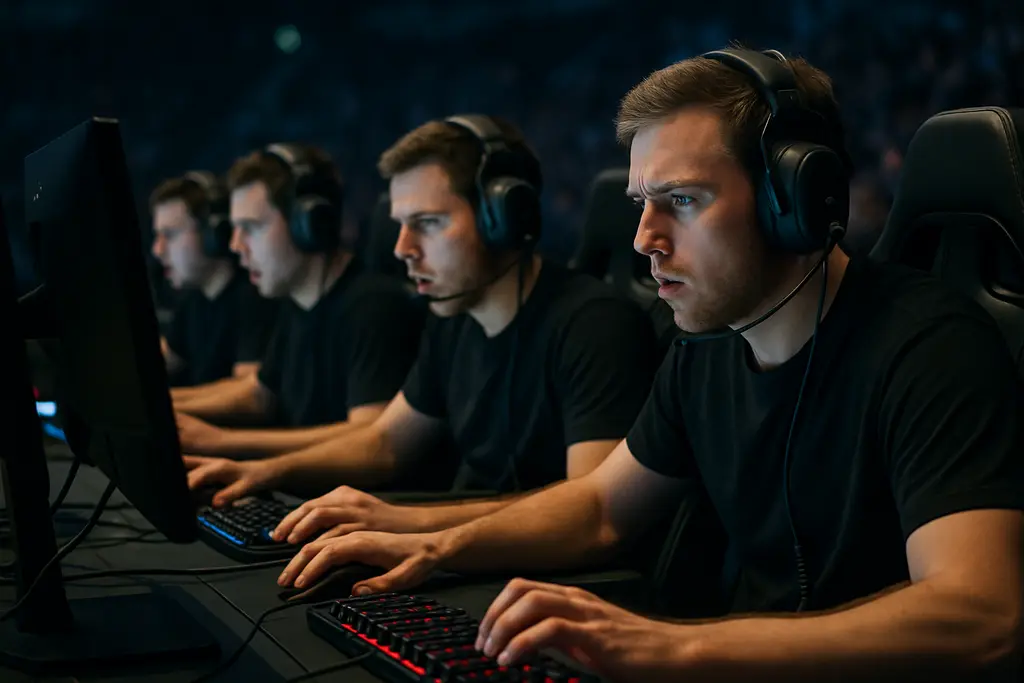
CS2 roster volatility became one of the defining business stories of Counter-Strike after the IEM Cologne Major ended on June 21, 2026. The server story was only part of it. Within a week, teams across Europe, the Americas, Asia, and Oceania had already started the familiar cycle of signings, benchings, loans, and coaching changes, as tracked by Strafe’s CS2 roster tracker. The pattern was not simply panic. It showed how organizations now balance competitive timelines, ranking pressure, buyout risk, language fit, and public identity in a scene where one bad event can sharpen every internal debate.
The old version of roster season was easier to describe: a team lost, a star became available, an organization tried to buy firepower. The 2026 version has been more guarded. Some clubs still moved quickly, but many treated change as a liability as much as a solution. A new rifler can fix trading patterns, but can also reset comms, roles, practice habits, and the authority of an in-game leader. A new coach can bring structure, but can also expose how little time teams have between major events. That tension is why roster strategy has become less about raw ambition and more about risk control.
CS2 Roster Volatility After Cologne
CS2 Roster Volatility Hit Fast
The June 21, 2026 end date for the IEM Cologne Major mattered because it gave organizations a clean competitive breakpoint. Once a Major cycle ends, leadership can justify decisions that would look disruptive during qualification or deep tournament runs. The research notes point to activity across multiple regions within one week, including signings, benchings, loans, and staff changes. That speed tells us teams had plans ready before the final matches were played.
That is the practical face of CS2 roster volatility: the public move arrives suddenly, but the strategic debate usually starts earlier. General managers and coaches are not just asking whether a player is good enough. They are asking whether the current five can keep a Valve Regional Standing position, whether a role clash is survivable, whether a language switch damages mid-round calls, and whether the replacement market is worth the cost. In that sense, the offseason was not chaotic from the inside. It was compressed.
The Transfer Calendar Tightened Decisions
Counter-Strike does not exist in isolation from the wider esports operations conversation. Across BLAST-run competition, formal transfer periods have become a way to limit competitive disruption. The 2026 BLAST R6 Global Rulebook, for example, listed transfer windows and capped licensed teams at three roster changes during mid-season windows in that circuit, according to the 2026 BLAST R6 rulebook. That is not a CS2 rulebook, and it should not be treated as one. It does, though, show why teams in major esports increasingly plan personnel moves around calendar pressure rather than emotion.
CS2 organizations face their own version of that squeeze. Even when rules allow movement, the competitive schedule punishes sloppy timing. A team that changes two roles after a Major may gain talent but lose weeks of defaults, utility habits, and map-pool trust. The result is a more conservative market than fans sometimes expect from public frustration after a poor finish.
Why Some Teams Chose Restraint
Chemistry Became A Real Asset
The supplied research notes that NAVI’s post-Major question as of June 26, 2026 was whether to hold steady despite inconsistent Major results. The argument for patience was clear: a team capable of winning events such as ESL Pro League Season 23 and IEM Atlanta 2026 does not automatically need a rebuild because one Major ended badly. That kind of case is where management earns its salary. Replacing a player can satisfy fan anger for a week, but if the underlying structure works, the organization may be better served by keeping its practice base intact.
CS2 roster volatility also turned chemistry into something close to an accounting line. Teams now understand that role knowledge has value. A support player who knows exactly when to flash, when to bait contact, and when to give up space may not be the flashiest asset on the market, but removing that player can create three new problems. The more international a lineup becomes, the more that hidden work matters.
Cost Made Big Swings Harder
The research also points to a budget issue that has become harder to ignore: acquisition costs remained high while CS2 revenue did not always rise at the same pace. That makes roster churn expensive even before considering salaries, relocation, coaches, analysts, and possible buyouts. A team can want change and still decide that the best move is no move.
This is where community expectations often collide with organizational math. Fans see the scoreboard. Executives see runway. A benched player may still carry salary cost. A buyout may limit spending elsewhere. A star addition may require role sacrifices from two existing players. For adjacent gaming-business readers, insights are tracked across the network by Rave Tech, highlighting how competitive pressures in CS2 are distinct because every roster decision is visible on match day.
Youth, Imports, And Identity Bets
Academy Paths Gained Value
One notable thread from the July 23, 2026 roster trackers was the turn toward younger or lower-tier talent. The research notes Liquid adding JT in place of siuhy, while MOUZ and The MongolZ were among teams bringing in young players. The MongolZ example cited in the research included promotions for tikuak and DarkMeister after cobrazera was benched. The common idea is not hard to read: if established talent is expensive or awkward to fit, a younger player may offer cleaner role flexibility and a longer development window.
This does not mean academy promotion is safe. Young players need time, and CS2’s calendar rarely offers much of it. The difference in 2026 is that organizations appear more willing to view development as a strategic hedge. A promoted player can protect budget, refresh motivation, and signal a long-term plan to fans. That same logic sits behind tier-two scouting in North America, where our earlier read on KODEX CS2’s entry framed lower-tier depth as both a competitive test and an org-building question.
International Rebuilds Raised New Risks
The research notes around Aurora after the Esports World Cup 2026 described a wider rebuild under coach Ashley “ash” Battye and new in-game leader kyxsan, with the team working toward a more international setup. Because those details come from reporting outside the permitted source list here, they should be read as directional rather than treated as an official team record. Still, the strategic theme is relevant: international CS2 lineups are no longer novelty projects. They are a major route for organizations that cannot or will not depend on one national talent pool.
The trade-off is real. International lineups can open access to better role fits, but they also make communication, cultural habits, and leadership authority harder. A new in-game leader must build trust in more than one language context. A coach has to decide which systems travel and which need to be simplified. A player who was comfortable in one domestic setup may need months to show the same confidence elsewhere. That is why roster change is now also identity change.
CS2 Roster Volatility And The Org Playbook
The best response to CS2 roster volatility in 2026 has not been one universal strategy. It has been choosing the right kind of risk. For a team with a broken role structure, movement can be necessary. For a team with proven event-winning upside, restraint can be the smarter bet. For a budget-conscious organization, academy talent may be more useful than chasing a name. For a club trying to grow global reach, an international rebuild may make sense even if the first months are uneven.
What changed after June 21, 2026 was the clarity of the trade-off. Roster moves are no longer judged only by the next match. They are judged by whether they protect rankings, extend financial runway, improve practice quality, and give fans a believable team identity. The organizations that handled the summer best were not necessarily the loudest in the market. They were the ones that understood why they were changing, what they were risking, and how long the new version of the team would need before anyone could grade it fairly.