
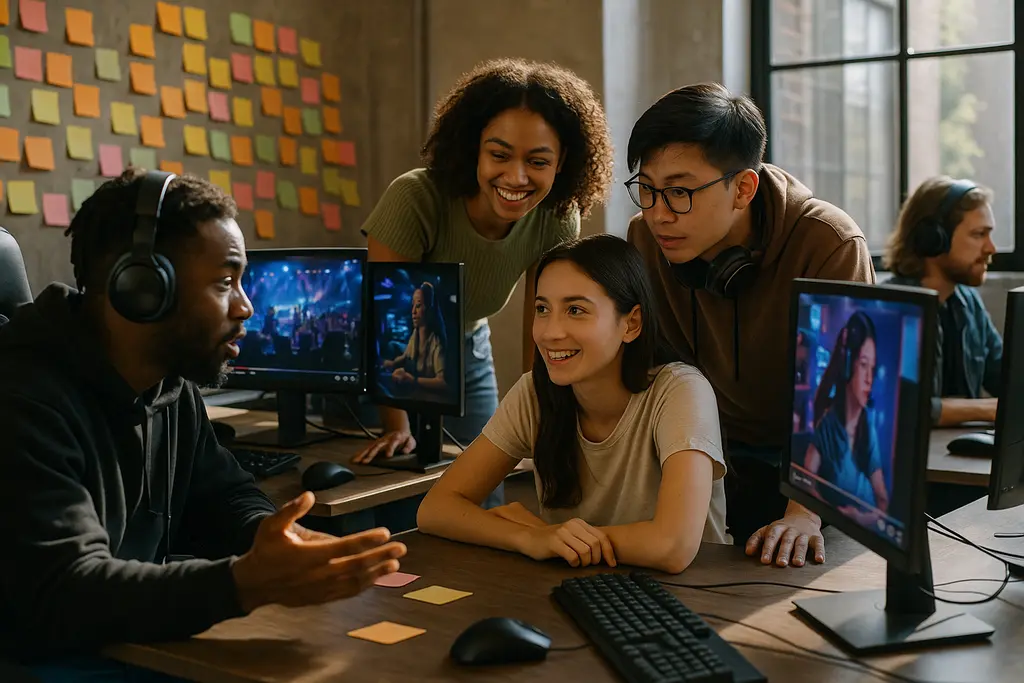
Netflix Short-Form Video is not a gaming product by itself, but it matters to gaming content creators because it shows how major streaming platforms keep borrowing from the clip-first habits shaped by TikTok, YouTube Shorts, Twitch highlights, and esports social feeds. Netflix entered this format in March 2021 with Fast Laughs, a vertical feed of short comedy clips pulled from its own catalog, with TechCrunch describing it as a TikTok-like discovery feature reported by TechCrunch. That framing is the key point for creators: short clips are not just side content now. They are a front door.
For gaming creators, the question is not whether Netflix suddenly becomes the next Twitch. The supported evidence does not show an open gaming upload platform, a live esports product, or a creator monetization system aimed at streamers. The stronger read is narrower but still meaningful: Netflix is testing and buying into formats that make creator content easier to sample. That puts pressure on gaming channels to treat short-form as audience acquisition, not as a throwaway edit at the end of a production week.
Why Netflix Short-Form Video Matters
Netflix Short-Form Video As Discovery
Fast Laughs was built around discovery. The clips came from Netflix programming, not from public uploads, and the format leaned on quick vertical viewing. That matters because discovery is where gaming creators often win or lose momentum. A tournament VOD, a three-hour ranked grind, or a 40-minute patch analysis rarely reaches cold viewers without a sharper entry point. A good short clip gives context fast: the matchup, the stakes, the joke, the fail, the clutch, or the take.
The core lesson from Netflix Short-Form Video is that platforms want viewers to sample more content with less commitment. That same behavior already shapes esports and gaming media. A viewer may first see a creator through a 25-second rant about a balance patch, then move to a YouTube breakdown, then join a Twitch stream during a regional final. Netflix entering the format does not create that behavior, but it validates why large entertainment companies keep designing around it.
Creator Content Is Moving Closer To Streaming Platforms
The other key development is Netflix working with established digital creators. In July 2026, TheWrap reported that Mythical’s cooking content, including shows associated with its YouTube audience such as Good Mythical Morning and Mythical Kitchen, would stream on Netflix through a creator partnership covered by TheWrap. That is not a gaming deal, and it should not be framed as one. Still, it gives gaming creators a useful signal: platforms may be more interested in creator brands that already have repeatable formats, loyal audiences, and library value.
That distinction matters. A creator who only posts viral one-offs is not in the same position as a creator with a recognizable show structure, recurring segments, and a community that follows across platforms. Esports-adjacent creators can learn from that without copying food entertainment. A weekly pro-play recap, a ranked coaching clinic, a documentary-style player profile, or a patch debate show can be clipped into short formats while still supporting longer episodes.
What Gaming Creators Can Learn
Clips Need A Clear Job
Short-form output works best when each clip has a job. Some clips introduce a creator’s personality. Some explain a meta shift. Some point viewers toward a full match review. Some capture a community joke that only makes sense if it is posted quickly. Gaming creators often weaken their own short-form strategy by treating every clip the same: loud moment, subtitle stack, reaction face, publish. That can work sometimes, but it does not build a channel identity by itself.
A stronger gaming clip strategy starts with format discipline. Competitive communities are good at spotting filler, especially around esports events where viewers already know the match context. If a creator posts a clip about a Counter-Strike execute, a VALORANT agent change, or a League of Legends draft decision, the clip needs enough context to be useful without turning into a mini lecture. The best short-form gaming content respects the viewer’s time without assuming the viewer knows every detail.
- For esports analysis: use clips to explain one decision, one fight, or one draft idea.
- For variety creators: use clips to show personality, not just volume or shock.
- For educational creators: make the first seconds state the problem the viewer is about to solve.
- For community channels: keep inside jokes readable enough for new viewers to join.
Short-Form Should Feed Long-Form, Not Replace It
The research notes point to a wider industry concern: short-form growth can pull attention away from long-form video, affecting view counts, engagement, and revenue streams for creators who rely on longer uploads. Even without overstating the data, gaming creators already feel that tension. A clip can win reach, but it rarely carries the same sponsorship value, community depth, or watch-time economics as a strong long-form video or live broadcast.
That is why gaming creators should avoid treating short-form as a full replacement for deeper work. A 30-second clip can sell the premise of a VOD review, but it cannot fully explain a best-of-five adaptation. It can show a funny queue moment, but it cannot build the same loyalty as a regular stream where chat culture forms over weeks. The creator economy rewards reach, but gaming communities still reward consistency and trust.
The Platform Risk For Gaming Channels
Netflix Is Curated, Not An Open Upload Home
One risk is overreading Netflix’s moves. Based on the cited developments, Netflix is not offering gaming creators a public upload tool comparable to YouTube, TikTok, or Twitch. Fast Laughs used Netflix’s own catalog. The Mythical partnership points toward selected creator programming. That suggests a curated model, where only established brands with proven formats are likely to get a serious conversation.
For most gaming creators, that means Netflix is more useful as a market signal than as an immediate distribution plan. The practical platforms remain YouTube, Twitch, TikTok, Instagram, and platform-native community tools. Creators should still watch Netflix because its choices can influence advertiser expectations and audience habits, but they should not build a 2026 strategy around a partnership path that has not been shown for gaming channels.
Accessibility And Community Trust Still Matter
The research notes also raise accessibility concerns around short-form video, especially for blind and low-vision viewers when rapid cuts, visual overlays, and dense on-screen text carry the whole message. Gaming content is already prone to this problem because clips often depend on tiny HUD elements, fast camera movement, item icons, or minimap information. If creators want short clips to function as entry points, those clips need to be understandable beyond the most locked-in viewers.
That can mean clearer voiceover, less crowded editing, captions that do not cover key game information, and titles that explain the clip’s subject without baiting the viewer. Gaming creators who care about community trust should also be careful with monetization signals. Short-form discovery can push creators toward constant posting and aggressive calls to action, but competitive gaming audiences tend to punish channels that feel extractive.
Netflix Short-Form Video And Creator Strategy
A Practical Read For Esports Creators
For gaming channels, Netflix Short-Form Video is less about chasing Netflix directly and more about preparing for a media environment where every long idea needs a short entry point. Esports creators should think in layers. The live stream builds community. The long video builds authority. The short clip creates the first contact. The newsletter, Discord, or site article keeps the relationship from being fully controlled by any single platform.
This is where viewer behavior research becomes useful for planning. If audiences are splitting attention across streaming services, ad-supported viewing, and multiple screens, creators need scheduling and packaging that reflect those habits. That is why our related analysis on viewer behavior research connects directly to this topic: distribution strategy now shapes the content itself.
The most grounded move for gaming creators is not to imitate Netflix’s format beat for beat. It is to build repeatable short-form systems that point back to stronger work. A creator covering a major esports patch can cut one clip for the headline change, one for the pro-play impact, and one for the solo queue reaction. A tournament analyst can clip a single turning point, then link it to a fuller breakdown. A streamer can post personality-driven highlights without letting the channel become only random moments.
Netflix’s short-form push and creator partnerships show that the gap between internet-native talent and subscription entertainment keeps narrowing. Gaming creators do not need to wait for a platform invitation to respond. They need clearer formats, better clip discipline, and a plan that protects long-form value while using short-form reach intelligently.


