Baylor esports careers now sit inside a larger national conversation after Baylor University joined the USA Esports Alliance, a coalition built to connect professional organizations, collegiate programs, and amateur competition. Baylor’s own announcement says the alliance was announced on March 20, 2026, and includes 11 North American esports organizations along with 17 universities from VOICE’s Presidents Advisory Council, including Baylor Baylor’s announcement. That matters because college esports has often been asked to serve too many purposes at once: varsity competition, student life, recruitment tool, broadcast lab, and career bridge. This alliance does not solve that by itself, but it gives Baylor a clearer structure to work within.
The careful read is better than the easy sales pitch. An alliance is not a job guarantee, and a national structure is only useful if students can see where they fit inside it. Still, Baylor joining a group that includes pro organizations such as 100 Thieves, Dignitas, TSM, Spacestation Gaming, FlyQuest, Cloud9, Team Liquid, NRG, Misfits Gaming, M80, and Ghost Gaming gives the university’s esports program a different kind of context. For students, parents, coaches, and campus administrators, the key question is not whether esports is visible. It is whether the pathway from campus involvement to professional readiness becomes easier to understand.
Why Baylor esports careers Matter Beyond The Roster
The Career Story Is Bigger Than Starting Five Spots
Baylor esports careers should not be measured only by who makes a varsity lineup. That framing misses most of the real workforce around competitive gaming. A program can develop players, but it can also expose students to production, marketing, program operations, community management, coaching support, event staffing, sponsorship work, and game-adjacent legal or engineering interests. Baylor’s esports material describes career readiness as part of the program, including areas such as computer programming, engineering, entertainment law, and marketing. Those fields are not side quests for esports; they are where many sustainable careers actually sit.
This is where collegiate esports has a chance to separate itself from a purely ladder-based model. In open competition, the question is usually whether a player is good enough right now. On campus, the better question is what a student is learning while competing, producing, managing, or organizing. If Baylor can connect its esports activity to documented skills, students may leave with more than a highlight reel. That is especially relevant for students who love competitive games but know they are unlikely to become full-time pro players.
Baylor esports careers Need Clear Expectations
Baylor esports careers also need honest messaging. Competitive gaming can attract students with the dream of playing for a living, but universities have a responsibility to explain how narrow that route can be. The value of Baylor’s alliance involvement is strongest if it helps define the support roles around the ecosystem rather than treating every participant as a future star. A student who learns how to run a broadcast, coordinate scrims, manage a Discord community, analyze opponent tendencies, or support a campus tournament may be building practical experience even if they never appear on a national stage.
That distinction matters for community trust. Esports audiences are quick to spot empty branding. Students are even quicker. If the alliance becomes a logo swap with little student access, it will be judged that way. If it leads to clearer standards, broader mentorship, and better understanding of what pro organizations actually need from entry-level talent, Baylor’s participation becomes more meaningful.
How USA Esports Frames The Pathway Question
A National Structure With Athlete Input
The USA Esports Alliance is described as an effort to unify professional teams, collegiate programs, and amateur competitions under a single national structure. That is a significant phrase because U.S. esports has often been fragmented by title, publisher, platform, school, and organizer. A shared structure could make it easier for colleges to understand how their programs connect to amateur and pro spaces, though the practical details will matter more than the announcement language.
The governance model is the most interesting part of the announcement. USA Esports is structured around an athlete-centered model requiring at least one-third of all standing committee members to be active athletes. The planned Athletes’ Advisory Council is also meant to provide representation on governance, competition standards, and athlete development. In college esports, where students can be competitors, employees, club officers, broadcasters, moderators, and community leaders at the same time, athlete input should not be treated as a courtesy. It should be part of how standards are built.
Why Pro And College Alignment Can Help
The presence of established North American organizations gives the alliance a professional reference point. That does not mean every student gets direct access to those teams, and it would be irresponsible to imply that. What it can mean is that colleges hear more clearly what pro organizations value outside raw mechanical skill. Those needs can vary by title and department, but the broader pattern is familiar to anyone covering esports careers: reliability, communication, content literacy, competitive knowledge, operational discipline, and comfort working in public-facing communities.
What Baylor Brings To The Alliance
A Young Program With Varsity Ambition
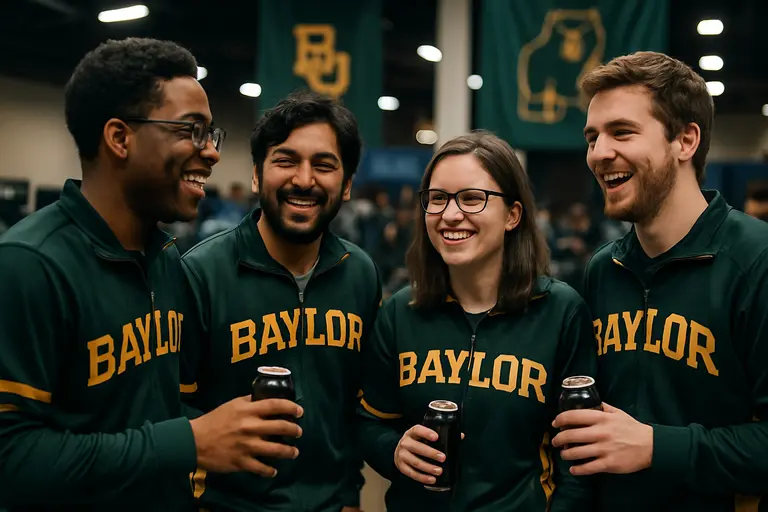
Baylor Esports was established in 2025, with Adam Stanley hired as the program’s first director and varsity coach. The inaugural 2025-2026 season includes a three-person Rocket League team featuring Colby “hockser” James, Andrew “Andy” Nolan, and Kadin “Zineel” Zineelabidine. That gives Baylor a notable competitive starting point, but the more important program question is how that varsity layer connects with the rest of the campus.
The research also notes Baylor fields varsity teams in Rocket League, Overwatch 2, Valorant, and Super Smash Bros. Ultimate, while competing in the Power Esports Conference, a scheduling alliance among top-tier Football Bowl Subdivision institutions. A schedule against similarly sized and resourced schools can help normalize esports inside athletics-adjacent campus conversation. It can also create regular work for students interested in match operations, content, streaming support, and team management.
Community Links Can Decide The Real Impact
Baylor’s collaboration with Oso Esports, the university gaming club established in 2017, may end up being one of the most important pieces. The Baylor Esports Academy is meant to train and elevate student-athletes for future varsity rosters in expanded gaming competitions. If handled well, that kind of bridge can keep the program from becoming a closed room reserved only for signed players.
Club communities are often where college esports culture is built first. Varsity programs can bring resources, structure, and recognition, but clubs bring continuity and local credibility. The healthiest version of this setup lets competitive students chase roster spots while also giving non-varsity students reasons to stay involved. That balance is where Baylor esports careers can become more than a recruiting phrase.
- Varsity competition can support player development and coaching education.
- Club activity can create entry points for students outside the starting roster.
- Broadcasts, events, and team operations can help students build visible work samples.
- Alliance participation can give campus programs a clearer connection to national standards.
That model also matches how esports employment usually works. Very few people enter the industry through one perfect door. Many start by moderating a community, producing a small tournament, clipping match footage, helping a student team, or writing about a scene before any formal role appears. For readers comparing possible paths, our breakdown of less obvious esports careers is a useful companion to Baylor’s campus-level shift.
Baylor Esports Careers And The Hard Work Ahead
The next phase is execution. Baylor esports careers will be shaped by what students can actually access: mentorship, reps, projects, competition, feedback, and credible points of contact. The USA Esports Alliance can provide a stronger frame, but Baylor still has to turn that frame into daily student experience. That means making pathways legible for varsity players, club members, production volunteers, student marketers, aspiring coaches, and students whose interest sits between gaming and another academic discipline.
The announcement is best read as a starting signal rather than a finished career system. Baylor has joined a national alliance with recognized pro organizations and peer universities. It has a young esports program, a varsity competitive base, a club connection through Oso Esports, and a stated interest in career readiness. Those are real ingredients. The measure now is whether students can point to specific opportunities and say the structure helped them move from interest to experience.
For a university entering this space, that is the right standard. Esports does not need another vague promise that gaming creates jobs. It needs programs willing to show students how competition, community work, production, and academics can connect. If Baylor can do that through its alliance role, then the career value will be visible without needing to oversell it.