
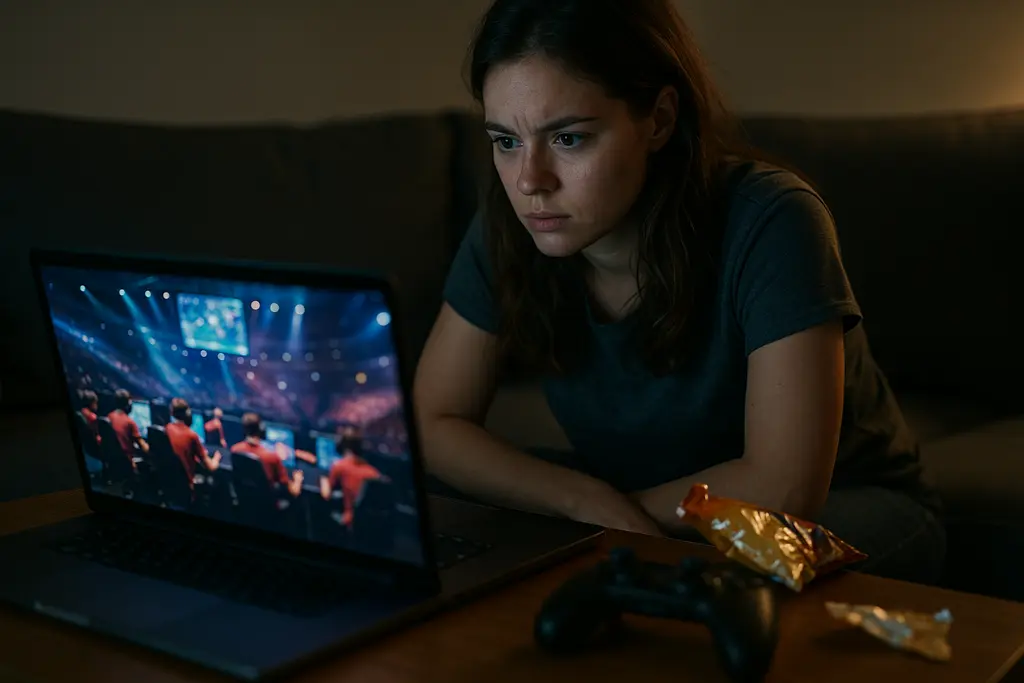
Viewer Behavior Research is becoming harder for esports creators to ignore because audience habits are no longer split cleanly between live competition, creator streams, and passive video. The same viewer who watches a tournament co-stream at night may also spend hours on ad-supported entertainment apps, short-form clips, and archived broadcasts. That does not make the audience impossible to understand. It does mean creators, org media teams, and tournament channels need to treat attention as something viewers actively reassign minute by minute.
The latest signals point in the same direction: streaming is now the center of TV viewing behavior in the United States, while creator ecosystems face pressure from overlapping live broadcasts and loyalty that can shift during a session. For esports, that matters because much of the scene already depends on fragmented attention. A Counter-Strike viewer may follow an official stream, a former pro’s watch party, team social clips, and post-match analysis without seeing those as separate habits. The creator who assumes one upload or one live slot owns the full relationship is working from an outdated model.
What Viewer Behavior Research Shows About Attention
Viewer Behavior Research And The Streaming Baseline
The broad media shift is clear. In October 2025, U.S. television viewers spent 60% of their TV time with streaming content, compared with 40% for linear TV, according to Samba TV coverage from TVTechnology. The same report said more than half of subscription video-on-demand subscribers had chosen ad-supported plans by that point. Those figures are not esports-specific, but they set the viewing environment that competitive gaming creators now operate inside.
For years, esports has talked about being “digital native,” but that label can hide a more practical issue: viewers are now trained to swap between live and on-demand formats without treating either as secondary. A tournament VOD, a player stream, a team documentary, and a short match recap can all sit in the same personal media rotation. The channel that wins is not always the one with the newest upload. It is often the one that gives the viewer the clearest reason to spend the next 10 minutes there instead of somewhere else.
Ad-Supported Viewing Changes The Creator Pitch
Ad-supported streaming also changes the commercial tone around creator work. If more viewers accept ads as part of the streaming exchange, brands may see creator-led programming as part of a broader entertainment buy rather than a niche gaming add-on. That can help established esports creators, but it also puts pressure on smaller channels to define what their audience actually does during a broadcast.
A live watch party with active chat, a quiet VOD review, and a personality-driven ranked session are not interchangeable inventory. Each format produces a different kind of attention. The safer creator strategy is not to copy a platform trend on sight. It is to ask whether a format produces repeat viewing, chat participation, Discord carryover, or clip sharing. Viewer Behavior Research gives creators a better vocabulary for that decision, especially when sponsors want proof that a channel is more than a follower count.
Concurrent Streams And Audience Leakage
Scheduling Still Carries Context
The creator ecosystem study cited in the research notes adds a useful warning for esports. A March 2026 paper, Concurrent Streaming, Viewer Transfers, and Audience Loyalty in a Creator Ecosystem, found that concurrent streaming is associated with substantial raw per-stream audience decreases, while scheduling factors account for much of the observed drop. That is a careful finding, and it should be read carefully. It does not say every overlapping stream damages every creator equally. It says the timing of streams and the surrounding schedule can explain a large share of the audience loss that appears when creators go live at the same time.
That distinction matters in esports because overlap is normal. Major events run across regions, co-streamers follow official broadcasts, and players may go live after scrims, ranked sessions, or match days. A creator who loses viewers during a crowded block may not have a content problem. They may have a scheduling problem. The inverse is also true: a channel that performs well in a quiet slot may not have the same pull when placed against a major final or a popular co-stream.
Loyalty Is Not A Static Asset
Audience loyalty in streaming is often discussed as if it is owned once it is earned. The research framing pushes against that. Viewer transfers can happen inside a creator ecosystem, especially when multiple familiar personalities are live at once. In esports terms, a viewer may not feel they are abandoning one creator by opening another stream. They may be following the match, the friend group, the analysis style, or the chat energy that fits the moment.
This is where Viewer Behavior Research becomes useful for team channels and individual creators alike. The practical question is not only “How many followers do we have?” It is “What happens when our audience has three credible alternatives at the same time?” If the answer is unknown, the creator has limited control over programming choices. If the answer is tracked through retention, chat behavior, and schedule testing, the creator can make better calls without pretending every viewer is loyal in the same way.
What Esports Creators Can Actually Change

Discovery Has To Be Earned Off Platform
Discovery remains one of the weakest parts of the creator economy for mid-size esports channels. Recommendation systems can help, but creators should not build a full content plan around being surfaced by an algorithm at the right time. Esports audiences already move across platforms: live chat, social clips, team accounts, match threads, Discord servers, podcasts, and YouTube uploads all play different roles in keeping a viewer connected.
A more durable approach is to make each format point somewhere useful. A short clip should not just repeat the loudest moment from a stream. It should give a viewer a reason to watch the full VOD, join the next live broadcast, or understand a player’s perspective after a match. A tournament content desk can do the same by making analysis accessible after the broadcast ends. That is not a replacement for live viewership. It is a way to stop losing the viewer once the live window closes.
Hardware, Comfort, And Repeat Viewing
There is also a consumer-side angle that esports coverage sometimes skips. Long viewing sessions are shaped by comfort, device choice, audio quality, and the social setting around the screen. That does not mean every content strategy needs to become a gear pitch. It does mean creators should understand that viewing is a habit built inside real rooms, not just inside analytics dashboards.
The main creator takeaway is simple: reduce friction. If a viewer needs to hunt for the schedule, decode the format, or wait through long dead air without context, they are being given reasons to leave. If the stream clearly explains what is happening, when the next match starts, and where the best supporting content lives, the channel respects the viewer’s time. In crowded esports weeks, that respect can matter as much as production polish.
Viewer Behavior Research For Creator Strategy
Smaller Decisions Matter More Than Slogans
Viewer Behavior Research does not hand creators a universal fix. It points toward smaller, testable decisions: avoid unnecessary schedule clashes, package VODs with a clear purpose, treat ad-supported audiences as normal streaming consumers, and measure whether viewers return after big-event spikes. For esports orgs, the lesson is similar. A star player’s stream, a team match day show, and a sponsor segment should not compete with one another by accident. They should fit into a viewing path that makes sense to the community.
The most useful reading of the latest research is not that audience loyalty is dead or that live streaming has peaked. It is that viewers have become more practiced at reallocating attention. They can follow several creators, shift between official and personality-led broadcasts, and accept ads when the value exchange feels reasonable. Creators who understand those habits will not need to chase every trend. They will make programming choices that match how esports viewers already behave.


