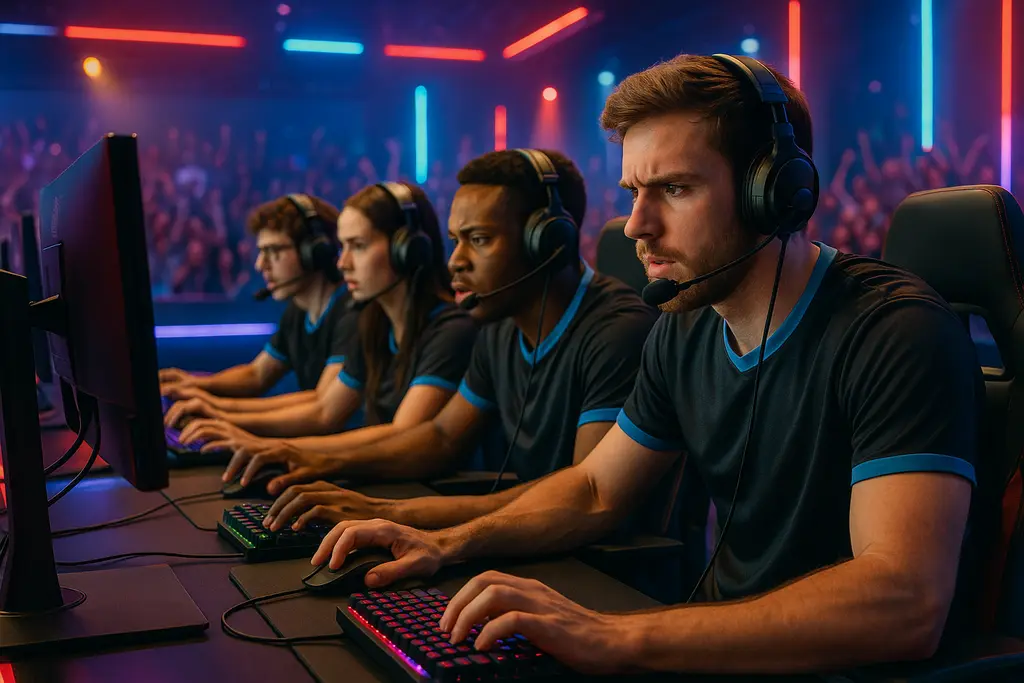
The EWC Paris Relocation is not just a venue change. It is a live stress test for how global esports partnerships respond when security, travel, broadcast, and public trust all collide at once. The 2026 Esports World Cup was moved from Riyadh to Paris after escalating military conflict in the Middle East, including drone and missile strikes near Riyadh that disrupted international air travel, according to European Gaming.
The scale makes that decision especially consequential. The event is scheduled for July 6 to August 23, 2026, with more than 2,000 players from over 100 countries across 24 games and a prize pool reported above $75 million, as detailed by The National. For tournament operators, publishers, clubs, broadcasters, sponsors, and host governments, the move turns the Esports World Cup into a case study in risk transfer rather than a simple calendar update.
Why EWC Paris Relocation Matters To Partners
EWC Paris Relocation Changes The Risk Model
Major esports events have always depended on complicated coordination, but this situation puts that dependence in public view. A cross-title event of this size is built on dozens of partner relationships: venue operators, game publishers, broadcast crews, national federations, talent agencies, travel providers, production vendors, and local authorities. When a host city changes, every one of those relationships has to absorb new cost, new timing, and new accountability.
For partners, EWC Paris Relocation is a reminder that global esports cannot scale on prize money alone. The ability to keep a tournament intact after a forced move becomes part of the product. Sponsors and publishers do not only measure audience reach; they also watch whether teams arrive safely, whether competitive integrity is protected, whether broadcast windows hold, and whether public messaging stays consistent. If those pieces break, the damage is not limited to one bracket. It spreads across every partner attached to the event.
Paris Gives The Event A Different Public Frame
Paris also changes the audience and policy context around the competition. Riyadh was tied to Saudi Arabia’s long-term investment in esports. Paris places the same project inside a European capital with its own public expectations around governance, worker movement, public funding questions, and media scrutiny. That does not erase Saudi involvement. Research around the event states that Saudi officials framed the move as an expansion of the World Cup’s global reach, not a retreat from the country’s esports plans.
That framing matters because international partnerships need a story that teams, sponsors, and fans can understand. A host-city switch caused by conflict can easily read as instability. Positioning it as a wider international model gives organizers a cleaner message, but the esports community will judge the claim through delivery. If players, coaches, broadcast workers, and fans experience confusion on the ground, the expansion argument weakens quickly.
Operational Pressure Behind The Paris Move
Travel, Visas, And Competitive Routine
The practical burden is heavy. The move required changes across travel, visas, accommodation, venue operations, scheduling, and broadcast infrastructure. Those are not background details for competitors. They shape practice blocks, media obligations, rest, equipment access, and the mental rhythm of a tournament week. In traditional sports, athletes often speak about routine as part of performance. Esports is no different, even if the public focus tends to stay on patches, maps, agents, heroes, or matchups.
The EWC Paris Relocation also tests how well clubs can support players across multiple games at once. A single organization may have several rosters arriving from different regions, with different staff needs and different competitive timelines. If one group faces travel trouble or delayed setup time, the issue can hit the club’s wider World Cup campaign. That is why operational reliability becomes a competitive factor, even if it never appears on a scoreboard.
Broadcast Partners Need Predictability
Broadcast reach is another partnership pressure point. Research notes that the 2026 event is set for live coverage in 160 countries through more than 100 partners, with coverage across more than 40 languages. Those numbers show why stability matters. Broadcast partners sell programming blocks, assign crews, localize coverage, and coordinate talent well before the first match goes live. A venue change forces them to rebuild workflows while still presenting the event as coherent to viewers.
For fans following the tournament from home, the most visible failure would be a delayed stream or inconsistent coverage. For media partners, the larger issue is confidence. If the Paris operation holds together, it gives future host cities and rights partners a stronger reason to work with the Esports World Cup model. If it struggles, the scale of the event becomes a liability rather than a selling point.
There is also a hardware and creator economy layer around events of this size. Player practice rooms, creator sets, fan activations, and viewing setups all sit beside the main competition. For those interested in the hardware part of gaming culture, Prosettings offers insights into related equipment and entertainment topics without turning the event itself into a spec sheet.
Community Trust And The France-Saudi Partnership
Transparency Is Part Of The Deal
The France-Saudi partnership around the event has prompted discussion around human rights and transparency. That reaction is not separate from esports. It is part of how the audience reads the event. Competitive gaming communities are used to questioning publisher decisions, organizer conduct, sponsor ties, and player treatment. A tournament that asks fans to care across 24 games has to expect similar scrutiny around who funds it, who benefits, and what public institutions are lending support.
France is also reported to expect indirect economic benefits of about €600 million, with Saudi Arabia covering organizational expenses. Those figures, if realized, would explain why governments and local partners pay attention to major esports events. But economic impact claims rarely settle community concerns on their own. Fans and industry workers tend to separate spectacle from accountability. They can enjoy the matches while still asking whether the partnership terms are clear enough.
That split is familiar across esports. Viewers care about the server, the stage, the format, and the broadcast desk, but they also care about labor conditions, political context, and whether organizations communicate honestly. The Paris move puts all of those questions in the same room. Our earlier coverage of the event’s scale in the Paris tournament preview focused on the competitive footprint; the partnership story now feels just as central.
What EWC Paris Relocation Means For Partners
The Partnership Standard Is Higher Now
The lesson for future esports partnerships is direct: global reach demands contingency planning that is visible, funded, and credible. A major event cannot ask publishers and clubs to commit their best players without proving that emergency relocation, visa support, accommodation, and broadcast continuity are more than private promises. The public will not see every contract clause, but it will see whether the event works.
- For publishers: the key question is whether competitive integrity survives the disruption.
- For clubs: the concern is player welfare, travel reliability, and staff coordination across multiple titles.
- For broadcasters: the priority is predictable production across regions and languages.
- For host cities: the event is a chance to gain esports credibility, but only if public concerns are handled with care.
The EWC Paris Relocation may strengthen the Esports World Cup’s international model if Paris delivers a stable event under pressure. It may also raise the standard for every large organizer that wants government backing, publisher cooperation, and global media rights. Either way, the relocation has already changed the partnership conversation. The tournament is no longer judged only by who wins across 24 games. It is judged by whether the people behind the event can keep faith with players, partners, and the wider esports public when the original plan breaks.