By Jonathan LeBlanc | April 8, 2026
As someone who spends half their life staring at a chat monitor and the other half obsessing over bitrate drops, let me give you the harsh truth right up front: simply hitting the “Go Live” button in 2026 will not build an audience. The days of playing your favorite game in silence and waiting for the internet to magically discover you are completely over.
Today’s streaming landscape is a highly competitive, algorithmic battlefield. You are not just playing a video game; you are running a live, unscripted television production while simultaneously managing a community. If you want to transition from playing in your bedroom to building a sustainable, monetized digital brand, you need a calculated approach. Let’s break down the technical baseline, the platform choices, and the analytical strategies you need to survive the zero-viewer grind.
The Hardware Baseline: Prioritizing Audio Over Video
The most common mistake new streamers make is blowing their entire budget on a 4K DSLR camera while relying on a cheap headset microphone. In the streaming world, viewers will forgive a slightly grainy webcam, but they will instantly click away if your audio is peaking, echoing, or picking up every keystroke.
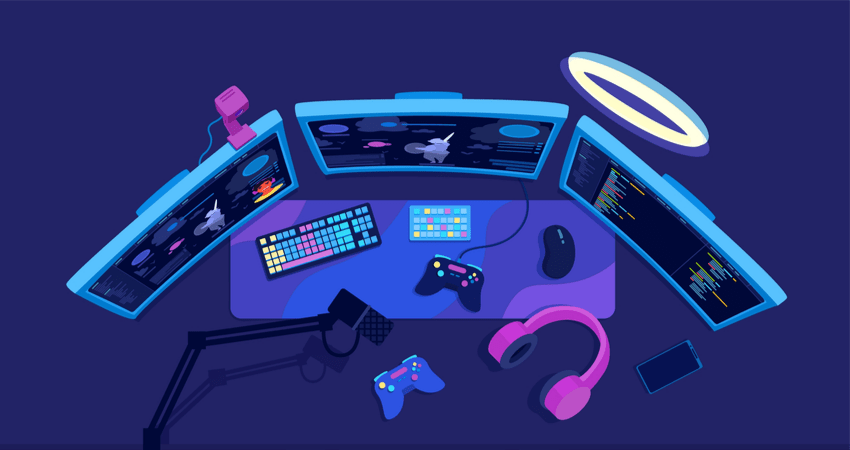
Your first major investment should always be a high-quality dynamic microphone paired with an audio interface. Dynamic microphones are excellent at rejecting background noise, which is crucial if you do not have a professionally treated, soundproofed room. Once your voice is isolated and broadcast-ready, you can begin optimizing your visual presentation. You do not need a dual-PC setup to get started, but you do need a rig capable of simultaneously rendering your game and encoding video at 1080p and 60 frames per second without stuttering.
| Hardware Component | Starter Setup | Professional Upgrade |
| Microphone | USB Dynamic (e.g., Samson Q2U) | XLR Dynamic + Audio Interface (e.g., Shure SM7B + GoXLR) |
| Camera | 1080p Web Camera (e.g., Logitech C920) | Mirrorless DSLR with Camlink (e.g., Sony Alpha Series) |
| Lighting | Basic LED Ring Light | Multi-Point Key Lights with Softboxes |
| Processing | Single High-End PC (NVENC Encoding) | Dual-PC Setup with Dedicated Capture Card |
Mastering the Broadcast Software and Platform
Once your hardware is plugged in, your next hurdle is the software. You will need to become intimately familiar with Open Broadcaster Software (OBS), the industry standard for live production. This is where you will build your scenes, manage your audio mixing, and configure your streaming bitrate. Learning how to properly balance your desktop audio against your microphone input is a mandatory skill before you ever introduce yourself to the internet.
Next, you have to choose your battleground. The platform war is fierce, and deciding where to plant your flag dictates your entire growth strategy. Do you want the deep, ingrained community culture and monetization tools of Twitch, or the superior VOD discoverability and algorithmic reach of YouTube? If you are struggling to make that choice, analyzing the current data on Twitch vs YouTube for gaming creators is a vital first step in charting your career path.
The Content Funnel: Surviving the Zero-Viewer Grind
Here is the analytical reality of streaming in 2026: platform discoverability for live streams is virtually non-existent. When you go live on a major platform with zero viewers, you are placed at the absolute bottom of a directory featuring thousands of other creators. Waiting for someone to scroll down that far is a mathematical impossibility.
To combat this, successful modern streamers treat their live broadcast as just one piece of a massive content funnel. You must utilize short-form video platforms like TikTok, YouTube Shorts, and Instagram Reels as your primary discovery engines. By editing your best live moments—whether it is a high-IQ clutch in Counter-Strike 2 or a hilarious communication breakdown with your squad—into punchy, vertical videos, you capture the algorithmic reach of those platforms. You then use those viral moments to funnel viewers back to your live stream. Growth in 2026 requires you to be an entertainer on stream and a ruthless digital marketer the second you go offline.