

The Call of Duty League 2026 Stage 2 is shaping up as one of the most important checkpoints of the season, not only because it pushes teams toward the next LAN title opportunity, but because it offers a clearer look at which rosters are actually built to survive the grind of a modern CDL campaign. Liquipedia lists Stage 2 Major Qualifiers as running from February 13 to March 22, 2026, with 12 teams competing in a 4v4 format, while the official CDL schedule shows the Major II event in Birmingham, United Kingdom, from March 27 to March 29.
At this point in the year, Stage 2 is more than a set of matches on the calendar. It is where early-season narratives start to harden into something more meaningful. Hot starts begin to look sustainable, struggling contenders start running out of excuses, and the middle tier gets forced to show whether it can actually threaten for a deep major run. With the league moving toward Birmingham for Major II, the pressure around every series increases.
| Event Segment | Details |
|---|---|
| League | Call of Duty League 2026 Stage 2 |
| Qualifier Dates | February 13 – March 22, 2026 |
| Major Dates | March 27 – March 29, 2026 |
| Teams | 12 |
| Format | 4v4 |
| Major Location | Birmingham, United Kingdom |
| Venue | bp pulse LIVE |
| Prize Pool | $365,000 |
Stage 2 Is Where Contenders Separate From Pretenders
Every CDL stage matters, but Stage 2 tends to carry extra weight because it arrives after teams have already had time to settle into the season. By now, coaching staffs have more film, map pools start to reveal real strengths and weaknesses, and teams can no longer hide behind the idea that they are still “figuring things out.” Liquipedia’s Stage 2 listing frames this segment as a full qualifier phase leading into Major II, which means the stage is directly tied to postseason-style pressure even before the LAN begins.
That makes Stage 2 compelling from an analytical standpoint. The strongest teams are usually the ones that can turn small tactical edges into consistent match wins over several weeks, not just dominate a single flashy weekend. In Call of Duty, that means deeper map preparation, cleaner Search and Destroy execution, and enough composure to win the swing moments that often decide a best-of-five. The official schedule’s steady run of qualifier matches underscores that this is a long evaluation period, not a one-day sprint.
The Birmingham Major Gives The Stage Real Stakes
The reason Stage 2 matters so much is simple: it feeds directly into Major II in Birmingham. According to the official CDL schedule, Major II is set for March 27–29, and Liquipedia lists the major itself with a $365,000 prize pool at bp pulse LIVE in Birmingham. That combination of LAN environment, international spotlight, and meaningful prize money turns every qualifier series into part of a bigger competitive story.
Birmingham also adds a sense of occasion that online qualifiers alone cannot replicate. LAN majors are where championship-level teams prove that their online discipline translates under lights, in front of a crowd, and against opponents who have had time to study every tendency. A roster can look sharp online, but a major stage exposes communication gaps, shaky veto reads, and teams that cannot recover once momentum flips. Stage 2 is important because it determines who gets to face that test with the best possible positioning.

A 12-Team Field Means Little Margin For Error
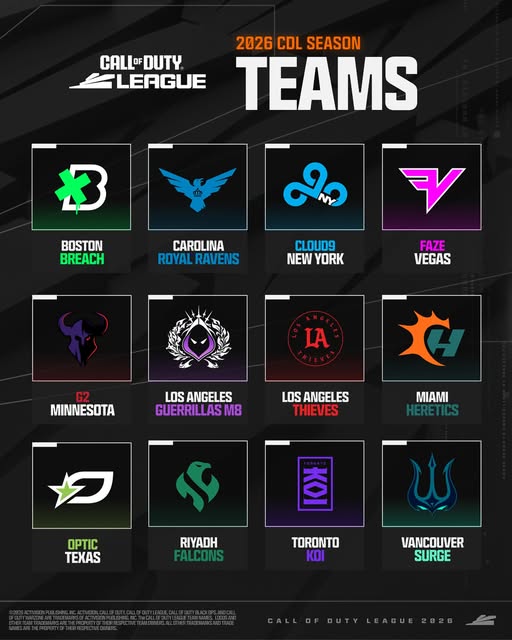
Liquipedia lists 12 teams for the Stage 2 qualifiers, which keeps the field tight and the league highly competitive. In a league of that size, every loss matters more because there are fewer places to hide and fewer meaningless matches on the schedule. One bad stretch can dramatically change seeding outlook, while one strong weekend can completely alter the tone around a roster.
That creates the kind of pressure that tends to reveal the true competitive hierarchy. Elite teams usually respond by tightening fundamentals. Mid-table teams are forced to chase consistency. Bottom-tier teams start playing with urgency because the gap between surviving and falling behind can open quickly. In practical terms, that makes Stage 2 one of the best times of the season to evaluate which squads have real staying power and which ones are still dependent on momentum or favorable matchups.
Why The Schedule Shape Matters
The official CDL schedule shows that Stage 2 unfolds across multiple qualifier dates before the Birmingham major, which is exactly the kind of structure that rewards teams with discipline over flash. It is not enough to win one statement match. Teams have to handle repeated preparation cycles, adapt to different opponents, and keep their level high over time.
That matters in Call of Duty because the league’s best rosters are often defined by repeatability. Can they keep Hardpoint setups clean over several weeks? Can they survive bad starts in Search and Destroy without collapsing? Can they maintain confidence when the stage begins to tighten? A longer qualifier window gives fans better answers to those questions than a short showcase ever could. It also makes Major II feel earned rather than random.
What Fans Should Watch During Stage 2
One of the biggest things to watch is whether any team can turn qualifier form into genuine major-threat status. The CDL always has a few rosters that look dangerous on paper, but Stage 2 is where theoretical upside has to become actual results. Because the stage runs for more than a month before the major, fans get a better sample size for judging who is improving and who is just trading inconsistent performances.
Another storyline is how Stage 2 shapes Birmingham seeding and confidence. In Call of Duty, confidence matters almost as much as raw slaying power. A team entering a major after weeks of strong qualifier wins feels different from one that barely scraped through. That psychological edge often shows up in the first LAN match, where one roster looks decisive and the other looks like it is still trying to convince itself it belongs there.
For readers who like tracking the broader esports calendar beyond one title, our live esports guide is a useful internal resource for keeping up with major events across multiple games.
Stage 2 Fits Into A Bigger CDL Story
From a season-wide perspective, Stage 2 is where the CDL begins to feel less theoretical and more definitive. The opening part of a season always leaves room for experimentation and surprise. By the time the league reaches a second major cycle, those surprises start getting tested. Teams that built early hype now have to defend it over a larger sample. Teams that disappointed early have to prove they can recover before the championship picture gets crowded.
That is why Stage 2 matters even for fans who are looking beyond Birmingham. This stretch helps establish whether the season is moving toward a handful of reliable contenders or a much messier title race. Either outcome can be entertaining, but Stage 2 is where the evidence starts to build in public.
Final Thoughts
The Call of Duty League 2026 Stage 2 has the kind of structure that makes it important even before the major starts. With qualifiers running from February 13 to March 22, a 12-team field, and Major II in Birmingham from March 27 to March 29 for a $365,000 prize pool, this stage is a serious measuring stick for the rest of the season.
For fans, that means Stage 2 is not just filler between headline events. It is the point where contenders either strengthen their case or begin to fade. For teams, it is the road to a major LAN with real consequences. For the CDL as a whole, it is another reminder that the best stories in esports are usually built over weeks of pressure, not just one championship Sunday.
For official match times and bracket updates, the best external reference is the CDL schedule


